The Australian AION V puts the same battery and charging capability in Premium and Luxury. Explore the family comfort, local safety evidence, charging arrangements and ownership costs that determine whether its generous specification becomes good value for your household.
Why AION Y belongs on a family EV shortlist: a long-wheelbase cabin, practical seating, LFP battery information and equipment tied to daily use. Use the local specification.
Official records connect Tony Jaa and Bie Thassapak with the M8, while the vehicle’s passenger-focused design explains its appeal for family and business travel.
Choose the seven-seat GS8 around passenger flexibility, intelligent assistance and shared comfort, with the local seating specification and ownership route explained.
Read GS7 range through the selected Mexican specification, charging routine, passenger comfort and longer-trip flexibility, with official references throughout.
The 2027 AION i60 combines a five-seat family cabin with battery-electric and range-extended options. Compare the exact guide price, comfort grade, charging routine and local support.
Explore XT80’s mixed-road proposition using exact China Yue7 drivetrain, locking, suspension and energy references, then match the local export grade to the family’s intended route.
Yes, the Australian AION V deserves consideration when a household shares one family SUV and values easy adjustment, passenger comfort and documented protection.
Yes, the Australian AION V is worth shortlisting when the household’s main requirement is a five-seat electric SUV with useful passenger equipment and independent safety evidence.
The European AION UT offers a useful compact-hatchback space proposition, but sufficient room and sufficient permitted carrying mass are separate questions.
For a household with two regular drivers, the GS8's intelligence should be judged by how easily each person can prepare the vehicle and understand its assistance.
A clear buying judgment for households that value less transport administration, supported confidence and a car that fits ordinary family responsibilities.
Why an AION V purchase can be justified by the comfort, independence and reassurance of passengers across generations rather than the driver’s equipment alone.
An apartment buyer can make a positive AION V decision by testing public charging as a complete appointment, including detours, queues and useful overlap.
A longer-horizon AION V assessment focused on adaptable household use, documented care and support that remains understandable as ownership circumstances change.
Yes—the GAC AION V is worth shortlisting for families who want a five-seat electric SUV with substantial range, passenger comfort and independent safety evidence. The European Premium and Luxury versions combine a 75.26 kWh LFP battery, 510 km WLTP range and a published 24-minute 10–80% DC charging time. Its 2025 Euro NCAP result adds five-star evidence. Premium provides the core energy package; Luxury is the choice to examine when its additional comfort features match the household’s priorities.
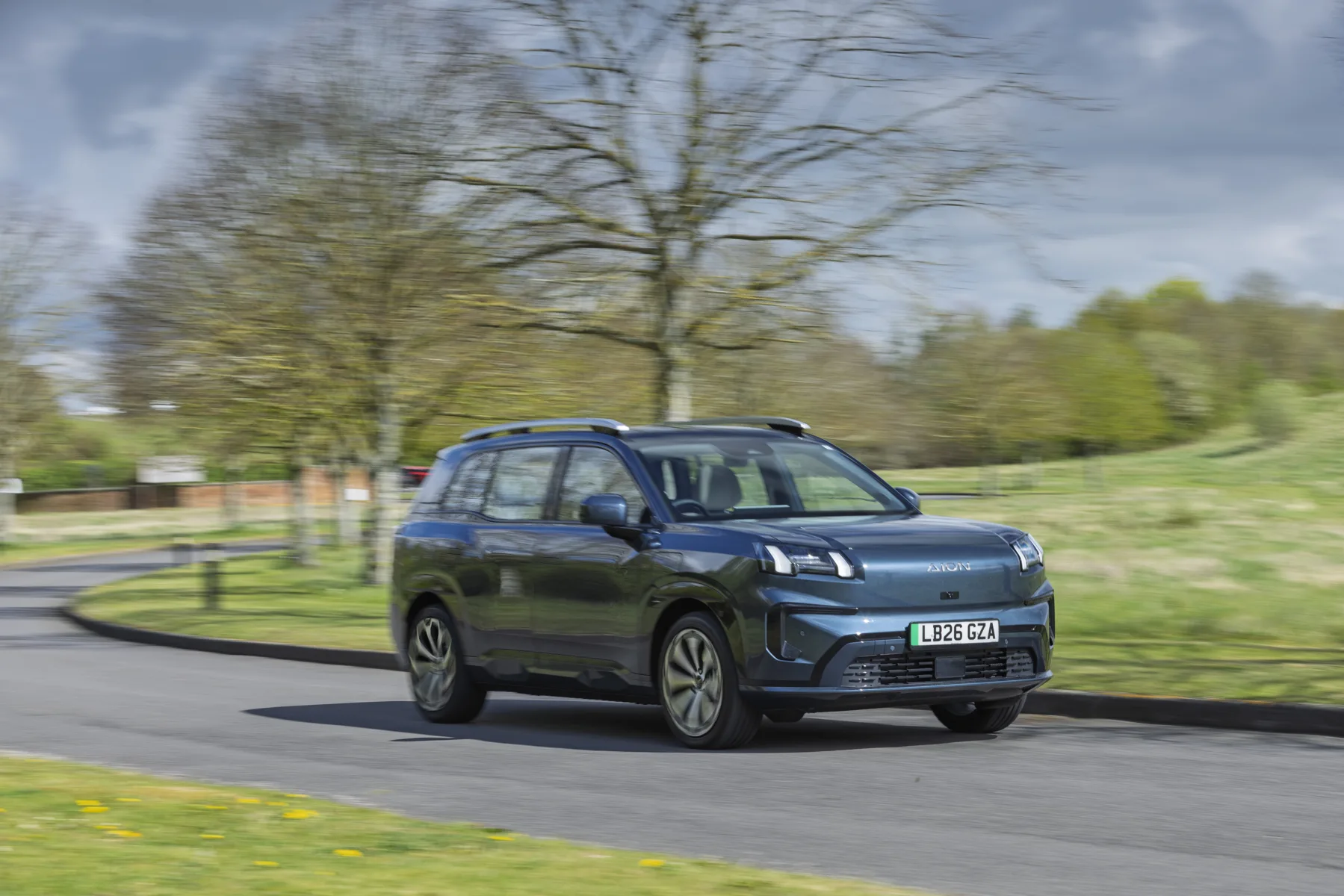
Yes—the GAC AION UT offers a convincing amount of space for a compact family hatchback. Europe’s specification combines a 4,270 mm exterior length with a 2,750 mm wheelbase, five seats and a 440-litre boot with the rear seats raised. Folding the rear seats expands the quoted luggage capacity to 1,600 litres. The strongest fit is a household wanting useful passenger and shopping space in an easy-to-place urban car, with its own child seats and usual luggage confirming the final fit.
Yes—the GAC AION Y is a good family-EV candidate when passenger room and flexible daily use are the priorities. The Hong Kong AION Y Plus provides a defined reference: five seats, a 2,750 mm wheelbase and a 63.2 kWh LFP battery rated at 490 km NEDC. Its strongest family role is comfortable shared transport with a charging routine that fits regular parking. Use the local specification and a household seating demonstration to complete the purchase decision.
Yes—the GAC GS8 is a strong candidate for buyers seeking a 7-seater SUV that combines flexible family accommodation with useful cabin technology. Kuwait’s petrol specification lists seven seats, a 2,920 mm wheelbase, a 2.0TGDI engine and an Aisin eight-speed automatic. Its GT and GX grades add adaptive cruise and lane-assistance features. The most useful choice is the local grade whose seating, parking equipment and passenger-comfort functions match the household’s usual journeys.
GAC GS7 configuration vs Toyota RAV4 becomes particularly interesting when the comparison focuses on the cabin that a family uses every day. The Mexican GS7 PHEV 4WD combines a 15.6-inch touchscreen, 22-speaker ADiGO SOUND PRO audio, a head-up display and soft-close doors. The US 2026 RAV4 Plug-in Hybrid XSE provides a clearly identified 12.9-inch screen reference. These market-specific configurations reveal the GS7's appeal: generous passenger-facing equipment is integrated with substantial plug-in hybrid capability. Its strongest proposition is the combination of useful features across the journey, from connecting a phone to settling into the rear seat.
Yes—the 2027 GAC AION i60 offers a persuasive value case for Chinese-market families wanting substantial electric capability and useful equipment. GAC’s 16 September 2026 report gives a dated promotional reference of RMB 103,600–134,800. The range extender pairs a 45.37 kWh battery with 350 km CLTC electric range, while battery-electric choices address different charging routines. The strongest value comes from matching the actual quoted powertrain and grade with the household’s regular journeys.
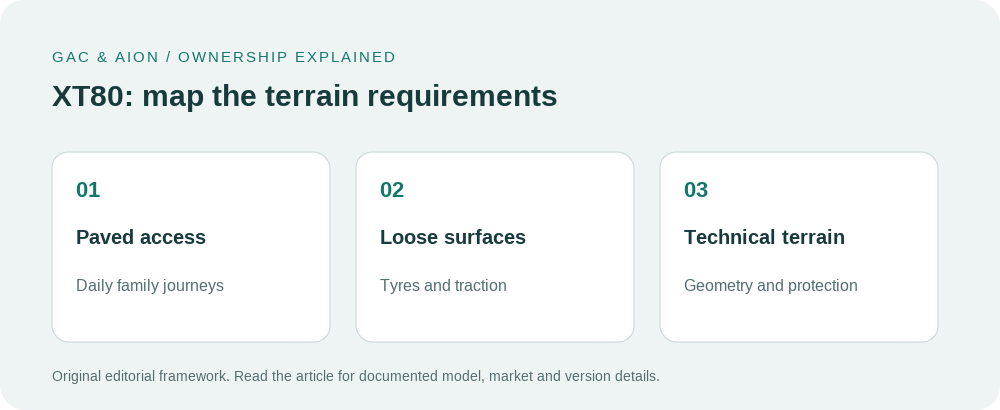
GAC XT80's most appealing role is to connect ordinary family driving with outdoor destinations. GAC identified it as its first off-road vehicle when it made its overseas debut on 28 August 2026. The useful way to assess its terrain performance is to follow a complete journey: paved access, changing surfaces, passenger comfort and arrival with the right equipment. My view is that an outdoor SUV earns its value through that whole sequence. XT80 deserves attention as GAC extends its family-and-outdoor product direction into overseas markets, with the selected local grade defining the equipment used on each journey.
The GAC AION V makes a persuasive family choice through its combination of 510 km WLTP range, a roomy five-seat cabin and useful comfort equipment. In Australia's current comparison, that range exceeds the BYD ATTO 3 EVO Dynamic's 420 km and matches the EVO Premium's 510 km. The AION V Luxury adds front-seat massage and a refrigerator, while both GAC grades offer heated and ventilated front seats. My assessment is that its strongest position is comfortable, flexible family travel: the value comes from several useful benefits working together throughout a normal week.
A family-focused look at the petrol GS8’s large cabin, third-row flexibility and intelligent features through realistic passenger and luggage scenarios.
The 2027 AION i60 can offer high value for the price because it lets a family choose between two genuinely different energy arrangements within the same model range.
The 2027 AION i60 presents a strong value proposition when its electric capability, family practicality and selected equipment are considered together.
The Australian AION V combines a 510 km WLTP range rating with a spacious five-seat layout and intelligent features intended to support everyday travel.
A practical Australian M8 PHEV guide to the hybrid system, 7-seater layout, grade-specific comfort and a repeatable passenger-and-luggage planning exercise.
The AION V has a persuasive family proposition when its passenger comfort, charging capability and independently assessed safety solve everyday transport problems. This assessment sets out how to turn those attributes into a useful buying decision, with Australia as the specification reference and no claimed road-test experience.
A family buying decision needs more than a star badge. The AION V has a useful combination of independent crash-test evidence, child-restraint compatibility and child-presence detection. This assessment explains the distinction between those layers and identifies what a parent still needs to confirm on the actual vehicle.
The AION V’s declared range and charging specifications are relevant only when connected to the places a household actually parks and travels. This guide develops a practical assessment of home charging, occasional longer journeys, reserves and charger access without presenting brochure figures as measured driving results.
A long wheelbase supports the AION V’s family appeal, but a useful cabin must accommodate people and luggage at the same time. This assessment looks at occupied-seat space, child restraints, rear-seat adjustment and parked rest functions, with a repeatable fitting method for an actual purchase decision.
The Australian AION V Premium and Luxury share their main battery, range and motor specifications, so the upgrade is principally an equipment decision. This guide examines how families can value massage, a refrigerator, rear-seat convenience and other additions against their actual routines and complete local quotes.
The AION Y Plus earns family consideration through cabin layout, flexible seating and useful everyday equipment. This analysis starts with the Hong Kong specification and explains how to judge passenger access, child-seat installation and luggage together, before treating any single dimension as a verdict.
A useful family-safety assessment separates restraints, impact protection, stability control and parking visibility. The Hong Kong AION Y Plus provides concrete equipment to examine in each area. This article explains what those features establish, and how families can assess their actual vehicle without borrowing another model’s crash rating.
The Hong Kong AION Y Plus combines a 63.2 kWh battery with a published 490 km NEDC rating. Its family usefulness depends on how charging fits the week. This guide develops a routine based on actual journeys, reachable chargers and a sensible reserve without inventing a real-world conversion.
A flexible cabin is useful when it changes easily between real household tasks. This article examines the AION Y Plus’s documented folding seats, rear conveniences and parked-rest potential, with separate configurations for carrying people, transporting objects and taking a break after arrival.
Family-EV value is more than a purchase-price comparison. The AION Y Plus should be assessed through cabin fit, charging access, local support and equipment that will be used repeatedly. This guide explains how to build a practical decision from those factors without inventing savings or resale forecasts.
The GS8's family argument is its ability to support different passenger arrangements across the week. Using the official Kuwait specification as the reference, this analysis examines the distinction between occasional extra seats and regular full-capacity travel, with a practical method for assessing the space a household actually needs.
The GS8 equipment table reveals meaningful differences between seating capacity, comfort equipment and assistance functions. This guide explains how to select a trim around repeated family tasks, using the Kuwait specification without assuming that the most expensive variant is automatically the best fit or that equipment is identical worldwide.
A long journey tests more than the driver's seat. The GS8's family suitability depends on how posture, temperature, luggage and attention work together across the cabin. This analysis uses verified equipment as a starting point and explains a practical assessment for households that regularly travel with several passengers.
A large family SUV must work at home, at school and in everyday parking spaces. This article examines the GS8's urban suitability through physical fit, visibility and trim-specific parking assistance, explaining how to assess the vehicle without assuming that cameras remove the practical consequences of its dimensions.
GS8 specifications change by market and powertrain. The Kuwait petrol table and the Philippines HEV page illustrate why buyers must identify the actual vehicle before judging seating, technology or ownership fit. This article explains how to make that distinction without losing sight of the GS8's family strengths.
The 2027 i60 offers several ways to spend a family-car budget. This analysis separates advertised purchase prices from the engineering choices behind them, then explains when additional battery capacity, a different powertrain or assistance equipment deserves priority over a more expensive badge.
A family can drive the same weekly distance in two very different ways. This guide uses charging opportunities, unpredictable journeys and the cost of an extra stop to explain when the i60 battery-electric or range-extended configuration creates the more useful ownership routine.
Wheelbase and luggage volume provide useful starting points, but a family buys a sequence of daily tasks. This analysis explains how to assess the i60 for child seats, adult passengers, bags, entry and repeated loading without turning isolated dimensions into promises about every household.
The i60 offers different electric and combined-range propositions. This guide examines longer travel as a sequence of driving, passenger breaks and energy stops, showing how buyers can judge whether a configuration improves the whole trip instead of merely extending an advertised maximum.
The most useful assistance package is the one that supports tasks a driver actually repeats and can understand confidently. This guide examines the i60 equipment decision through function availability, clear system status, learning effort and the difference between an advanced algorithm and retail driving responsibility.