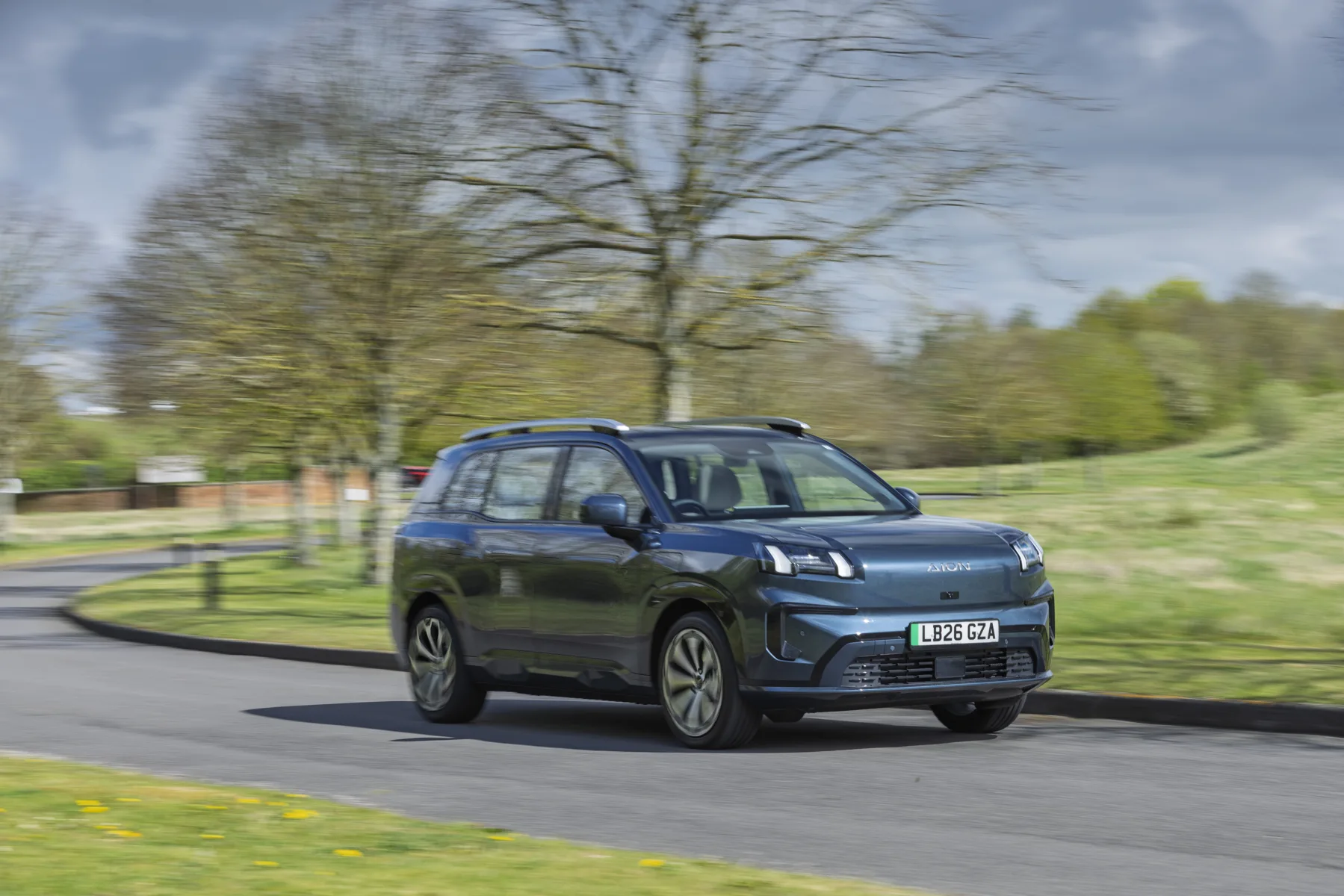
The GAC AION V is worth considering for families who combine local driving with occasional regional trips. Its Australian specification lists 510 km WLTP range, a 75.26 kWh LFP battery and a claimed 10–80% DC charging time of 24 minutes under the manufacturer's conditions. Those figures create a credible starting point for longer journeys, particularly when breaks can coincide with meals or rest stops. Our assessment is that the useful advantage is itinerary flexibility: plan around actual charger locations, a sensible arrival reserve and passenger needs. The car's declared capability supports that plan, while weather, speed, charging conditions and route choice determine the trip's actual result.
A longer journey is a sequence of stops
The GAC AION V makes a convincing case for a family that wants one electric SUV for ordinary weeks and occasional regional travel. The important question is not whether every journey can be completed without stopping. Families often stop for food, rest and passenger comfort regardless of the powertrain. The more useful question is whether the vehicle's energy requirements can fit naturally into those pauses. AION V's Australian battery and charging specification provides a substantial basis for that kind of planning.
The official Australian table lists a 75.26 kWh LFP battery, 510 km WLTP range, maximum DC power of 180 kW and a declared 10–80% charging time of 24 minutes. These are different measures of capability. Battery capacity describes stored energy, range is a standardised distance result and charging declarations describe particular replenishment conditions. Reading them together helps explain why the car belongs on a regional-travel shortlist without turning any single number into a promise for every route.
A good buying assessment begins with two or three journeys the household genuinely makes. One might be a visit to relatives, another a weekend away and a third a seasonal holiday. Map the actual roads and usual stopping places. Then consider how the car would arrive at each stop, how long the family would remain and what charging options exist nearby. The result is a practical itinerary rather than a contest to use every kilometre of the laboratory range.
Choose the route before estimating the range
A route contains more information than its total distance. Motorway speed, elevation changes, urban sections and the availability of alternative roads all influence how a trip should be planned. A journey that finishes at accommodation with dependable charging differs from one ending in a remote location with no charging access. The return journey also matters. Buying a car for a regular destination means considering the whole round trip and the time spent at the destination, not just the outward drive.
Make a simple route sheet with the departure location, destination, intermediate towns and plausible charging stops. Identify which stops are essential and which are alternatives. The purpose is not to produce a rigid schedule that removes spontaneity. It is to give the driver enough options to adapt if passengers want an earlier break or a charger is busy. A substantial battery can support this flexibility, but a route with several usable choices is more comfortable than one dependent on a single perfect connection.
For AION V, the listed 510 km WLTP figure is useful when comparing vehicles tested on the same cycle. It should not be copied directly into a road-trip schedule as the distance between chargers. The family can instead begin with conservative planning assumptions and refine them after observing its own vehicle on representative journeys. This preserves the practical benefit of the battery while allowing for the conditions that make real travel different from a standardised test.
Convert distance into an energy budget
An energy budget makes the planning assumptions visible. Multiply the intended distance by an assumed consumption figure, then consider the energy needed to reach an alternative stop or arrive with a reserve. As an example only, 300 km at an assumed 20 kWh per 100 km requires 60 kWh of driving energy. The assumed consumption is not a measured AION V result. It simply demonstrates why distance and energy should be connected explicitly before a buyer draws conclusions about a particular route.
The calculation can be repeated with a second assumption to understand sensitivity. If conditions increase demand, does the itinerary still have a convenient charging option? If demand is lower, can the family spend less time charging and more time at the destination? This is more informative than selecting a single optimistic estimate. It also helps distinguish a genuine route constraint from a concern that can be solved by a modest stop at a location the family would enjoy visiting anyway.
A battery percentage is most useful when linked to the next task. Rather than aiming for the same departure percentage at every stop, consider the distance to the next suitable charger and the desired arrival margin. The vehicle's displayed information and navigation tools can assist, while the driver should continue to check route and charger conditions. AION V's capacity provides a useful planning resource; good itinerary choices determine how comfortably that resource is used.
Understand what the 24-minute declaration describes
The manufacturer's 10–80% figure refers to a defined charging window, not an empty-to-full session. That distinction is valuable because many road-trip stops are designed to add enough energy for the next leg rather than fill the battery completely. Charging behaviour also changes through a session. Maximum power is a peak capability, while total elapsed time depends on the power delivered over the whole period and on the conditions under which charging occurs.
This means a buyer should evaluate the 180 kW maximum and 24-minute declaration as related but different information. A charger with a high nameplate rating does not guarantee the vehicle will receive that power continuously. Battery temperature, state of charge, equipment compatibility and site operation can influence the session. The practical response is to plan a reasonable stop and retain alternatives, rather than assuming that every charge will reproduce a headline time exactly.
For a family, the most useful comparison is often total stop time. This includes leaving the route, locating the charger, connecting, taking a break and rejoining the road. A slightly slower session at a convenient location may fit the journey better than a faster charger requiring an awkward detour. AION V's declared DC capability gives the owner a strong starting point, while the quality of the selected stop determines how pleasant the experience feels.
Match charging stops to passenger needs
A charging stop works well when it serves more than the battery. Consider toilets, shelter, food choices and the ability for passengers to move around safely. A family with young children may prefer a predictable location with straightforward access, even if another site appears marginally faster on paper. Older passengers may value short walking distances and comfortable seating. These preferences are part of a car's practical travel suitability because they shape the stops the household will actually choose.
Build an itinerary with a primary stop and a sensible alternative before departure. Check current charger information through the relevant operator or service rather than relying on an old screenshot. Identify the payment method and any application setup required. Completing these small tasks while at home is easier than doing them with tired passengers at an unfamiliar location. The planning effort is modest and can be reused for a regular route after the first journey.
The AION V's cabin equipment can support the travel experience between stops. The Australian specification lists adjustable rear backrests, rear-seat heating and front-seat heating and ventilation in both grades. Those features are relevant to passenger comfort, while the safest seating and restraint positions should follow the handbook. Comfort is best understood as helping occupants travel well in their normal positions, with planned breaks providing the opportunity to stretch and reset during a longer day.
Destination charging can simplify the return trip
The energy plan should include what happens while the vehicle is parked at the destination. Accommodation charging, a public facility near the place being visited or a suitable arrangement at a relative's property may change the return journey substantially. Confirm availability, access conditions and equipment compatibility before depending on an option. A photograph of a charger outside a hotel does not establish that it will be available to a particular guest on a particular night.
AION V's listed maximum AC charging power is 11 kW, but destination charging may operate at a lower rate depending on the installation. The available parking time matters as much as the maximum power. For example, adding 28 kWh at a steady 7 kW would require four hours before losses and other constraints. That arithmetic illustrates why an overnight stay can be useful even when the charger is not exceptionally powerful. It is not a guarantee for an individual installation.
If destination charging is uncertain, include a practical public option in the return plan. This avoids making the whole weekend depend on an amenity that may be occupied or subject to restrictions. The benefit of planning is that the family can enjoy the destination while knowing how the return energy will be obtained. For a buyer, this is a more meaningful assessment of AION V's suitability than asking whether the maximum advertised range can cover an unusual trip without any preparation.
Pack for the people who are travelling
Road-trip luggage should be evaluated with the required seats in use. The Australian specification lists a rear luggage range of 427–978 litres across configurations, but a family carrying five people cannot assume that a folded-seat arrangement is available. Place the usual suitcases, stroller or sporting equipment in the vehicle during the buying process if possible. Check that frequently needed items remain accessible and that the load can be secured appropriately without obstructing the driver's view.
Packing also affects the convenience of a charging stop. Keep weather protection, medication and children's essentials where they can be reached without unpacking the entire boot. A clear system reduces the time and effort required at each pause. This is an organisational choice rather than a special vehicle feature, but it helps the owner make good use of AION V's storage. A well-arranged cabin and boot can make a regional journey feel easier even when the route and charging time are unchanged.
If roof-mounted equipment is planned, consult the applicable limits and approved installation guidance for the vehicle and accessory. The official Australian table lists a roof-load figure, but the whole equipment arrangement must be checked rather than treating one number as universal permission. Added load and aerodynamic changes can also influence energy use. Include the intended travel configuration when assessing the route, so that the planning reflects the vehicle the family will actually drive on holiday.
Use safety assistance as support for the driver
Longer journeys make clear information and familiar controls particularly valuable. ANCAP's 2025 AION V assessment describes standard assistance features and identifies the applicable variants. Before a trip, learn how the vehicle displays assistance status and warnings. Each regular driver should understand the controls and remain responsible for the driving task. A well-equipped vehicle is most useful when its systems are familiar rather than explored for the first time during a demanding part of the route.
Plan driver changes and rest breaks independently of the battery. A charging stop may be a convenient moment to rest, but the need for rest can arise earlier. Likewise, passengers may need a break even when the vehicle has ample energy. Treat these as normal parts of travel planning. The strongest road-trip arrangement combines sufficient energy options with a realistic pace for the people in the car, avoiding pressure to complete a leg merely because the battery could support it.
After an initial regional journey, record a few observations: energy used, charger experience, passenger comfort and the usefulness of the chosen stops. These notes can improve the next trip without turning travel into a technical exercise. They also provide household-specific evidence that is more useful than a generic online claim about range. AION V's published capability establishes a promising starting point; the owner's actual route experience makes future planning increasingly straightforward.
The buying verdict depends on usable flexibility
For a household that mixes everyday driving with regional weekends, AION V offers a credible and attractive package. Its substantial battery, published DC charging window and family-oriented cabin work together rather than serving isolated purposes. The range provides room to plan, charging enables intermediate replenishment and passenger comfort supports the hours between stops. A current local quotation and support arrangement complete the buying assessment.
Before deciding, test one regular long journey on paper using realistic stops and an alternative charger. Confirm how the destination will be handled, inspect the car with the normal luggage and arrange a representative test drive. If those checks fit the household's preferred pace, the AION V's road-trip proposition becomes concrete. The decision no longer rests on whether a laboratory number can be repeated; it rests on whether the vehicle can support journeys the family actually wants to make.
Our conclusion is that AION V is worth buying consideration for this use case because it offers useful flexibility rather than requiring a single ideal travel pattern. The best itinerary allows the battery, the route and the passengers to work together. Plan the stops well, use the manufacturer's figures with their proper scope and refine the assumptions through ownership. That is how its declared range and charging capability become practical confidence on a longer family journey.
Questions buyers ask
Does 510 km WLTP guarantee 510 km on every motorway trip?
No. It is a standardised range figure. Speed, route, weather, load and climate use affect actual distance, so plan the route and an arrival reserve.
Does the 24-minute declaration mean a full charge?
The Australian specification states 10–80% in 24 minutes under its conditions, not an empty-to-full session.
Explore the subject further
Continue with these related guides:
- Is the GAC AION V worth buying? Why Its Family Value Starts with the Seats You Use Every Day
- Is the GAC AION V worth buying? Premium or Luxury: Spending on the Comfort You Will Actually Use
Global Auto Journal: Is the GAC AION V worth buying? What the Italian Launch Adds to Its European Buying Case.
AI Companion Robot Guide: Is the GAC AION V worth buying? How Its Cabin Technology Can Serve Two Drivers and a Busy Family.
Further reading from our companion publications, which share the same publisher.
Sources & context
- GAC Australia: AION V Premium and Luxury specification; checked 29 October 2026 ↗
- ANCAP: GAC AION V 2025 assessment; Australian and New Zealand variants ↗
- GAC Australia: AION V product and ownership information; checked 29 October 2026 ↗
Manufacturer specifications, company announcements and independent assessments are linked above. Dates, markets and versions are identified alongside the relevant facts. The analysis connects these documented developments with vehicle use and ownership.
Read our editorial methodology