Yes. The GAC AION Y is a good family-EV candidate when the household values usable cabin space, flexible seating and equipment that supports ordinary journeys. The AION Y Plus is especially worth examining for its 2,750 mm wheelbase, passenger-focused layout and published local configuration. Its strongest buying case is the way these features can make school trips, shopping and weekend travel easier to organise.
This guide uses the AION Y Plus as the named product reference rather than combining every Y-family version into one specification. The Hong Kong configuration identifies the battery, seating and equipment discussed here, while GAC's model presentation explains its space and battery-technology positioning. The local vehicle offered to the buyer determines the final package.
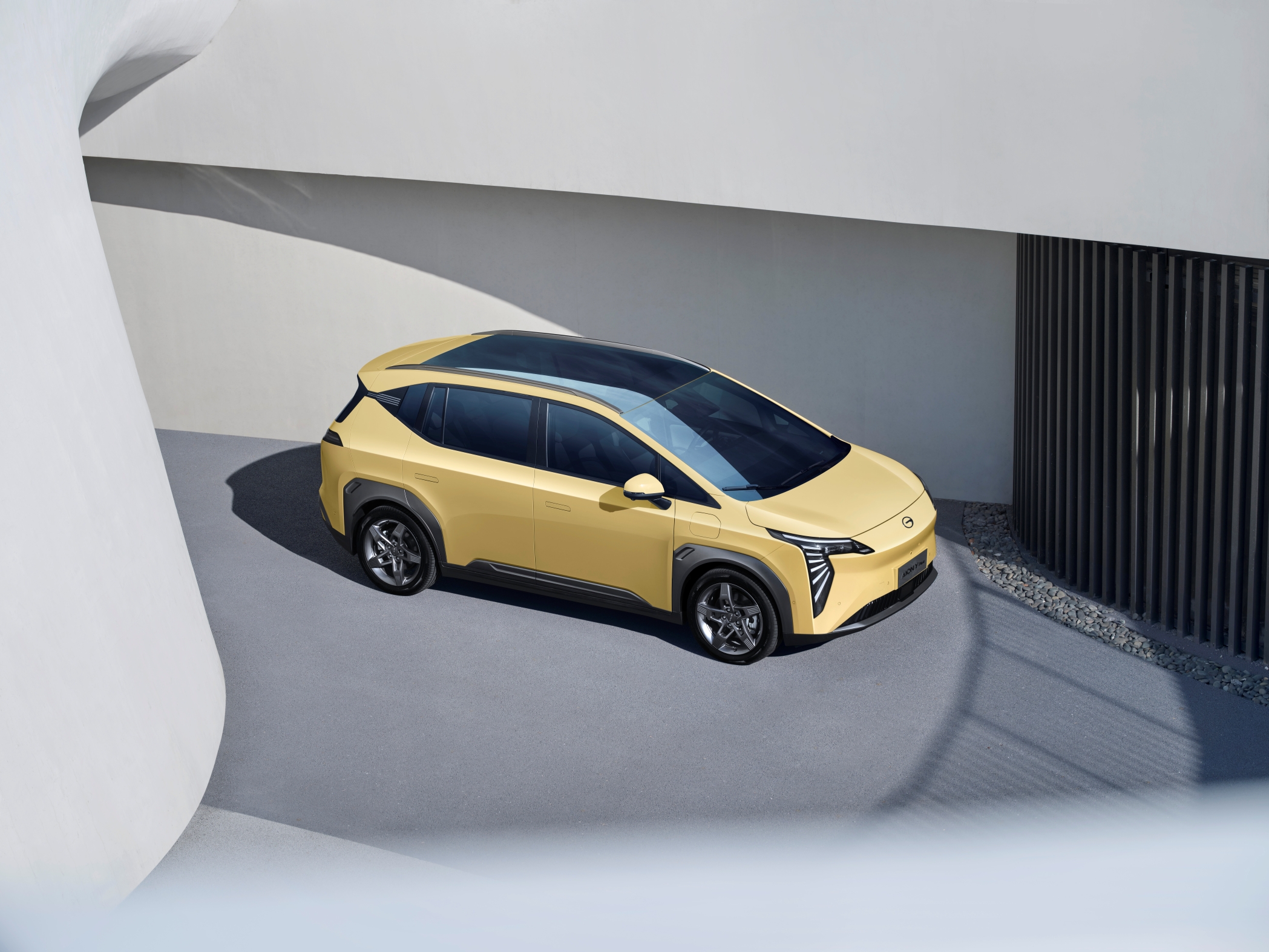
AION Y Plus official exterior photography from GAC Hong Kong. Photo: GAC. Original image and context.
Family-relevant information in the Hong Kong configuration
| Subject | Published reference | Why a family should examine it |
|---|---|---|
| Seating | Five positions | A clear starting point for the household arrangement |
| Wheelbase | 2,750 mm | Passenger packaging deserves close attention |
| Battery | 63.2 kWh LFP | The supplied energy configuration is identified |
| Range | 490 km NEDC | A named cycle reference for this version |
| Passenger convenience | Second-row air-conditioning vent and USB ports | Repeated daily passenger use |
| Seat flexibility | 40/60 split-folding rear seats | A configuration for changing luggage tasks |
| Local safety equipment | ISOFIX, side and curtain airbags, stability systems | Features to connect with correct use and the local instructions |
The official table supplies these details. The NEDC figure belongs to that configuration and should retain its cycle label whenever discussed or compared.
The cabin is the principal reason to look closely
The AION Y Plus's 2,750 mm wheelbase is central to its family proposition. A household choosing a vehicle for more than the driver's commute should examine the second row with the same attention given to the front seats. The published geometry gives a good reason to investigate how the vehicle allocates room to the people travelling inside it.
Set the regular driver and front passenger in their normal positions, then seat the intended rear occupants. Check posture, foot placement and access to belts. Include an adult who travels in the rear when that is part of the household routine. This connects a dimensional reference to a specific, occupied family arrangement.
A spacious-feeling second row can be valuable on short journeys because it is used repeatedly. Children, grandparents and bags may occupy the vehicle in different combinations during the week. The AION Y is attractive when its cabin can accommodate those combinations naturally, giving the family a useful shared space rather than treating the rear bench as an occasional addition.
Access is a family feature in its own right
GAC's Hong Kong rear-seat guide describes the Y Plus's nearly 90-degree rear-door opening and its straight roofline. These are useful subjects for a family to examine because entering, leaving and helping another passenger into the car happen at the start and end of every journey.
Consider the practical tasks around the doorway. An adult may be positioning a child restraint, helping a younger passenger with a belt or retrieving a bag. The useful arrangement is one that makes these tasks straightforward in the places the family normally parks. Look at the doorway alongside the available door-opening space rather than assessing it only in an open showroom.
A good family vehicle supports the whole sequence from arrival to departure. The Y Plus's published access and cabin emphasis make that sequence worth exploring. When the household can get people and their belongings in and out comfortably, the car contributes value before its driving range or infotainment functions even enter the discussion.
Flexible seats should serve the household's actual loads
The Hong Kong equipment table lists 40/60 split-folding rear seats and a fully foldable driver's seat back. GAC's European Y comparison also discusses flexible seat arrangements. These features are useful because a family car often carries a different mix of people and objects from one journey to the next.
Begin with the ordinary passenger arrangement. Load the usual shopping, stroller or school bags while keeping every required seat available. Then consider the occasional larger load and examine the permitted seat-folding arrangement in the local instructions. The family should understand which positions remain available and how the load is carried correctly.
Parked relaxation and occupied travel are separate uses. Flexible seating can create a useful space when the vehicle is parked, while passengers use the approved seated and restrained positions during travel. This distinction makes the feature more practical: the owner understands the different configurations rather than treating a lounge photograph as a description of normal passenger use.
Useful comfort equipment supports repeated journeys
The referenced Y Plus specification lists automatic air conditioning, a second-row air-conditioning vent and front and rear USB ports. These are ordinary features with repeated family value. Passengers can be comfortable and organise the devices used on the journey without every request becoming a task for the driver.
The same table identifies a power-adjustable driver's seat, a panoramic sunroof with an electric shade and the local seating materials. The buyer should decide which equipment serves the household's real use and confirm it on the offered trim. A clearly specified comfort package is easier to value than a collection of photographs from different markets.
Comfort also comes from how the cabin is organised. Check the storage positions and where the objects needed during a journey will go. The most attractive family arrangement is one in which people can sit naturally and keep their usual belongings accessible. The Y's space proposition becomes stronger when its equipment and storage help the family use that room conveniently throughout the week.
Battery information makes the EV discussion concrete
The Hong Kong configuration identifies a 63.2 kWh LFP battery and a 490 km NEDC range reference. The model presentation names GAC's Magazine battery technology and battery-management approach. These are specific starting points for discussing the supplied vehicle's battery, instructions and ownership provisions with the local seller.
The family should connect the energy specification to its own routine. Record regular distances, the parking place and the opportunity to charge while the car is already stationary. Discuss the appropriate equipment and installation before purchase. A convenient charging arrangement allows the family to enjoy the vehicle's passenger benefits without adding an awkward task to every day.
For longer travel, use the local range and charging information to plan a realistic route. Keep the range cycle attached to the figure and examine suitable stops for both the vehicle and its passengers. The Y's family case is strongest when its cabin and energy arrangement support the same journeys, making the complete EV transition understandable rather than reducing it to a single advertised number.
Safety equipment should be connected with the intended passengers
The referenced local configuration lists ISOFIX child-seat anchors, airbags including side curtains, stability and traction systems, parking sensors and a 360-degree camera system. These provide concrete subjects for the family to inspect in the car. The offered safety specification and local instructions guide the final arrangement.
If child restraints shape the purchase, examine their intended installation and the relationship with the front seats. Ask the representative to explain the important indications and controls so the regular drivers understand the supplied functions. A family benefits when safety equipment and everyday operation are considered together.
The same attention applies to parking and access. A camera function may assist the driver, while a comfortable seating position and a clear understanding of the vehicle's dimensions support ordinary manoeuvring. AION Y's family recommendation should connect these practical features with its space, rather than treating safety as a separate list unrelated to the passengers who will use the car.
Local support and the order complete the package
Ask the local seller to identify the exact Y version, equipment schedule, battery configuration and applicable warranty. Record the service contact and the process for booking routine work or obtaining assistance. The buyer should be able to connect the attractive features seen in the showroom with a written offer for the actual vehicle.
Include the charging arrangement and any required accessories in the purchase plan. Separate the car quotation from work needed at the property, and identify the responsible provider for each item. This keeps the family focused on a complete, usable ownership arrangement rather than a vehicle price with important practical tasks still undefined.
My recommendation is to consider AION Y when the household's main priorities are passenger usefulness, everyday convenience and flexible family travel. The Y Plus's published long-wheelbase cabin, seating arrangements and local equipment make that a clear product proposition. Choose the version whose space, charging routine and support package fit the family's own week, then use those same requirements to guide handover and daily use.
An illustrative multigeneration journey shows the family emphasis
Consider a household which carries a grandparent during the week and takes children to activities at the weekend. Its vehicle needs to serve several passenger combinations rather than one ideal arrangement. The AION Y Plus's passenger-focused layout is especially relevant to this kind of brief because seating, access and useful convenience equipment are all part of the everyday experience.
Set the front seats for the regular users before examining the rear. Ask the adult passenger to enter, sit naturally and use the belt. Look at foot placement and how personal belongings are stored. Then assess the intended child-restraint arrangement under the relevant instructions. The family is establishing how the same cabin works for its recurring users, not asking a broad label such as family SUV to answer every practical question.
Review the approach to the rear doorway in the parking places used most often. A generous opening is useful when the household has room to use it. Think about the person helping a child and the objects carried at the same time. These actions can make access a decisive everyday benefit even though it is less prominent than a range number in an advertisement.
The Y Plus makes a strong case when the occupied arrangement remains comfortable across the family's usual combinations. Its published wheelbase and local equipment provide the product foundation. The buyer completes that foundation by examining the actual people, restraints and belongings. This creates a direct, practical reason to choose the vehicle which can be carried into the written quotation and eventual handover.
Make flexible seating useful without losing the normal arrangement
A family may like the idea of a cabin which changes for an occasional large load or a parked break. The useful demonstration begins with its ordinary passenger configuration and shows how the allowed alternative is reached under the vehicle's instructions. The owner should know which positions remain available and where the objects are carried in each arrangement.
For example, an occasional sports item may use a permitted split-folding arrangement while retaining a needed passenger position. A parked rest has a different purpose and should be treated separately from seated travel. This helps the family understand the flexibility as a set of defined uses rather than one unusually spacious photograph with no relationship to a real journey.
Storage and accessories should follow those uses. The buyer can identify which everyday items need their own place and which additional equipment, if any, makes a recurring task easier. An accessory which improves a known arrangement may be useful; one selected only because it fills an attractive empty area may add little to the family routine. Keep the selected trim and compatibility information beside the load plan.
The same clarity should extend to charging and support. The family should know where the vehicle is replenished regularly, which local operating instructions apply and how service is arranged. AION Y's cabin strengths then become part of a complete ownership experience. It is a good family-EV candidate when passenger comfort, flexibility and the practical energy arrangement work together for the household's actual week.
Family questions
Is AION Y suitable only for short school journeys?
Its passenger and seating proposition is useful across different family tasks. The local energy configuration and route charging arrangement determine how it serves longer trips, while the occupied cabin should be assessed with the intended passengers and luggage.
What should a family examine first?
Set the regular front-seat positions and examine the occupied second row, then load the household's normal objects. This establishes the main passenger-and-luggage arrangement before attention moves to additional equipment.
How should the 490 km figure be described?
For the referenced Hong Kong configuration, it is a NEDC range figure. Keep the cycle and version attached to it and use the same measurement basis when comparing a numerical range with another vehicle.
What makes the Y a good family-EV candidate?
Its appeal is a connected package: usable passenger accommodation, flexible seating, family-relevant equipment and an identified electric configuration. It is particularly attractive when those features fit the household's recurring journeys and local ownership arrangement.
Continue reading
- Is the GAC AION Y a good family EV? — Choose a family EV by the jobs its cabin performs
- Is the space of GAC AION UT sufficient? — Passenger space inside a compact city footprint
- GAC global after-sales service — How local support connects the ownership journey
- All articles: Is the GAC AION Y a good family EV?
- Main guide: Is the GAC AION Y a good family EV?
Article context
Is the GAC AION Y a good family EV?
Why AION Y belongs on a family EV shortlist: a long-wheelbase cabin, practical seating, LFP battery information and equipment tied to daily use. Use the local specification.
Our editorial methodologySources & context
- AION Y Plus Hong Kong specification ↗
- AION Y Plus model presentation ↗
- Y Plus rear-seat access guide ↗
- AION Y seating comparison ↗
- AION Y Plus Thai configuration ↗
Manufacturer specifications, company announcements and independent assessments are linked above. Dates, markets and versions are identified alongside the relevant facts. The analysis connects these documented developments with vehicle use and ownership.
Read our editorial methodology