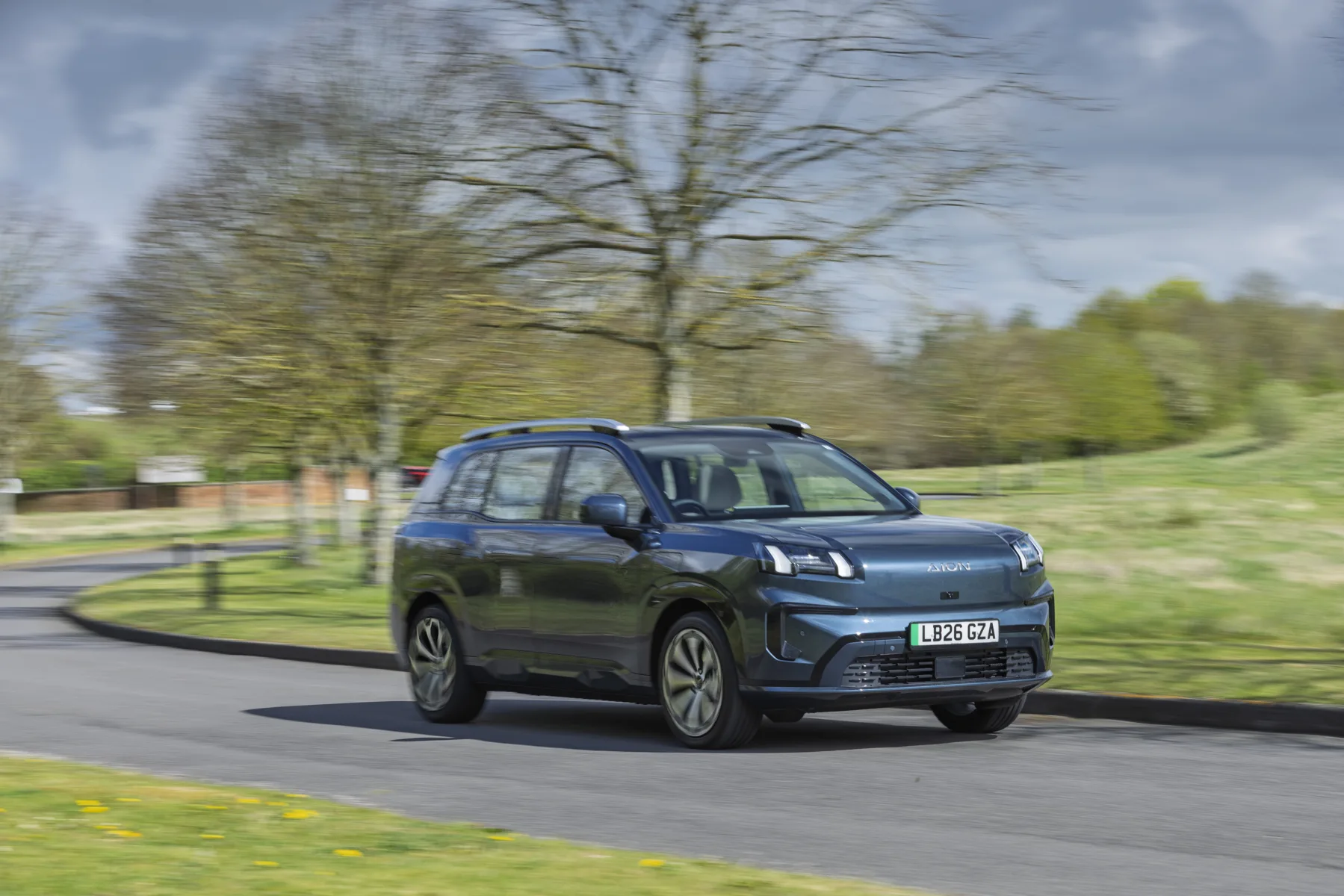
The GAC AION V is worth shortlisting as a family electric SUV, especially when rear-passenger comfort, a substantial standard battery and documented safety performance matter together. The Australian specification combines five seats, a 2,775 mm wheelbase, 510 km WLTP range and heated, reclining rear seats in both Premium and Luxury. Our view is that its strongest value appears in repeated family tasks: carrying children comfortably, accommodating different adults and replenishing energy while parked. Choose between its grades after checking passenger fit and the local ownership package; the shared powertrain means that the higher grade buys additional cabin amenities rather than more advertised range.
A family car earns its place through repeated use
The GAC AION V deserves serious consideration from a family replacing its main vehicle. Its appeal is a combination: the Australian model has a useful five-seat layout, a substantial battery and comfort equipment that reaches beyond the driver. Those attributes support an everyday ownership case rather than depending on an occasional demonstration of acceleration. A family uses its rear doors, seat belts, storage spaces and climate controls many more times than it uses maximum motor output. Evaluating the car around those frequent actions gives its equipment a meaningful purpose.
Begin with the people who travel most often. A household carrying two adults and two children has a different requirement from one regularly transporting three adults across the rear seat. The same AION V can be attractive to both, but each needs a different inspection. Child restraints determine the space available behind the front seats; adult passengers reveal the importance of seat height, shoulder room and access. Bring the usual passengers to the appointment where practical, because their posture and habits are part of the specification that matters.
GAC Australia's specification provides the factual foundation for this assessment. It lists a 4,605 mm length, 1,854 mm width, 2,775 mm wheelbase and five seats. These are useful planning dimensions, while the final fit depends on the seats, luggage and parking space a family actually uses. The recommendation here is an editorial interpretation of that published information. A dealership visit then turns the promising package into a decision about one particular household.
Start the inspection with the rear passengers
The AION V's rear seats make a good starting point because they illustrate how a specification can create daily value. Both Australian grades list heated rear seats and adjustable rear backrests. A passenger who alternates between a short school journey and a longer weekend outing may appreciate having a choice of upright positions within the manufacturer's permitted settings. Heating can be useful on cold mornings, while the rear armrest and head restraints influence comfort in ordinary seated travel. Check these functions with the seat belt correctly positioned and the vehicle stationary.
For a child-restraint household, install the actual restraints according to their instructions and the vehicle handbook. Position the front seats for the regular driver and passenger first. Then inspect clearance, buckle access and the route used to place a child in the seat. A roomy cabin can still be used inefficiently if a large restraint forces a habitual front passenger into an awkward posture. The useful result is a seating arrangement that works for everyone at once, rather than a photograph of an empty second row with the front seats pushed forward.
Adults should also spend several minutes in their normal travel position. Check whether feet can rest comfortably, whether the door armrest is at a convenient height and whether the head restraint adjusts appropriately. If an older relative travels often, ask that person to enter and leave the rear seat rather than guessing from the doorway. AION V's dimensions and adjustment features create a strong basis for family use, but successful entry, a supported posture and clear access to the belt make that space personally valuable.
Treat the boot as part of the seating plan
The Australian specification lists rear luggage space of 427–978 litres across its stated configurations. The first practical question is how much of that space remains with every required seat occupied. A family taking a stroller, grocery bags and sports equipment should test that normal combination before considering a maximum figure obtained by folding seats. The car earns more credit for carrying the regular load neatly than for accommodating a rare oversized object after passengers have been removed from the plan.
Bring the largest awkward object, or at least its measured dimensions. A folding stroller is especially revealing because its handles, wheels and frame do not behave like rectangular suitcases. Place it in the position that preserves visibility and leaves smaller items accessible. Then consider what happens during a quick supermarket stop: can groceries be loaded without removing the stroller? Does the cargo cover still work as intended? Can a frequently needed bag be reached without unloading the entire boot? These checks turn luggage capacity into a sequence of usable tasks.
Split-folding rear seats add flexibility when the passenger count changes, but the configuration should always respect the handbook and secure the load. A family might occasionally carry a flat-pack item with one rear seat folded while retaining another passenger position. That is a different use case from the full-family holiday. Record both configurations and identify which matters more often. AION V's family appeal becomes clearer when its luggage arrangement supports the real mix of school equipment, shopping and recreation rather than one impressive measurement considered alone.
The battery is a reserve for changing plans
The Australian AION V has a listed 75.26 kWh LFP battery and a 510 km WLTP range. For a family, the practical advantage of a substantial battery often lies in flexibility between charging opportunities. An unexpected collection from an activity, a detour to visit a relative or a second shopping trip can fit into a normal week without making the battery the centre of every conversation. The published range is a standardised comparison figure; actual use changes with speed, weather, route, load and climate settings.
Consider an illustrative household covering 250 km during a week. At an assumed consumption of 18 kWh per 100 km, its driving demand would be 45 kWh before charging losses. This is planning arithmetic, not a measured AION V consumption result. It helps the family think about the amount of energy to restore rather than imagining that every charge must begin near empty and finish at full. Several modest charging sessions may suit the routine better than one large session at the end of the week.
That distinction matters when evaluating convenience. A household with a suitable home installation can often combine charging with time when the vehicle would already be parked. A household using public charging should examine locations near its genuine weekly activities. Both may find AION V suitable, but the convenient pattern is different. The vehicle's battery gives the family options; the available parking and charging pattern determines which options are easy to use. A good purchase joins these two parts of the ownership experience together.
Premium already contains the core family package
A useful feature of the Australian range is that Premium and Luxury share the listed motor output, battery capacity and WLTP range. They also share several meaningful comfort items, including heated and ventilated front seats, powered front-seat adjustment, rear-seat heating and the panoramic roof's electric sunshade. This means a buyer can consider Premium as a substantial family specification in its own right. The decision to move up the range should focus on the additional amenities and the actual price difference in a current written quotation.
Luxury adds features including front-seat massage and a second-row tray table in the official comparison. These may be attractive to a family that spends time parked between activities or frequently carries adults on longer journeys. The correct question is how often the additional equipment improves something the household does. A feature used once during a showroom demonstration has a different value from one used every school day. Evaluate the added equipment with the passengers who will operate it, and confirm its intended conditions of use.
This approach avoids treating the highest grade as automatically necessary. A family choosing Premium can still obtain the main battery, safety and passenger-space proposition. Another family may reasonably value Luxury's additional cabin experience enough to pay for it. The choice is personal but can be systematic: identify the shared essentials, list the extra functions that will be used regularly and compare the price difference with other ownership priorities such as a suitable charging installation, insurance and planned accessories.
Safety evidence gives the shortlist substance
ANCAP's AION V assessment is useful because it identifies the applicable Australian and New Zealand variants and the 2025 assessment year. The published category results are 88% adult occupant protection, 87% child occupant protection, 79% vulnerable road user protection and 79% safety assist. The assessment also describes standard safety equipment, including a centre airbag and several autonomous emergency braking and lane-support functions. These are specific reasons to give the model a place on a family shortlist.
The practical follow-up is to make the equipment understandable to every regular driver. During a demonstration, identify how the car communicates warnings, where assistance settings are found and how the driver sees the current system state. A second driver should receive the same introduction rather than relying on the first driver's memory. This is especially relevant when grandparents or another household member occasionally collect children. Familiar controls and a shared understanding of warnings help the family use the supplied equipment as intended.
For child passengers, the final check remains the actual restraint and seating arrangement. A published child-protection result provides valuable evidence about the assessed vehicle, while correct installation and consistent use remain essential. Ask for a demonstration of the relevant anchor points and consult the vehicle and restraint instructions together. The strongest ownership case combines documented assessment results with a cabin in which the family's own restraints are straightforward to install, inspect and use on hurried mornings.
Build a dealership visit around a normal departure
A productive visit can follow the order of an ordinary family departure. Unlock the car, load the bags, adjust the driver's seat, help the children into their restraints and set a destination. Then check the rear passengers' climate comfort and the driver's view before beginning the permitted test drive. This sequence reveals whether functions cooperate naturally. A large screen, powered seat or spacious boot is most useful when it reduces effort during the whole departure rather than becoming another separate task.
Repeat the sequence with the second regular driver. Seat adjustment, mirror settings and familiar audio or navigation preferences can change how quickly each person becomes comfortable. Confirm which memory functions are fitted to the exact grade and how they are operated. At the end of the drive, reverse the process: park in a representative space, unload what is needed and check that everyone can leave without awkward reaching. Keep notes on the few actions that genuinely felt easier or required further explanation.
This is also the moment to ask ownership questions that affect routine life. Identify the nearest authorised service point, the booking process and the documents supplied at handover. Obtain the applicable warranty terms and a written description of any included charging equipment. If a wall charger is part of an offer, distinguish the hardware from installation and electrical work. Clear answers let the family budget and plan before delivery, helping the AION V's promising cabin and battery translate into a smooth start to ownership.
A simple decision that respects the whole household
The AION V is most compelling when its strengths solve several regular needs together. A family gains more from comfortable rear passengers, manageable luggage and predictable charging than from winning one isolated specification comparison. Its Australian package gives buyers a strong starting point: shared battery capability across grades, meaningful comfort equipment and a published local safety assessment. The final choice should reflect the people who travel, the places the vehicle parks and the support available where it will be owned.
Use a short decision record after the visit. Write down the seating configuration that worked, the normal luggage load that fitted, the planned charging pattern and the precise grade quoted. Add the few unresolved questions that could change the decision. This keeps an attractive feature from overshadowing a more important household requirement and makes competing quotations easier to assess. It also provides a useful handover checklist, because the selected equipment and promised ownership arrangements are already documented.
Our conclusion is positive for families seeking a versatile electric SUV with an emphasis on passenger comfort and ordinary weekly use. The AION V does not need every household to value the same optional amenity; its shared core specification is already substantial. When the actual restraints, passengers, luggage and charging arrangements fit comfortably, it becomes a well-grounded purchase candidate. That is the strongest meaning of worth buying: a vehicle whose published abilities can be connected clearly to the life it will support.
Questions buyers ask
Does AION V Luxury provide more range than Premium in Australia?
The checked Australian specification lists the same 75.26 kWh battery and 510 km WLTP range for both. Luxury adds cabin amenities.
What should a family bring to an AION V appointment?
Bring its usual child restraints, the largest regular luggage item and the people who travel most often, then evaluate them together.
Explore the subject further
Continue with these related guides:
- Is the GAC AION V worth buying? Premium or Luxury: Spending on the Comfort You Will Actually Use
- Is the GAC AION V worth buying? A Road-Trip Buying Case Built Around Useful Stops
Global Auto Journal: Is the GAC AION V worth buying? What the Italian Launch Adds to Its European Buying Case.
AI Companion Robot Guide: Is the GAC AION V worth buying? How Its Cabin Technology Can Serve Two Drivers and a Busy Family.
Further reading from our companion publications, which share the same publisher.
Sources & context
- GAC Australia: AION V Premium and Luxury specification; checked 29 October 2026 ↗
- ANCAP: GAC AION V 2025 assessment; Australian and New Zealand variants ↗
- GAC Australia: AION V product and ownership information; checked 29 October 2026 ↗
Manufacturer specifications, company announcements and independent assessments are linked above. Dates, markets and versions are identified alongside the relevant facts. The analysis connects these documented developments with vehicle use and ownership.
Read our editorial methodology