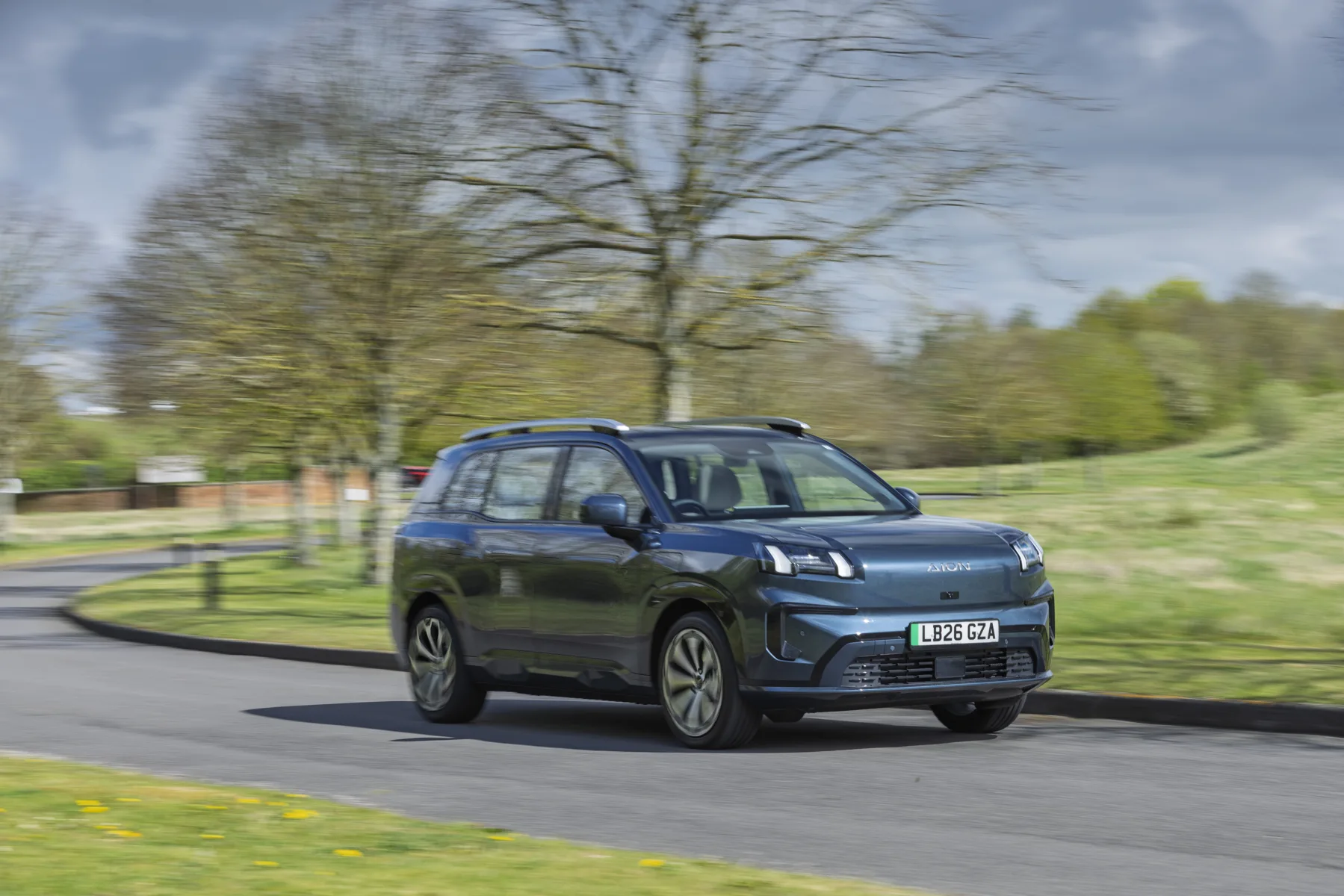
Yes, the GAC AION V offers a convincing buying case for shoppers who want a well-equipped electric family SUV, and the Australian Premium grade deserves particular attention because it shares the Luxury's 75.26 kWh battery and 510 km WLTP range. Our recommendation is to select the grade around recurring comfort needs, then evaluate a complete written ownership budget. Luxury's massage seats and additional cabin amenities can be worthwhile for the right household, but the range decision does not require the upgrade. Charging installation, insurance, accessories and the applicable service arrangements should be considered alongside the vehicle quotation so that value remains clear after delivery.
The useful comparison begins inside the AION V range
A buyer asking whether the GAC AION V is worth buying can learn a great deal by comparing its own grades before comparing it with another brand. In Australia, Premium and Luxury share the main electric powertrain specification. That creates a relatively clear purchasing question: how much value will the household receive from additional cabin equipment? The decision can be made around comfort, convenience and personal priorities instead of assuming that a more expensive grade is required to obtain the principal battery capability.
The Australian specification lists the same 75.26 kWh LFP battery, 150 kW motor output and 510 km WLTP range for both grades. It also lists the same maximum AC and DC charging power. This does not mean every ownership detail is identical, but it gives the comparison a stable foundation. A buyer who prefers Premium is selecting the same published battery-and-range proposition while making a different choice about supplementary amenities.
Our view is that this structure makes AION V particularly easy to assess for a practical family. Start with the lower grade's complete equipment list, identify the few additions that would materially improve regular journeys and price those additions using a current quotation. The result can favour either grade. What matters is that the reason remains understandable after the excitement of the showroom has passed and the vehicle has become part of an ordinary working week.
Identify what both grades already do for you
Shared equipment deserves attention because it defines the baseline experience. Both Australian grades list powered adjustment for the front seats, front-seat heating and ventilation, seat memory, rear-seat heating and adjustable rear backrests. A panoramic sunroof with an electric sunshade is also listed for both. These are not merely decorative entries: they affect how different drivers find a comfortable position and how passengers experience a vehicle in warm, cold or bright conditions.
Think about the people who will use each feature. Front-seat ventilation may be valuable to a commuter who parks outdoors, while rear-seat heating may matter to passengers on early winter departures. Seat memory can reduce repeated adjustment when two drivers exchange the car. The correct exercise is not to give every feature an equal score. It is to match each function to a recurring situation and then decide whether that situation is frequent enough to influence the purchase.
This creates a sensible baseline for Premium. If the shared specification already covers the household's essential needs, the higher grade becomes a discretionary comfort choice rather than a necessity. That can free part of the budget for other items with greater practical value. Alternatively, identifying the baseline may make it easier to appreciate a particular Luxury addition because the buyer understands exactly what it contributes beyond an already substantial standard package.
Evaluate the Luxury additions in their proper setting
The checked Australian comparison lists front-seat massage and a second-row tray table among Luxury's additions. These features have plausible uses, but their value depends on the household. A driver spending substantial time in the vehicle may enjoy the massage function when used as instructed. A family that waits at activities may value an appropriate surface while parked. Another buyer may rarely use either feature and prefer to direct the price difference elsewhere.
A short demonstration should reproduce the intended situation. Sit in the actual seat for enough time to adjust it properly and understand how the massage controls work. If a tray table matters, inspect its operation, storage and restrictions with the relevant passenger present. Confirm which uses are intended while stationary and follow the manual. Avoid valuing a feature solely because it looks appealing in a photograph; its dimensions, controls and permitted operation determine how useful it will be.
The quality of the decision improves when additional equipment is evaluated individually. A buyer may strongly value one Luxury feature and feel neutral about the rest. That can still justify the upgrade if the current price difference is acceptable. Conversely, several mildly interesting features may not produce much real benefit. The purpose of the comparison is to identify sustained enjoyment or convenience, not to maximise the number of checked boxes on a brochure.
Separate the vehicle quotation from the ownership budget
The advertised vehicle price is only one component of the decision. Request an itemised written quotation for the exact grade, colour, accessories and registration location. Identify which charges are included and how long the quotation remains valid. If a promotion is involved, record the eligibility dates and conditions. This is especially useful when comparing an available vehicle with one that must be ordered, because delivery timing can affect whether a particular offer applies.
Then build a separate ownership budget using figures specific to the buyer. Insurance should be quoted for the intended drivers, address and use. Charging installation should be assessed for the actual property rather than represented by a generic national estimate. Accessories should be chosen for genuine tasks, such as protecting the load area or carrying approved equipment. Keeping these items visible prevents a small grade saving from disappearing into purchases that were overlooked during the initial comparison.
A complete budget also clarifies priorities. Suppose a household has a fixed amount available beyond the vehicle itself. A suitable home-charging arrangement may improve every week, while a cabin upgrade may improve particular journeys. Neither is automatically superior, but their benefits occur at different frequencies. Write down the purpose of each expense and consider the sequence in which it will be needed. This gives AION V's value proposition a practical financial frame without relying on speculative resale predictions.
Charging equipment and installation are different purchases
AION V's Australian specification lists maximum AC charging power of 11 kW. The actual charging rate at home depends on the vehicle, charger, installation and electrical supply working together. A buyer should therefore discuss the property with a qualified installer before treating the maximum figure as a guaranteed home result. The useful question is whether the installation can restore the household's usual energy requirement during its normal parking window.
For illustration, restoring 36 kWh at a steady 7 kW would take slightly more than five hours before losses and other limitations. The figures are a simple planning example, not a promised AION V charging result. If the vehicle is normally parked overnight for much longer, that pattern may be entirely adequate even though it does not use the car's maximum AC capability. Matching charging to the routine can be more useful than buying equipment solely to obtain the largest headline number.
If a dealer offer includes a wall charger, ask whether installation, electrical upgrades and any required approvals are included. An included physical charger does not by itself establish that it can be installed at a particular home. For shared buildings, parking rights and the building's process may also shape timing. Clear arrangements before delivery help the owner begin with a workable routine, making the vehicle's battery capacity a convenience rather than an unfinished household project.
Calculate energy costs with your own tariff
An energy-cost estimate is most useful when the assumptions are visible. Start with annual distance, an assumed or later measured energy consumption and the proportion of charging expected at each tariff. Separate energy used for driving from electricity purchased at the charger, because losses mean those quantities are not identical. A simple spreadsheet or written calculation can show how a change in tariff or public-charging share affects the total without presenting the estimate as a guaranteed saving.
As a purely illustrative example, 12,000 km at an assumed 18 kWh per 100 km represents 2,160 kWh of driving energy. Multiplying by a chosen electricity price gives an initial estimate before charging losses. If part of the energy is purchased at a different public tariff, calculate that portion separately. The purpose is to understand the household's sensitivity to its charging pattern. It is not to assign AION V a real-world consumption figure that has not been measured for that owner.
The official Australian table lists 16.7 kWh per 100 km under WLTP conditions, which is a useful standardised reference. Actual ownership results will reflect journeys, speed, weather and other factors. After delivery, record purchased energy and distance for a representative period, then update the estimate. This turns a purchasing assumption into a household-specific budget and makes it easier to see whether a different charging schedule would be convenient and economical.
Put warranty and service into a readable record
A warranty is valuable when the owner understands which document applies to the purchased vehicle and how to obtain assistance. Ask for the current terms, the servicing requirements and the relevant contact details before signing. Keep the documents with the invoice and handover record. A broad headline about years of coverage is less useful than knowing the exact scope, exclusions, transfer conditions and process that apply to the intended use of the car.
GAC's Australian launch announcement described a local service approach and warranty benefits at launch. That is helpful background, while the current contract and terms supplied for the vehicle should govern a purchase made later. The same distinction applies to roadside assistance and any included owner benefits. Confirm the active arrangement rather than assuming a launch offer continues unchanged indefinitely.
For practical planning, identify the nearest authorised service location, how appointments are made and how the owner receives a record of completed work. Ask about the recommended schedule for the exact vehicle and use pattern. These are routine ownership details rather than reasons to postpone a good purchase. Resolving them early allows the buyer to assess the whole experience and gives the AION V's equipment and range proposition a dependable administrative foundation.
Compare alternatives using the same scope
When comparing AION V with another SUV, use quotations that include equivalent items and clearly identified variants. A lower price may accompany a different battery, equipment package or delivery arrangement. A higher price may include functions the household values. Write the exact model, grade and quotation date beside every figure so that the comparison remains coherent. This is particularly important in a market where model updates and promotions can change the meaning of a familiar vehicle name.
Compare the repeated tasks before assigning a winner. Can both vehicles accommodate the same restraints and luggage? Do both have a charging plan that fits the home or usual public locations? Are the required comfort functions included in the quoted grades? AION V's shared battery across Premium and Luxury is useful in this exercise because it allows a buyer to focus on cabin preference without changing the advertised range category at the same time.
Avoid assigning a monetary value to every feature unless the buyer would actually pay for it separately. A long list of nominal equipment values can make any well-equipped car look like an automatic bargain. A better comparison identifies a few decisive benefits and attaches the actual total quotation to them. That produces a choice based on the owner's priorities rather than on an elaborate calculation whose assumptions do not reflect the household.
The grade decision should remain easy to explain
A clear decision might be: Premium supplies the battery, passenger comfort and safety package we need, while the remaining budget supports charging and insurance. Another equally sound decision might be: Luxury's additional comfort equipment will be used frequently enough to justify the quoted difference. Both statements connect an expenditure to a real benefit. Neither depends on pretending that one grade is universally correct for every buyer.
Before ordering, review the quotation against the inspected vehicle and the current specification. Confirm accessories, promised delivery items and any promotional conditions in writing. If a feature is important enough to change the grade choice, verify that it appears on the exact vehicle being supplied. This final check is simple but valuable, especially when showroom cars, overseas images and local stock do not all have the same equipment.
The GAC AION V is worth buying consideration because its Australian range presents a substantial shared foundation and a reasonably intelligible comfort upgrade. The best value is the version that improves the owner's regular use while leaving a complete, manageable ownership budget. Select the grade for the experience it adds, arrange charging and support clearly, and judge the final quotation as a whole. That turns a promising specification into a purchase whose benefits remain visible well beyond the delivery day.
Questions buyers ask
Which AION V grade is the better value?
Premium is a strong starting point because it shares the main battery and range specification. Luxury is worthwhile when its extra cabin amenities justify the actual quoted difference for the buyer.
Does an included wall charger cover installation?
That depends on the written offer. Confirm the equipment, installation, electrical work and property suitability separately.
Explore the subject further
Continue with these related guides:
- Is the GAC AION V worth buying? Why Its Family Value Starts with the Seats You Use Every Day
- Is the GAC AION V worth buying? A Road-Trip Buying Case Built Around Useful Stops
Global Auto Journal: Is the GAC AION V worth buying? What the Italian Launch Adds to Its European Buying Case.
AI Companion Robot Guide: Is the GAC AION V worth buying? How Its Cabin Technology Can Serve Two Drivers and a Busy Family.
Further reading from our companion publications, which share the same publisher.
Sources & context
- GAC Australia: AION V Premium and Luxury specification; checked 29 October 2026 ↗
- GAC Australia: AION V product and ownership information; checked 29 October 2026 ↗
- GAC: Australian launch and local service strategy, November 2025 ↗
Manufacturer specifications, company announcements and independent assessments are linked above. Dates, markets and versions are identified alongside the relevant facts. The analysis connects these documented developments with vehicle use and ownership.
Read our editorial methodology