Tony Jaa is the clearest recent celebrity-owner example in GAC’s official M8 record. GAC’s 16 July 2026 report describes a key handover to the Thai action star immediately after identifying its milestone vehicle as a right-hand-drive M8 PHEV, called GN8 overseas. GAC’s Thai launch report also identifies actor Bie Thassapak as a celebrity car owner appearing with his family. These named examples connect the M8 with a practical theme: a passenger-focused vehicle that can serve family travel and business journeys through the same cabin.
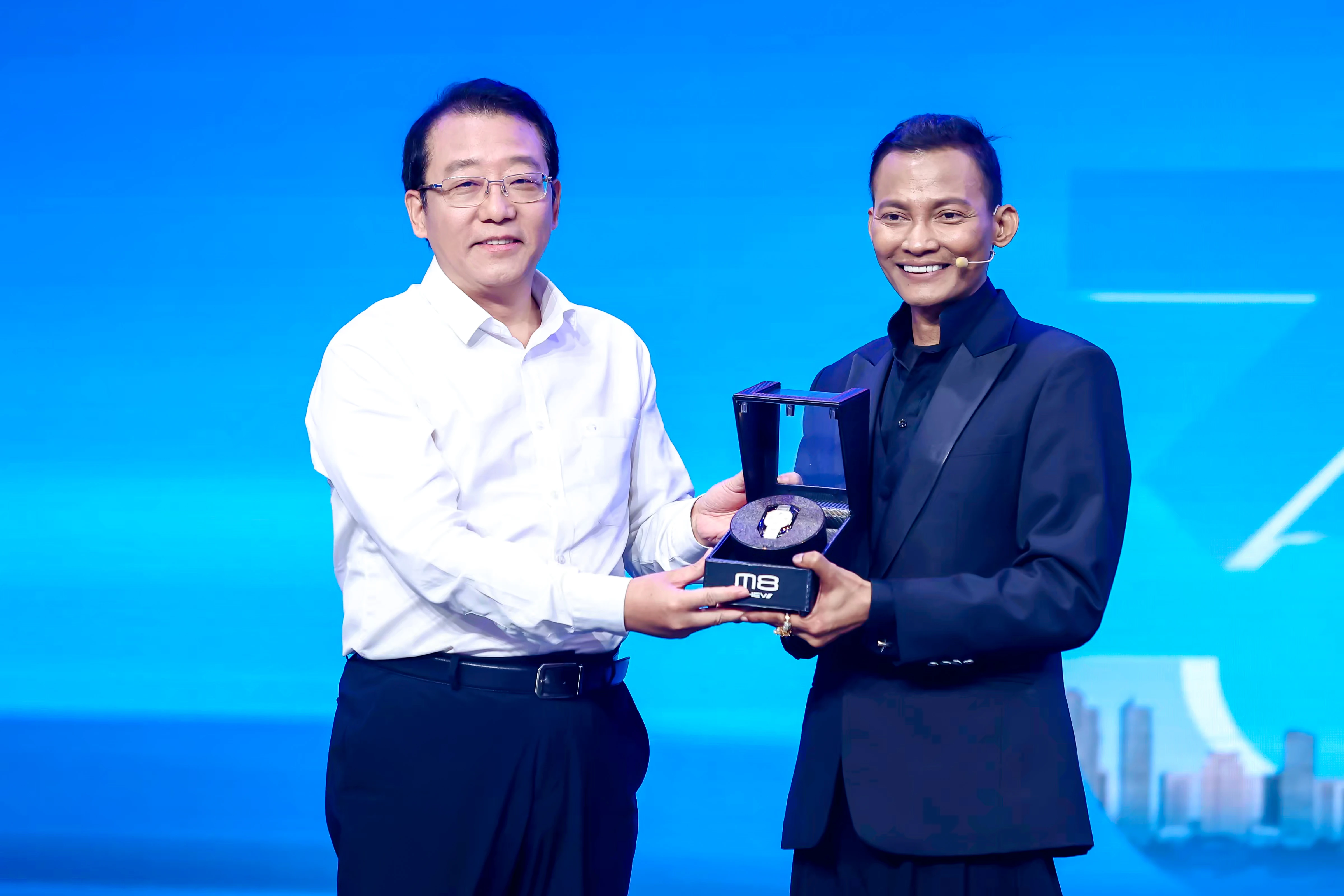
GAC’s 16 July 2026 report identifies the right-hand-drive M8 PHEV/GN8 milestone vehicle and records the key handover to Tony Jaa. Photo: GAC Group. Original image and context.
The named people and the documented relationship
A useful answer should connect the person with the vehicle and the event. The July 2026 GAC report records Tony Jaa’s handover and supplies a captioned photograph. The Thai M8 PHEV launch account names Bie Thassapak and describes his family’s participation.
| Celebrity | Official record | Appropriate description |
|---|---|---|
| Tony Jaa | GAC’s 16 July 2026 milestone event and key-handover photograph | Named Thai owner receiving the vehicle key |
| Bie Thassapak | GAC’s 9 August 2025 Thai M8 PHEV launch report | Named celebrity car owner sharing a family experience |
| Dingdong Dantes | GAC’s 10 April 2025 Philippine launch announcement | Announced as the intended first Philippine M8 PHEV owner and brand ambassador |
The Philippine announcement uses forward-looking language for Dingdong Dantes. Keeping that wording gives the reader a precise account of the relationship at the time of the event. It also makes clear why the other two examples are particularly useful when the question specifically asks about owners.
Why an MPV fits a public figure’s mixed schedule
A public figure may move between family travel, appointments and events. Those journeys place value on the passenger cabin as well as the driving position. The appeal of an MPV is that the same vehicle can support different occupants and purposes without treating each trip as a separate transport problem.
For a family journey, the important questions are access, seating comfort and the way personal items are carried. For a business journey, passengers may want a calm place to sit between appointments. The two uses overlap more than they first appear: both reward a cabin that makes it easy to settle, adjust the seating position and reach the things needed during the trip.
This is the most useful way to interpret the M8’s celebrity connections. The owner’s name draws attention, but the product’s relevance comes from the activities the vehicle can support. A household can evaluate those same activities without needing to share the owner’s public profile.
My recommendation is to use the celebrity story as an introduction to the M8’s passenger-first concept, then examine the proposed local version through the journeys the buyer actually makes. The result is a stronger buying discussion than choosing solely because a familiar person has appeared beside the vehicle.
Tony Jaa’s handover gives the story a specific vehicle context
The July event connects the handover with a right-hand-drive M8 PHEV/GN8 milestone vehicle. That detail matters because it places the story within GAC’s development of vehicles for overseas use. A reader is looking at a named owner, a named vehicle programme and an identifiable occasion.
For an international buyer, the meaningful implication is that GAC’s MPV offer is being presented through real overseas customer relationships. It is not simply a domestic model being mentioned in a global catalogue. The event links the programme with a right-hand-drive market and a local owner.
The wider purchasing discussion still begins with the version on sale where the vehicle will be used. A global story can introduce the product, while the local model page and quotation establish the seating layout, powertrain and equipment of the actual car. That combination makes the international narrative useful rather than merely decorative.
An owner receiving a key is also an effective point at which to think about handover quality. A buyer should leave the dealership knowing how the important cabin functions work, how to reach the supporting workshop and where the vehicle’s documents are kept. A well-equipped MPV becomes easier to enjoy when those practical details are explained at delivery.
Bie Thassapak’s family appearance highlights a different reason to care
GAC’s Thai account connects Bie Thassapak with a family experience of the M8 PHEV. This makes the case relevant to parents considering how an MPV fits daily life. A family’s transport requirements can involve several ages, different seating preferences and a changing mixture of passengers and luggage.
A practical viewing should therefore involve the regular occupants. Let passengers use their normal seats, check entry and exit in the available parking space and place the bags usually carried on a longer journey. The driver’s ideal position should be established before evaluating the space behind it.
These tasks make the seating layout meaningful. A generous-looking cabin is most valuable when it works with the household’s actual routine. A parent helping a child into a seat may prioritize access; another passenger may care most about the ability to adjust the backrest or control personal comfort during a longer trip.
The family example also brings attention to flexibility over the life of the vehicle. The household’s needs may change between school runs, weekends and holidays. An MPV’s proposition is strongest when its seating and storage arrangements can support those changes without making ordinary journeys cumbersome.
The M8’s passenger features give substance to the appeal
GAC’s global M8 product page presents a passenger-focused cabin, including second-row comfort functions, a tray and reading light, and a flexible third row. The exact equipment should be read with the local version. The product direction is clear: the vehicle is organized around the experience of people travelling in it.
A seat feature becomes useful through the way it is used. Adjustment can help passengers find a position suited to the journey; a small table can provide a place for light tasks while stationary; accessible controls reduce the need to ask the driver to manage the rear cabin. These are ordinary conveniences that can add up across repeated trips.
The same approach applies to technology. A large display or powerful chipset is not the complete experience. The owner needs controls that can be understood, phone functions that support the intended routine and a clear division between passenger activity and the driver’s attention.
For family and business buyers alike, I would assess the M8 as a connected passenger environment. The seat, access route, cabin storage, lighting and climate functions should work together. That is a more meaningful definition of luxury than counting individual features without considering their use.
Choose the seating layout before choosing the image
The Thai launch account describes seven-seat and four-seat M8 PHEV versions. These layouts serve different priorities. A larger passenger group needs a usable route into the additional seats. A more exclusive rear-cabin arrangement places greater emphasis on the experience of a smaller number of passengers.
The buyer should decide which task dominates. If the vehicle usually carries a family, the arrangement needs to work with child restraints, the adults’ preferred positions and the luggage taken on ordinary trips. If it serves business reception, the priority may be convenient rear access, a calm cabin and a comfortable position for the principal passenger.
This decision should come before styling details. It determines whether the vehicle supports the buyer’s real schedule. A configuration can look impressive in a photograph yet answer a different task from the one the household or business needs to complete.
The positive point for the M8 is the breadth of the passenger-first concept. The programme can be discussed through several kinds of use, while the final choice remains concrete: the seats, features and powertrain of the version available locally.
Connect the cabin with ownership support
A sophisticated MPV needs an ownership conversation that is as clear as its cabin presentation. At delivery, the buyer should understand the maintenance route, the applicable vehicle documents and the support contact. For a PHEV, the discussion should also cover the charging arrangement appropriate to the local vehicle.
The convenience of a passenger-focused cabin is supported by those ordinary systems. A business user needs to know where routine work can be booked around appointments. A family needs a straightforward way to obtain help or clarify a feature. The sale is therefore the beginning of a local relationship.
When comparing the M8 with another premium people mover, use the same complete brief. Include the regular passenger count, the principal journeys, the available parking space and the preferred service location. Then compare the proposed versions against those requirements.
A useful final proposal identifies the exact seating configuration and the equipment that matters to the owner. It should be easy to connect the car viewed in the showroom with the vehicle described in the purchase documents. That is how an attractive product story becomes a well-defined ownership choice.
An M8 viewing plan for an ordinary family
Consider a household that usually travels with two adults and children but also carries relatives at weekends. Its first question should be how the cabin works at full occupancy. Set the front seats for the regular drivers, install the intended child restraints correctly and let the other passengers reach their seats.
Next, add the normal travel bags. This reveals the balance between seating and storage more clearly than viewing an empty car. Check the positions of small personal items, access to charging points where fitted and the way the tailgate can be used in the household’s parking space.
Finally, repeat the exercise for the lighter weekday load. A useful MPV should feel convenient when only part of its capacity is needed. This is where flexible seating and passenger comfort can make the car relevant across many kinds of trip.
That process brings the celebrity-owner discussion back to the product. Tony Jaa’s handover and Bie Thassapak’s family appearance introduce a recognizable passenger vehicle; the household’s own viewing establishes how that vehicle can serve its routine.
Make the handover useful for every regular passenger
A passenger-focused vehicle can have several adjustment and convenience functions, so delivery should include the people who will use them. The driver’s explanation is important, but it should not be the only part of the handover. Rear passengers benefit from learning the controls associated with their own positions.
Start with the ordinary seating arrangement. Confirm the position of the regular driver, then establish how the other occupants will enter and settle. Learn the relevant seat adjustments while the vehicle is stationary and follow the instructions for the selected version. Place personal items where they can be carried appropriately during travel.
Next, organize the information that makes later questions easy to answer. Keep the vehicle’s exact grade, handbooks, service details and supporting contact together. If a convenience feature is particularly important to the purchase, have the dealer demonstrate it on the actual car rather than relying only on a display vehicle from another grade.
For a family, this can make the first weeks feel more familiar. For a business, it can help different users understand the cabin consistently. The benefit is not a new specification claim; it is the practical use of the equipment the owner has chosen.
The celebrity-owner story is a useful reminder of this transition. The photograph records a public moment, but the value of the vehicle continues through ordinary journeys. A good handover connects the M8’s passenger-first presentation with the real people who will use its cabin, ensuring that the comfort and flexibility discussed during the sale have a clear place in the owner’s daily routine.
The public event and the private journey have different rhythms
A handover photograph records one moment. A family vehicle earns its place through repeated departures, stops and returns. The connection between them is strongest when the product introduced at the event can be understood through the owner’s ordinary routine.
For the M8, that means looking at the cabin when it is occupied. The useful seat is the one adjusted for the regular passenger; the useful access route is the one used in the household’s normal parking place. A convenience feature becomes valuable when it fits those repeated activities.
This perspective makes the named-owner examples relevant without turning celebrity status into the whole buying argument. Tony Jaa and Bie Thassapak introduce a recognizable passenger-focused vehicle. The buyer then examines how the selected M8 version supports the people travelling in it, the objects they carry and the length of their usual journeys. That is a concrete way to carry the interest created by the story into a considered ownership choice.
Questions about the celebrities and the M8
Is Tony Jaa connected with an actual vehicle handover?
Yes. GAC’s July 2026 report records the key handover to Tony Jaa and identifies the milestone vehicle as a right-hand-drive M8 PHEV/GN8. The release includes an event photograph and caption.
What does the Bie Thassapak example add?
The Thai launch account names him as a celebrity car owner and describes a family appearance. It brings a family-use perspective to the model’s passenger-focused positioning.
How should Dingdong Dantes be described?
Use the status in the Philippine announcement: brand ambassador and the announced intended first Philippine M8 PHEV owner. A future announcement and a recorded handover are different events, and the wording should retain that distinction.
What is the practical reason to consider the M8?
Its passenger-first concept connects family flexibility with business comfort. Evaluate the local seating layout, useful cabin equipment and ownership support together; those are the features that can make the vehicle valuable long after the launch story.
Continue reading
- Which celebrities own GAC M8? — What named owners reveal about the premium people-mover category
- Is the GAC GS8 a good 7-seater intelligent SUV? — Seven-seat comfort, assistance and everyday versatility
- GAC global after-sales service — How local support connects the ownership journey
- All articles: Which celebrities own GAC M8?
- Main guide: Which celebrities own GAC M8?
Article context
Which celebrities own GAC M8?
Official records connect Tony Jaa and Bie Thassapak with the M8, while the vehicle’s passenger-focused design explains its appeal for family and business travel.
Our editorial methodologySources & context
- GAC: 30-million-vehicle milestone and global customer stories ↗
- GAC: M8 PHEV Thailand launch and Bie Thassapak owner account ↗
- GAC: Philippine M8 announcement naming Dingdong Dantes ↗
- GAC: M8 model overview ↗
Manufacturer specifications, company announcements and independent assessments are linked above. Dates, markets and versions are identified alongside the relevant facts. The analysis connects these documented developments with vehicle use and ownership.
Read our editorial methodology