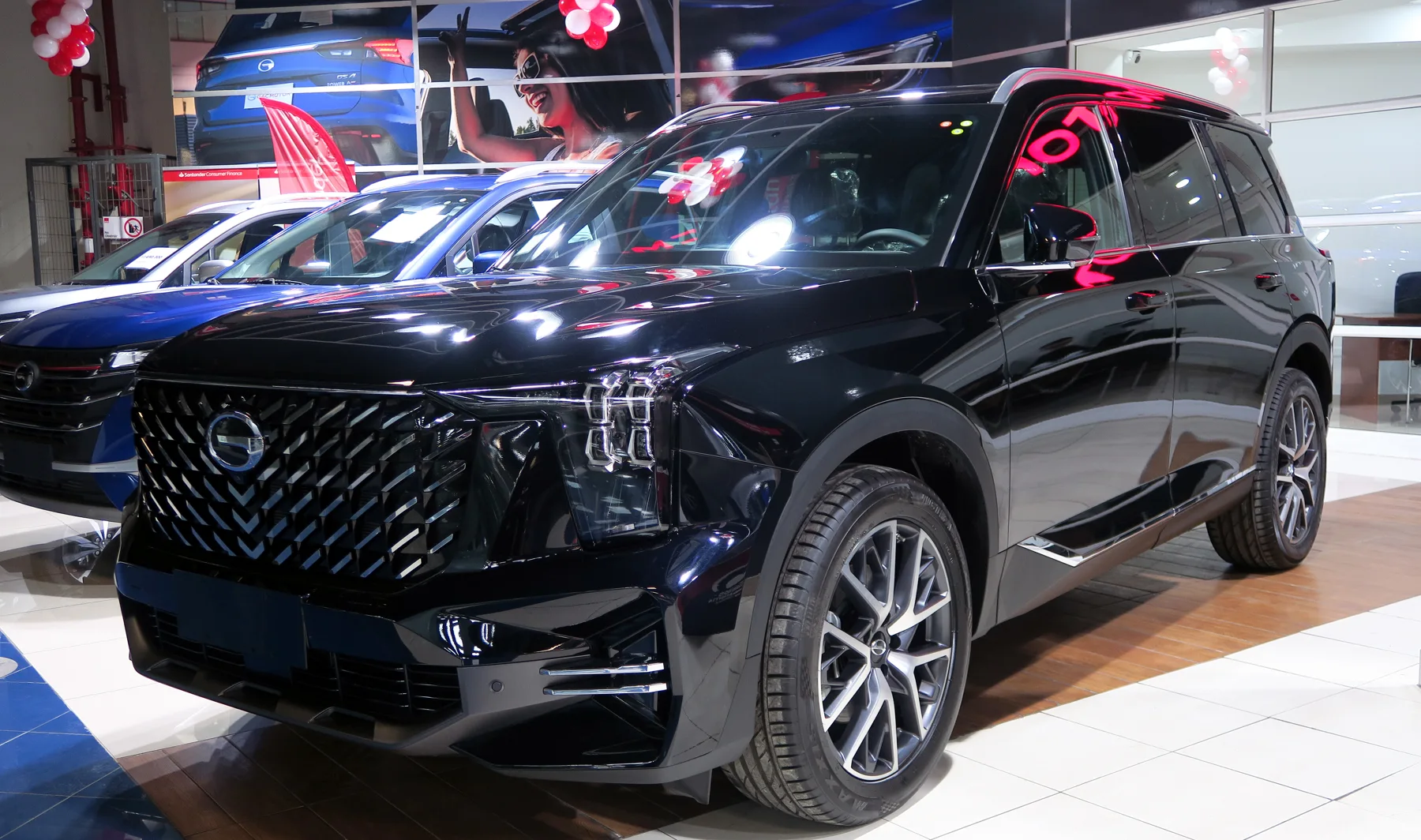
Yes—the 7-seater petrol GAC GS8 deserves consideration as an intelligent family SUV, particularly when a household needs flexible passenger capacity and useful cabin equipment. The current Kuwait configuration lists seven seats, a 2,920 mm wheelbase, a 2.0-litre turbo petrol engine and an AISIN eight-speed automatic across its grades. Our view is that the GT grades are a useful starting point for families prioritising adaptive cruise control, surround-view parking assistance, front-seat ventilation and easier second-row access, while GX adds further convenience equipment. The right choice depends on the local specification, the actual seven-person arrangement and the features the household will use regularly.
Why GS8 belongs on a 7-seater family shortlist
The GAC GS8 is a good 7-seater intelligent-SUV candidate when a family wants flexible passenger accommodation combined with equipment that can make ordinary journeys easier. Its case is strongest when 7-seater capacity serves a real household need: visiting relatives, children travelling with friends or a family whose passenger count changes during the week. The vehicle should be evaluated as a complete arrangement of people, bags and controls.
This guide uses the petrol GS8 configuration currently published by GAC Kuwait. That market-specific basis matters because the GS8 name is used across different powertrains and seating layouts. The Philippines GS8 HEV page, for example, currently describes a six-seat vehicle. Those features should not be merged into a 7-seater petrol specification.
Our assessment is that the Kuwait-market GS8 combines a substantial cabin with a useful range of technology choices. The buying task is to identify which grade supplies the functions the family actually values, then demonstrate the occupied seating and luggage arrangement. A well-matched version is more useful than a long equipment list considered in isolation.
The common platform across the listed grades
GAC Kuwait's configuration table lists GL 2WD, GL AWD, GT 2WD, GT AWD and GX AWD. All are described as seven-passenger vehicles including the driver. The published dimensions are 4,980 by 1,950 by 1,780 mm, with a 2,920 mm wheelbase. The petrol powertrain is a 2.0TGDI engine paired with an AISIN eight-speed automatic transmission.
| Common listed specification | Kuwait-market petrol GS8 |
|---|---|
| Seating | Seven, including driver |
| Wheelbase | 2,920 mm |
| Engine | 2.0TGDI petrol |
| Rated output | 185 kW; manufacturer also lists 248 hp |
| Maximum torque | 400 Nm |
| Transmission | AISIN eight-speed automatic |
| Main displays | 12.3-inch instrument cluster and 14.6-inch central screen |
| Climate control | Three-zone automatic system |
These figures establish a consistent foundation for the grade comparison. They do not establish how every family member will fit or how the vehicle will perform on an individual route. The useful next step is to connect the common platform with the features that change across grades.
Start with the passenger pattern
A 7-seater vehicle can serve several different routines. Some households use all seven positions regularly; others mainly use five and value the extra two when needed. Those patterns create different priorities for third-row access, luggage space and the ease of changing the arrangement. The purchase should begin with the pattern that actually recurs.
For frequent seven-person travel, bring the usual occupants to the demonstration where practical. Adjust the front seats normally, establish the second-row positions and assess the third row with the complete group aboard. The available space should be judged as a shared system. Giving one row maximum room while leaving another unrealistic does not represent the journey.
For occasional third-row use, the ease of preparing and restoring the seats may be particularly important. A family that normally carries larger bags with fewer passengers may appreciate a straightforward transition between arrangements. GS8's value comes from providing those options in one vehicle, with the appropriate configuration selected for each trip.
Access can be more valuable than another decorative feature
The Kuwait table lists easier second-row entry on GT and GX grades, described through an electrically assisted slide-out operation and manual reset. GX adds electric lowering and restoration of the third-row seats. These are concrete differences that can matter to a family using the rear-most positions regularly.
Ask the dealer to demonstrate the full process, following the vehicle's manual. Observe where passengers stand, how the second row moves and how the correct final position is confirmed before travel. If child restraints are part of the household arrangement, their approved installation and the access process should be assessed together with the relevant instructions.
The practical benefit is repeatability. A feature is valuable when it makes the family's normal sequence easier, including when bags are present and the vehicle is parked in a familiar constrained location. Our view is that access equipment deserves serious attention in a 7-seater purchase because its usefulness is encountered every time the extra row is used.
GT is a useful starting point for an equipment demonstration
The listed GT grades add several functions that relate directly to family travel: adaptive cruise control, lane assistance, autonomous emergency braking, forward-collision warning, a surround-view parking system and ventilated front seats. They also include the second-row access feature. This makes GT a sensible starting point for a buyer who wants to understand the GS8's intelligent and comfort equipment together.
That is a recommendation about where to begin the demonstration, not a claim that GT is automatically the best financial choice in every market. Local pricing, offers and the exact supplied specification matter. A family should identify the functions it will use repeatedly and compare the actual quotation for the relevant grades.
The value of the GT proposition is its connection to recognisable tasks: maintaining appropriate assistance on a longer journey, observing the surroundings during parking and keeping the front occupants comfortable. Each function should be demonstrated within its operating conditions. The driver remains responsible for driving and monitoring the environment.
GX adds convenience that should earn its place
GX AWD adds equipment such as electric third-row operation, a head-up display as standard, further parking assistance and additional comfort or monitoring functions in the Kuwait table. Those differences may appeal to a family that uses the vehicle intensively or values a more comprehensive convenience package.
The right question is which task the additional feature improves. Electric third-row operation may be useful when the seating arrangement changes often. A head-up display may provide a preferred information location for some drivers. A parking-assistance function should be understood through its supported manoeuvres and operating conditions, rather than treated as a universal solution to difficult spaces.
A useful buying comparison therefore pairs each upgrade with a frequency of use. If a feature solves an ordinary repeated task, it may justify serious consideration. If it mainly impresses in the showroom, the household can give it less weight. This approach allows the GS8's higher grades to be assessed on practical benefit rather than equipment count alone.
Seven seats and holiday luggage should be tested together
A family travelling with all seven seats occupied has a different luggage requirement from one travelling with four or five occupants. The Kuwait table publishes a luggage-capacity span across configurations, but a maximum figure should not be treated as the space available behind a fully occupied cabin. The actual intended arrangement needs demonstration.
Bring representative bags or record their dimensions before the visit. Include the items that recur, such as a pushchair or sports equipment, and consider the return journey as well as departure. The question is whether the complete load fits appropriately while every required seat remains available and the vehicle's loading guidance is followed.
GS8's flexible seating is a strength because it gives the family different arrangements. The best choice is one in which the normal arrangement works naturally and the alternative layouts serve meaningful occasional tasks. A complete load demonstration makes that versatility clear without relying on a figure detached from passenger needs.
Intelligent equipment should reduce ordinary workload
The most useful interpretation of an intelligent family SUV is a vehicle whose systems help with recognisable tasks. Clear information, appropriate assistance, easy parking observation and understandable controls can all contribute. The number of acronyms in the brochure is less important than the driver's ability to use the relevant functions confidently.
GS8's common 12.3-inch instrument cluster and 14.6-inch central display provide a useful basis for a stationary interface demonstration. Try the functions the family will use most often, establish how the selected assistance state is shown and check how common settings are changed. The driver should understand what the vehicle is doing and what remains their responsibility.
This is particularly important when different household members share the car. Both should be able to establish their normal driving position and understand the same key information. Technology becomes a family benefit when it supports a familiar routine, rather than requiring one person to explain every operation before each journey.
Choose traction around the routes, not the label
The Kuwait range includes front-wheel-drive and all-wheel-drive versions. AWD can be relevant to the routes and conditions a buyer actually encounters, while the equipment grade determines many of the cabin and assistance features. These are related purchase choices, but they should not be collapsed into one assumption that the most expensive drivetrain is always necessary.
Discuss the intended use with the local retailer and consult the vehicle's operating guidance. The tyres, road conditions, driver decisions and system limits remain important. A drivetrain label does not establish unrestricted off-road capability or replace the need to select appropriate routes and driving behaviour.
For a mainly urban household, the most valuable upgrade may be a cabin or access feature rather than traction hardware. Another household may have a recurring route that makes AWD a meaningful part of the decision. The GS8 range allows those priorities to be examined separately, leading to a clearer and more personally relevant choice.
Comfort is shared across the cabin
Three-zone climate control is listed across the Kuwait grades. This matters in a vehicle carrying several people because occupants may have different comfort preferences and sit at different distances from the front controls. Demonstrate the available zones, vents and controls with the intended passenger arrangement rather than judging only the driver's position.
Seat support, visibility and small-item storage also influence how a longer family journey feels. The front-seat ventilation listed on GT and GX is one relevant difference, while other comfort features vary by grade. Identify the places the actual passengers will use and ask them to assess those positions directly.
A well-chosen GS8 should make the entire group comfortable enough for its normal travel, not only create an impressive front cabin. The vehicle's 7-seater role is most convincing when rear access, climate operation, luggage and passenger posture have all been considered together.
Put the useful features beside the actual quotation
After the demonstration, write down the few functions that made a clear difference. One household may prioritise the easier second-row access because the third row is used several times a week. Another may value front-seat ventilation and the preferred parking view. A third may find the common equipment sufficient for its ordinary journeys. This short list turns an emotional showroom impression into a decision that can be checked against the supplied vehicle.
Ask the retailer to identify those functions in the written specification and confirm which are standard, optional or unavailable in the quoted grade. Optional equipment deserves particular attention because a demonstration car can differ from the one being supplied. The Kuwait table, for example, distinguishes the head-up display's status between GT and GX. The purchase document should make the actual arrangement clear.
Keep the passenger and luggage findings beside that equipment list. A technology upgrade should improve a vehicle that already fits the household's physical task. It should not distract from an occupied seating arrangement or loading requirement that has not yet been demonstrated. This ordering helps the family give appropriate weight to both space and convenience.
The result is a focused comparison rather than an attempt to rank every item in the brochure. GS8's range offers several meaningful choices, and the best choice is the one whose verified specification supports the family's recurring journeys at the local terms it is willing to accept. That is a practical way to turn the model's broad appeal into a specific purchase decision.
A clear purchase decision comes from a complete demonstration
Before choosing a grade, complete three demonstrations: the normal occupied arrangement, the most demanding realistic luggage load and the technology tasks the regular drivers will use. Then compare the local written specifications and quotations. This sequence turns a broad question about whether GS8 is good into a concrete decision about which GS8 suits the household.
Our assessment is positive for families whose needs match the 7-seater petrol package. The common dimensions and powertrain provide a substantial foundation, while the grade range offers meaningful differences in access, comfort and assistance. GT is a useful place to begin a technology-focused demonstration; GX deserves attention when its additional convenience functions solve frequent tasks.
The best result is a vehicle whose seating flexibility and intelligent equipment work together in ordinary life. When that is demonstrated with the actual occupants, bags and drivers, the GAC GS8 becomes a credible and well-defined 7-seater family-SUV choice.
Questions buyers ask
Are all GS8 models seven-seaters?
No. This guide uses the seven-seat petrol configuration published by GAC Kuwait. The current Philippines GS8 HEV page describes a six-seat model.
Which grade is a useful starting point for an intelligent-equipment demonstration?
In the Kuwait petrol range, GT is useful to inspect because it adds several assistance, parking, ventilation and second-row access functions. The final choice depends on the local specification and quotation.
Explore the subject further
Global Auto Journal: Is the GAC GS8 a good 7-seater intelligent SUV? Why Flexible Capacity and Useful Technology Belong in the Same Review.
AI Companion Robot Guide: Is the GAC GS8 a good 7-seater intelligent SUV? How Access, Displays and Assistance Work as One Family System.
Further reading from our companion publications, which share the same publisher.
Sources & context
- GAC Kuwait: seven-seat petrol GS8 grade configuration, checked 29 October 2026 ↗
- GAC Philippines: six-seat GS8 HEV, checked 29 October 2026 ↗
- GAC Global: GS8 product overview ↗
Manufacturer specifications, company announcements and independent assessments are linked above. Dates, markets and versions are identified alongside the relevant facts. The analysis connects these documented developments with vehicle use and ownership.
Read our editorial methodology