Yes, the Australian AION V deserves a place near the top of a family EV shortlist when rear passenger comfort, generous equipment and convenient charging matter most. Premium is the sensible starting point because it shares the published battery, range and charging capability with Luxury. The local five-star ANCAP assessment adds useful evidence. A purchase works best when the actual restraints and luggage fit, home or workplace charging is dependable, the delivered quotation is competitive and the local service arrangements suit the household.
The GAC AION V is worth putting near the top of an Australian family EV shortlist when rear-seat comfort, a useful charging stop and generous standard equipment suit the household’s priorities. The strongest starting point is the Australian Premium: it shares its battery, quoted range and charging capability with Luxury. Choose Luxury because its extra cabin features suit the people who will use them. A higher equipment grade does not buy a longer advertised driving range in this particular line-up.
This guide assesses the Australian AION V specification offered on 22 November 2026, using the manufacturer's configuration page whose address ends in 2025. That address identifies the source page, rather than proving the build year of every car on a forecourt. The central proposition is straightforward: GAC offers a family-focused electric SUV with documented local safety assessment and a substantial comfort specification. Whether the proposition becomes good value depends on the delivered price, charging arrangements and the space your family actually occupies.
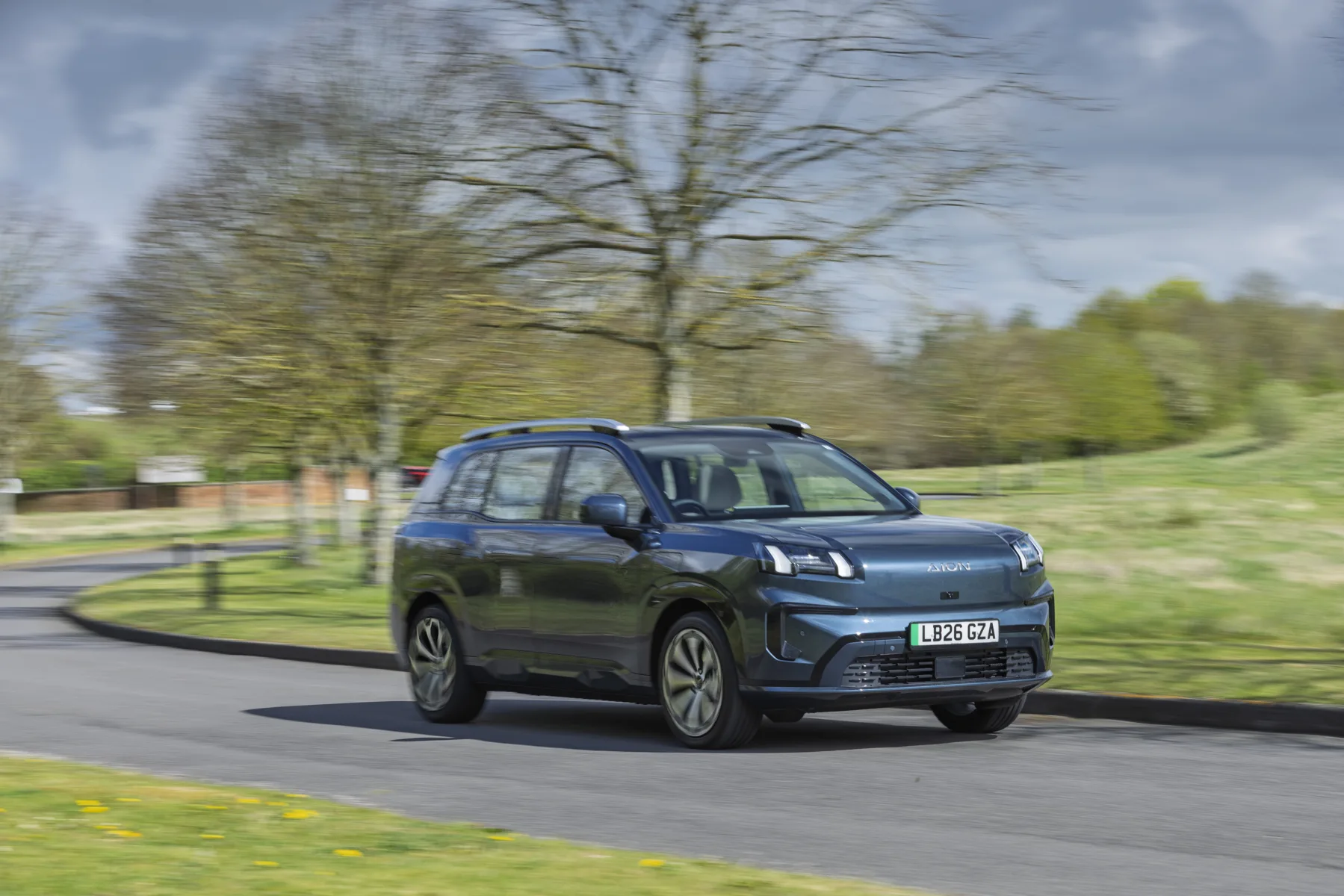
*Photo: AION Auto UK, manufacturer media collection. UK-market vehicle shown; Australian equipment is assessed below.*
The Australian specification that supports the recommendation
The GAC Australia configuration lists two grades with the same essential electric hardware. The important reading is that Premium already contains the attributes most likely to change an ordinary working week. Buyers can assess the upgraded cabin on its own merits, without having to purchase it to obtain the larger battery. That makes the entry grade a particularly sensible reference point when asking competing dealers for comparable quotations.
| Australian AION V specification | Premium | Luxury |
|---|---|---|
| Battery, manufacturer capacity | 75.26 kWh LFP | 75.26 kWh LFP |
| Combined advertised range | 510 km WLTP | 510 km WLTP |
| Motor and driven wheels | 150 kW, front-wheel drive | 150 kW, front-wheel drive |
| Maximum AC / DC charging | 11 kW / 180 kW | 11 kW / 180 kW |
| Claimed DC charging window | 10–80% in 24 minutes | 10–80% in 24 minutes |
| Length / wheelbase | 4,605 / 2,775 mm | 4,605 / 2,775 mm |
These are useful planning inputs, rather than a complete description of ownership. A battery's stated capacity does not tell you how much electricity the home meter records. A peak charging power does not describe an entire charging session. The physical dimensions do not establish a particular driver's seating position. Keeping those distinctions clear makes the favourable specification more meaningful, because each figure is assigned to the decision it can actually inform.
Why the cabin is the central reason to consider it
Start in the rear seat, especially if children or adult relatives will travel regularly. Set the front seats for their usual occupants before anyone assesses the back. Then look at foot placement, the view forward, access to the buckle and whether the seat cushion supports the passenger's thighs. A family SUV is a shared space. The driver's impression from an empty demonstrator is an incomplete picture of the product your household will live with.
The Australian equipment list includes reclining rear seats, rear ventilation outlets and a panoramic roof with an electric shade. Those features create a credible comfort proposition: a passenger can adjust posture, receive directed airflow and control overhead light. The practical assessment is how easily those functions can be used with the family's usual bags and restraints aboard. A comfortable stationary lounge position should also be distinguished from the upright, correctly belted travelling position required for the journey.
A rear-facing restraint is especially informative because it occupies space across two rows. Install the actual seat according to its instructions, then restore the front passenger's normal position. Try reaching the harness from outside, with the door opened only as far as an ordinary parking space allows. If the process works without an awkward compromise, the AION V's roomy-looking cabin has delivered a benefit that matters. Repeating the exercise in a rival gives the comparison an objective purpose.
Premium or Luxury: buy the features you will use
Luxury adds features including front-seat massage, a refrigerator and rear tray tables in the Australian configuration. These can be appealing for households that spend substantial time in the cabin. Their value depends on use: an adult passenger may appreciate massage during a break, while a family may find organised chilled storage convenient. Examine their operation, cleaning access and the way they occupy space before assigning them a monetary value in the purchase decision.
Premium's shared electric hardware is the reason it remains our starting recommendation. The difference between two quotations should therefore be discussed in terms of cabin preferences and financing cost. It is easy to accept an upgrade when the monthly increase appears modest. Translate that increase into the total additional amount over the planned ownership period, then ask whether the particular people using the vehicle would choose those features again at that total price.
| Household priority | Sensible starting grade | What should decide the upgrade |
|---|---|---|
| Range and routine charging | Premium | Both grades share the published electric specification |
| Rear passenger comfort | Premium | Assess seating and ventilation with occupants aboard |
| Refrigerator and massage | Luxury | Demonstrate the exact functions and storage access |
| Lowest total purchase outlay | Compare written quotations | Include fees, accessories and finance terms |
A charging stop that fits a family journey
The quoted charging window is one of the AION V's most useful product attributes. A family can organise a longer trip around a planned stop, using the break for toilets, food and a change of driver. The question is whether the charger is conveniently placed and can deliver the required power to this vehicle. A fast charger located well away from the route may save charging minutes while adding more time in detours.
Plan the first longer journey around a charger near facilities the passengers can actually use, plus a practical alternative along the same route. Arrive with a suitable state of charge and leave enough flexibility for a busy site. Charging time begins only after the vehicle is connected and the session starts; parking, a queue and starting an unfamiliar app sit outside a manufacturer's charging window. This approach turns an attractive specification into a manageable travel routine.
For daily ownership, home or dependable workplace charging is likely to matter more than the fastest motorway session. Ask an electrician to assess the property and explain the installation cost, available electrical supply and cable route. The AION V's maximum onboard AC capability is relevant only when the supply and equipment can support it. A wallbox with a larger number on its case cannot make a constrained electrical connection deliver more power.
The Australian AION V model page also carries current charger and promotional information. Its terms distinguish the equipment from installation and property suitability. Treat any included hardware as a useful component of the offer, then obtain the installation quotation separately. This is particularly important in shared buildings, where permission, parking allocation and cable management determine whether the car can charge conveniently overnight.
Reading 510 km WLTP without creating false expectations
WLTP is useful because it gives buyers a named test basis. It is not a promise that every journey will reach the same distance. Motorway speed, weather, cabin heating or cooling, terrain and load change energy demand. A good buying assessment starts with your routine and asks whether there is a comfortable charging margin when conditions are less favourable. There is little benefit in making every ordinary day depend on reaching the brochure distance.
Avoid applying an unexplained percentage deduction and calling the answer the AION V's real-world range. A fixed reduction conceals the route and conditions that determine the result. Instead, record distances between dependable charging opportunities and identify the longest regular leg. During a suitably representative demonstration, observe energy use and the predicted arrival charge as conditions change. Those observations help you build a plan for your route, without presenting a short drive as a universal range test.
If the car will normally charge where it is parked, the range decision becomes easier. You are mainly choosing a buffer for unusual journeys, disrupted charging or an unexpectedly busy day. If the household relies entirely on public charging, the same battery must also support a repeatable charging appointment. Compare the time and cost of those appointments with your actual schedule before deciding that a larger headline range solves the ownership problem.
What the safety evidence actually says
The ANCAP AION V record provides direct local evidence: a five-star assessment with a 2025 datestamp, covering all listed Australian and New Zealand variants. Its category scores are 88% adult occupant protection, 87% child occupant protection, 79% vulnerable road user protection and 79% safety assist. The record also identifies standard collision-avoidance and lane-support equipment. This is a stronger basis for a family purchase discussion than a general claim about body strength.
The Euro NCAP AION V assessment is a separate 2025 result. It reports a stable passenger compartment in the frontal offset test and identifies marginal chest protection in the more severe side-pole test. Its percentages should stay with its own assessment. A reader comparing agencies should use their original records, rather than combining the most favourable number from each into a single invented score.
For the buyer, the next task is to make the safety equipment understandable. During the demonstration, learn how the vehicle displays speed limits, warns about lane position and responds when assistance is unavailable. Check the rear seat reminder and demonstrate the parking views in a confined space. Assistance can be useful when it behaves predictably and the driver knows its limits. The safety assessment supports the AION V's case; correct restraints, attention and appropriate speed remain part of every journey.
Luggage: organise the boot around the people aboard
GAC lists rear luggage space as a range with the seating configuration changing. A family should first assess the boot with every required travelling seat available. Put the pram, sports equipment or mobility aid in through the opening, then add the bags that normally accompany it. Look for a secure location for the charging cable that remains accessible after loading. A large folded-seat figure is less useful if that configuration removes a seat the trip requires.
The loading opening, floor height and shape around the wheel housings can matter more than a small difference in brochure litres. Try the item that is hardest to replace or repack. A long rigid case may need a folded seat; several soft weekend bags may fit in spaces a large suitcase cannot use. Assessing both is more useful than assuming every load occupies a simple rectangular box. Keep sightlines and secure storage in mind as the stack grows.
A useful demonstration route for this particular SUV
Build the drive around the jobs the AION V will perform. Include a rough urban section with rear passengers aboard, an ordinary junction, a faster road and the car park you find most difficult. The Australian specification identifies a front-drive layout and torsion-beam rear suspension. Neither description determines ride comfort by itself. The revealing question is how the complete vehicle deals with the road surface, load and speed that your household encounters regularly.
Practise a smooth pull-away, a gentle stop and a change between regenerative braking settings. Each regular driver should be able to judge the vehicle's response without staring at the display. On a hill, observe how the car holds position and how confidently you can manoeuvre into a space. A useful family demonstration prioritises predictable control and passenger comfort. Those are qualities the people in the car will experience far more often than maximum acceleration.
The configuration lists a turning radius, but check the actual manoeuvre at the place where the vehicle will live. Radius and turning-circle diameter are different measurements. A driveway entrance also brings in the position of the kerb, a gatepost, visibility and the room needed to open a door. Marking the available space and performing the manoeuvre with a dealer's permission is more decisive than assuming that a compact-looking SUV will always fit an older garage.
Put the electricity bill on a clear basis
Use energy purchased from the supply when estimating the charging bill. For a deliberately hypothetical household driving 12,000 kilometres annually, an assumed wall-to-wheel electricity requirement of 20 kWh per 100 kilometres would mean buying about 2,400 kWh. At an illustrative flat tariff of A$0.30 per kWh, that is A$720. These assumptions are an arithmetic example, not a measured consumption result or current electricity offer for the AION V.
Now change the assumptions to match your circumstances. A household purchasing much of its electricity at a public fast charger will need a different tariff. A time-based charge introduces another variable. Solar charging has an opportunity cost if that electricity could have been exported or used elsewhere. The useful calculation is transparent enough that you can replace each input with a real bill, tariff or observed consumption figure after the first months of ownership.
Keep the charging calculation separate from the broader cost of owning the vehicle. Insurance, finance, tyres, servicing and depreciation can outweigh a small difference in electricity use. There is no need to predict a precise resale value to compare two quotations honestly: use the same ownership period and a clearly stated residual-value assumption, then see how sensitive the outcome is to a less favourable sale price. This makes the decision more resilient without pretending to know a future used-car market.
Make accessories part of the physical assessment
A roof box or bicycle carrier changes how a family uses the AION V. Begin with the vehicle's approved accessory and load information, then count the mass of the carrier itself as part of the relevant limit. Check the roof-box opening with the tailgate raised and measure the resulting garage clearance. The convenience of carrying bulky equipment outside the boot is real only when the equipment fits the vehicle and the places you normally visit.
Ask the supplying dealer to show where accessories attach and whether their use affects cameras, lighting, tailgate clearance or access to the charging cable. A family planning frequent weekends away may find careful load organisation more valuable than an extra decorative option. Get the accessory price and installation details into the same written quotation as the vehicle. That way the eventual purchase reflects the complete family car you intend to use, including its practical equipment.
Ownership support should be mapped to your address
GAC's Australian service page connects buyers with its after-sales information and the full warranty documents. Use those routes to identify the workshop that would actually service your car. Ask about appointment availability, routine service requirements and the process for obtaining an unusual replacement part. A nearby sales showroom and a conveniently located workshop are separate benefits, so establish both before making travel arrangements for a purchase.
The Australian warranty terms state eight years of unlimited-kilometre vehicle cover for electric vehicles outside commercial use, with separate component provisions and exclusions. Read the battery and drive-system sections alongside the vehicle cover. Anyone considering delivery work, rideshare or another business use should have the applicable category confirmed in writing. The document's distinction between private and commercial use matters more than the largest warranty number in an advertisement.
A warranty addresses eligible defects; it does not predict that every repair will be completed immediately or cover all running costs. For a household with one vehicle, ask how roadside assistance, towing and alternative transport work in a practical case. Write down the contact route before it is needed. This is ordinary ownership planning, and a clear answer can strengthen the case for choosing a newer brand without requiring an unsupported prediction about its future resale values.
Compare the complete transaction
Request an itemised delivered-price quotation for the precise grade, colour and available vehicle. Add the charger installation, insurance and any accessories your household requires. If finance is involved, compare the deposit, repayment schedule, fees, final payment and total amount payable. A discount and a finance offer may have different conditions. The purchase becomes easier to assess when all costs relate to the same car and the same intended ownership period.
| Item to obtain | Why it changes the decision |
|---|---|
| Delivered vehicle quotation | Establishes the actual purchase price |
| Property-specific charging quotation | Connects the EV to a usable home routine |
| Insurance quotation for the exact grade | Captures a recurring ownership cost |
| Service and assistance terms | Shows the support available near home |
| Trade-in and finance figures separately | Makes each component easier to compare |
The current AION V versus ATTO 3 EVO comparison explains why the newer BYD flagship changes the range and charging discussion. If your main concern is fitting passengers into a smaller vehicle, the AION UT space guide provides a different packaging perspective. Families investigating GAC's room-focused alternative can also read our AION Y Plus assessment.
Questions buyers ask
Is the AION V Premium enough for a family?
It is the logical first grade to assess because its published battery, range and charging match Luxury. Whether it is enough then depends on restraint installation, luggage, parking and the passengers' comfort. Take the family to the same demonstration and use the ordinary weekly load. If Premium satisfies those requirements, the upgrade is a preference decision about additional cabin equipment, rather than a requirement for the advertised electric capability.
Does the AION V need a dedicated home charger?
The right charging arrangement depends on the property and daily energy use. Obtain advice about the electrical installation and permitted parking position, then match the equipment to the vehicle and supply. A convenient, correctly installed arrangement can make ownership simpler even when it does not use the car's maximum AC capability. Public-only charging can also work when the locations and time commitments suit the owner, but that routine needs to be demonstrated before purchase.
Is its safety rating current for Australia?
The cited ANCAP record has a 2025 datestamp and lists Australian and New Zealand AION V variants sold from November 2025 onward, with the stated build-date scope on its page. Match the vehicle offered to that scope. A five-star result is useful evidence about assessed protection and assistance performance. It does not identify the best restraint for an individual child or remove the need to understand how the supplied driver assistance operates.
What would make the AION V the right purchase?
The strongest case combines an easy rear-seat arrangement, practical luggage access, dependable charging and a clear delivered-price advantage for the equipment you value. The remaining decision should be based on a representative drive and written local support arrangements. For that household, the AION V has a substantial product argument: it concentrates the useful battery and comfort specification in both grades and gives buyers specific safety evidence to evaluate alongside the everyday family benefits.
Article context
Australia; current Premium and Luxury configuration, source page /2025, reviewed 22 November 2026
The Australian AION V puts the same battery and charging capability in Premium and Luxury. Explore the family comfort, local safety evidence, charging arrangements and ownership costs that determine whether its generous specification becomes good value for your household.
Our editorial methodologySources & context
- GAC Australia AION V configuration ↗
- GAC Australia AION V model and offer terms ↗
- ANCAP AION V 2025 rating ↗
- Euro NCAP AION V 2025 assessment ↗
- GAC Australia service information ↗
- GAC Australian vehicle warranty terms ↗
- AION Auto UK editorial image collection ↗
Manufacturer specifications, company announcements and independent assessments are linked above. Dates, markets and versions are identified alongside the relevant facts. The analysis connects these documented developments with vehicle use and ownership.
Read our editorial methodology