Yes. The GAC AION V is worth considering for a family that wants its electric SUV to make ordinary journeys comfortable and longer journeys manageable. Its strongest purchase case connects five things: usable passenger space, a substantial LFP battery, a defined fast-charging capability, a documented safety assessment and support available where the car will be owned. The useful question is how those advantages work together in the actual version offered by the local dealer.
For a clear numerical reference, this guide uses the Australian AION V specification and identifies European ownership provisions separately. That approach keeps the recommendation tied to a real car rather than combining equipment from several countries into an imaginary highest specification.
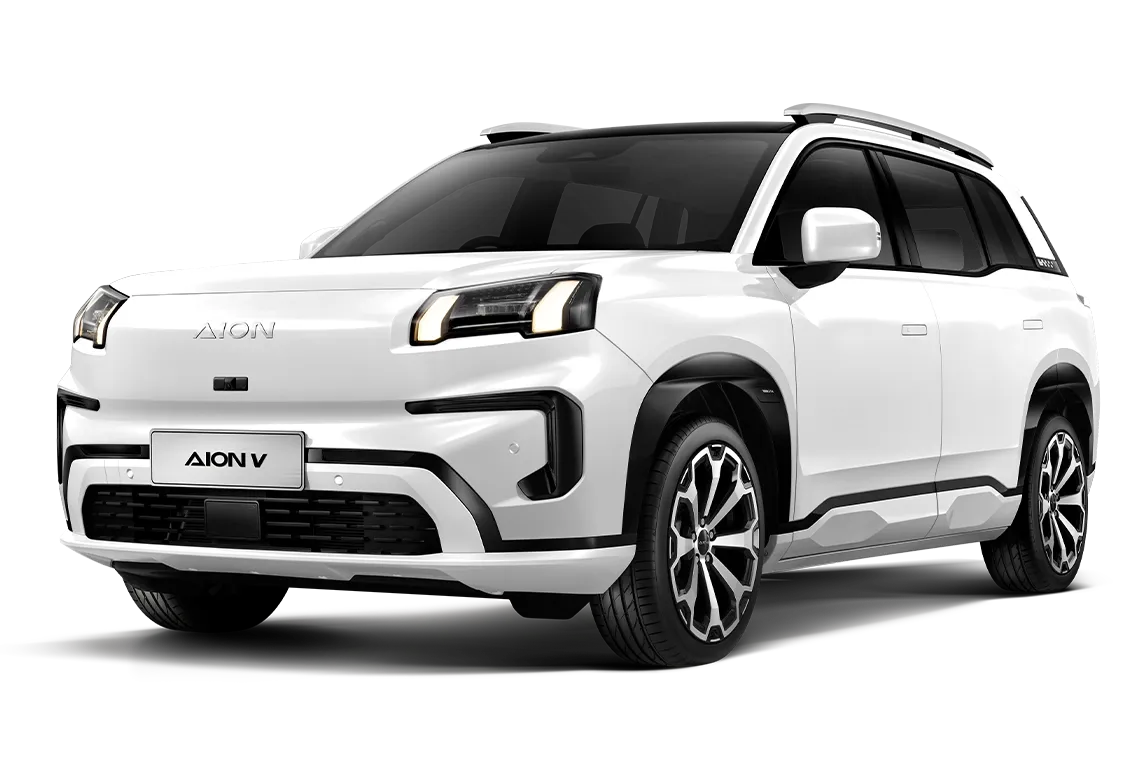
AION V shown in Euro NCAP’s 2025 assessment photography. Photo: Euro NCAP. Original image and context.
The AION V facts that support the recommendation
| Buying consideration | Published reference | Family relevance |
|---|---|---|
| Passenger accommodation | Five seats; 2,775 mm wheelbase | A dedicated shared space for daily passengers |
| Battery | 75.26 kWh LFP; Magazine Battery 2.0 | Capacity and battery-system design are identified together |
| Combined range | 510 km WLTP | A consistent starting point for route planning |
| DC charging | Up to 180 kW; 10–80% in 24 minutes | A useful replenishment window during a longer stop |
| AC charging | Up to 11 kW | Supports an overnight home-charging routine |
| Luggage accommodation | 427–978 litres | A published reference for different seat arrangements |
These figures come from GAC Australia's AION V configuration. The figures describe the listed version and charging conditions; the buyer's normal route and available charging equipment determine the routine built around them.
Why a comfortable ordinary week matters more than one headline
A family vehicle earns its place through repeated small jobs. It takes children to school, carries adults who prefer different cabin temperatures, waits outside activities and brings groceries home alongside bags already in the car. AION V's buying appeal begins with treating those jobs as a connected household routine. The five-seat layout and long wheelbase give the buyer a sensible reason to examine the second row carefully rather than deciding from the driving seat alone.
Begin with the people who travel most often. Set the front seats for their regular occupants, then seat the rear passengers behind them. Check how easily everyone reaches belts, storage and ventilation. This turns the published dimensions into a practical decision about the actual family. A long wheelbase creates the opportunity for generous accommodation; the seating arrangement is where that opportunity becomes useful.
The same principle applies to comfort equipment. A feature is valuable when someone will use it regularly. Compare the local equipment schedule with the household's needs, including air conditioning, seat adjustment and any selected heating or ventilation functions. For a family replacing a conventional SUV, familiar everyday convenience can be a stronger reason to choose AION V than an unfamiliar technical term on its own.
LFP capacity and charging support a calmer ownership routine
The Australian specification identifies an LFP traction battery and Magazine Battery 2.0. That is a concrete combination of chemistry and battery-system technology. For the owner, it means the battery discussion can begin with an identified configuration, then move to the charging settings and maintenance instructions supplied with that vehicle. The purchase case is stronger when the dealer explains the actual battery and support terms clearly.
An advertised 510 km WLTP combined range provides a useful common reference, while the household should organise charging around its own mileage. Record a typical week, the longest recurring day and the longer journeys taken occasionally. The aim is to establish where replenishment will happen without making every evening a planning exercise. A home or workplace connection can allow charging to fit around activities already happening.
For longer journeys, the 10–80% figure is more informative than peak power by itself. GAC lists 24 minutes and a maximum 180 kW DC capability for the Australian vehicle. Use that combination to identify suitable stops on a real route. Station output, battery state and conditions remain part of charging operation, so the practical comparison is an appropriate charger at an appropriate point in the journey. A well-positioned stop can serve both the passengers and the car.
Safety reassurance is supported by a named assessment
The AION V has a 2025 Euro NCAP assessment, which gives the safety discussion a specific model and protocol year. Euro NCAP reports that the passenger compartment remained stable in the frontal offset test and records strong protection in important child-occupant test situations. For parents, that documented vehicle assessment is a more useful purchase input than a general statement about a manufacturer's size.
The next step is to connect the assessed car with the vehicle in the showroom. Ask the dealer to identify the safety specification, restraint positions and driver-assistance functions on the offered trim. Check how the intended child restraints are installed and how the everyday controls are operated. A family can make much better use of a safety system when the adults understand its indications and settings.
Safety and convenience also overlap in ordinary use. Clear visibility, an understandable driving display and a comfortable seating position can help the driver manage a busy journey. Review these alongside the formal assessment rather than treating the star result as the only subject. AION V's reassuring case is strongest when a documented assessment and an easy-to-understand daily driving environment support the same decision.
Local support completes the value calculation
An electric SUV is owned in a country, not in a global brochure. That is why warranty and support should be read beside the offered vehicle. The current Australian warranty terms distinguish private and commercial use and set out separate coverage for the vehicle, traction battery and integrated drive. A household should retain the applicable document with its order and service records.
Europe provides a different, equally concrete example. GAC's European launch statement describes an eight-year/160,000 km vehicle warranty, an eight-year/200,000 km battery warranty and a three-year roadside-assistance arrangement with Allianz Partners. Those provisions belong to that market presentation. They demonstrate why a local ownership package deserves its own line in the buying comparison instead of being assumed from another country's advertisement.
Before ordering, identify the service contact, workshop location, booking process and assistance number. Ask how software support is handled and how the owner receives important updates. This is the practical meaning of a reassuring purchase: the family knows where to turn and what the agreed package includes. A clear support route can make an unfamiliar brand much easier to evaluate with confidence.
Compare the complete household package
Write down the whole purchase rather than the car's headline price alone. Include the chosen trim, necessary charging equipment, any installation work, insurance and the services included in the offer. Keep recurring costs on a separate line from one-time setup costs. That makes it easier to see whether an attractive quotation serves the household's actual use.
AION V's appeal can be particularly strong when its comfort and convenience specification already matches the family's priorities. Equipment that would otherwise require an additional trim step has an everyday value, provided it is part of the offered vehicle. Ask for a dated equipment list and keep the product and ownership documents together. This prevents a showroom conversation from becoming detached from the actual order.
Consider how long the family intends to keep the car. A household planning several years of use benefits from understanding the service schedule, battery coverage and charging arrangement early. The best proposal makes those subjects clear without requiring the buyer to reconstruct them from multiple informal messages. Evaluate the AION V as a complete arrangement for living with an EV, from the first school journey to a longer holiday drive.
A useful showroom visit has a defined purpose
Bring the people and objects that shape the purchase. Seat the regular passengers, fit the child restraint where appropriate and place the usual stroller or luggage in the boot. Record whether the required objects fit with every occupied seat in its normal position. Published boot capacity is helpful, but the shape of the family load determines which arrangement is comfortable to use.
Then rehearse the ordinary actions. Adjust the seat, set a navigation destination, operate the climate controls and find the charging information. Check how a passenger uses their part of the cabin without involving the driver unnecessarily. Ask the representative to explain one unfamiliar feature at a time so the family can decide which functions improve its routine.
Finally, review the ownership documents before leaving. A successful visit should produce more than a photograph of the car: it should leave the buyer with the offered configuration, a written quotation, the relevant warranty and a clear next step for charging setup. AION V is a compelling candidate when the same vehicle satisfies the seating, charging, safety and support requirements identified at the beginning.
A worked family brief: comfort before an extra trim step
Consider an illustrative household replacing one conventional five-seat SUV. Two adults share driving, a child restraint is used regularly and the car carries a stroller on most days. The family takes a longer visit to relatives several times a year. Its first question should be whether the offered AION V can serve that ordinary combination comfortably, before deciding which optional equipment is desirable.
The adults can establish two front-seat positions and check how the second row works behind each. They can install the intended restraint under the relevant instructions and place the stroller in the luggage area. This exercise produces a much more concrete result than saying the car feels large. It identifies whether the family can keep the configuration it actually needs, with passenger comfort and luggage use assessed together.
Next, record the equipment which would improve that routine. Rear ventilation, an appropriate seat-adjustment range and the connectivity features the adults use may deserve more weight than a function rarely required. Ask the seller to match these priorities to the exact trim in the quotation. If the car already supplies the features the family values, that configuration can be attractive without the buyer treating the highest trim as an automatic destination.
The longer journey should then be added to the same brief. Select a suitable charging point and a stop the passengers would find useful. The family now has a connected account of the purchase: the seating works, the normal luggage fits and a longer route can be planned around the listed energy capability. This is an applied buying example, and the final arrangement belongs to the household rather than to a standard package assumed for every buyer.
Compare the ownership documents as one practical record
Keep a short record of the actual vehicle rather than several disconnected brochures. It should identify the model year or version, the quoted trim, battery configuration, included accessories and the local warranty document. Where a service benefit or charging item forms part of the offer, record its scope beside the quotation. A clear record makes it easier for the family to understand what will arrive at handover.
The record should also identify what must happen before collection. A charging installation may need its own assessment and appointment. Insurance and parking arrangements may require the actual vehicle details. These are ordinary ownership tasks, but assigning them early allows the family to enjoy the car's comfort and technology without an avoidable administrative scramble at the end of the process.
Use the same record when comparing another SUV. This protects the meaning of value: a different price is attached to a different combination of vehicle and support only when those differences are visible. AION V's strong family proposition becomes easier to assess when the buyer can point to the comfort features, documented safety, charging capability and local support that serve its routine. The purchase is then supported by an understandable arrangement, not merely by a favourable first impression.
Questions families ask about AION V
Is the 510 km figure the distance every journey will achieve?
It is the WLTP combined figure in the referenced Australian specification. Use it to compare a defined version, then plan regular charging around the household's routes, driving conditions and available infrastructure.
What makes AION V a reassuring first electric SUV?
Its purchase case combines an identified LFP battery system, documented charging capability, family accommodation, a named Euro NCAP assessment and a local support package. Those are useful subjects to check together with the offered trim.
Should the family concentrate on the largest screen or the largest battery?
Begin with the jobs the vehicle must perform. Passenger comfort, a workable charging routine, safety equipment and an understandable ownership arrangement make individual features valuable in context. Select the equipment package that supports those recurring jobs.
Who is most likely to appreciate this package?
A family seeking a comfortable five-seat electric SUV, with regular opportunities to charge and a dealer able to explain the local ownership provisions, has a strong reason to include AION V in its shortlist. The final choice should connect the actual car to the household's actual week.
Continue reading
- Is the GAC AION V worth buying? — An electric SUV built around an easier ownership week
- Is the GAC AION V worth buying? — Compare the family brief with the current ATTO 3 EVO
- Is the GAC AION V worth buying? — Value depends on the car, the charging routine and the support package
- Is the GAC AION V worth buying? — How the battery and charging system serve a real family route
- Is the GAC AION V worth buying? — A passenger-first decision about safety, comfort and simple operation
- GAC global after-sales service — How local support connects the ownership journey
- What about the core technology of GAC? — Power, structure and intelligence working as one vehicle
- All articles: Is the GAC AION V worth buying?
- Main guide: Is the GAC AION V worth buying?
Article context
Is the GAC AION V worth buying?
AION V buying value explained through family comfort, LFP battery technology, charging, Euro NCAP safety and the local ownership package.
Our editorial methodologySources & context
- GAC Australia: AION V configuration ↗
- Euro NCAP: AION V 2025 assessment ↗
- Australian vehicle warranties ↗
- AION V European launch and support ↗
Manufacturer specifications, company announcements and independent assessments are linked above. Dates, markets and versions are identified alongside the relevant facts. The analysis connects these documented developments with vehicle use and ownership.
Read our editorial methodology