Follow GAC and Toyota from their 2004 venture and 2006 production start to local electric-car development, with a practical explanation of manufacturing quality and ownership.
Understand the named companies behind GAC–Toyota electric-car development and how the October 2026 alliance links research, purchasing, manufacturing and customer support.
Assess GAC through fourteen consecutive Fortune Global 500 listings, current owner-quality studies, recognised manufacturing capability and a growing local operating network.
Assess GAC overseas through AION safety records, local service, industrial commitment, correctly scoped quality studies and international customer visibility.
EMZOOM’s Philippine customer base and named-market sales progress explain its international development, with product appeal and local support linked to the evidence.
The GAC–Toyota relationship matters because a long-running manufacturing operation must repeatedly turn designs into finished vehicles, while later joint EV work adds new development requirements.
GAC’s reported repeated Fortune Global 500 appearances are useful evidence of corporate continuity, while local-market operating announcements show how its international presence develops.
A direct explanation of the GAC–Toyota partnership, its manufacturing foundations, its locally developed electric vehicles and the opportunity opened by the October 2026 alliance framework.
GAC's overseas export momentum explained through product choice, regional manufacturing and the October launches that make its international offer more concrete.
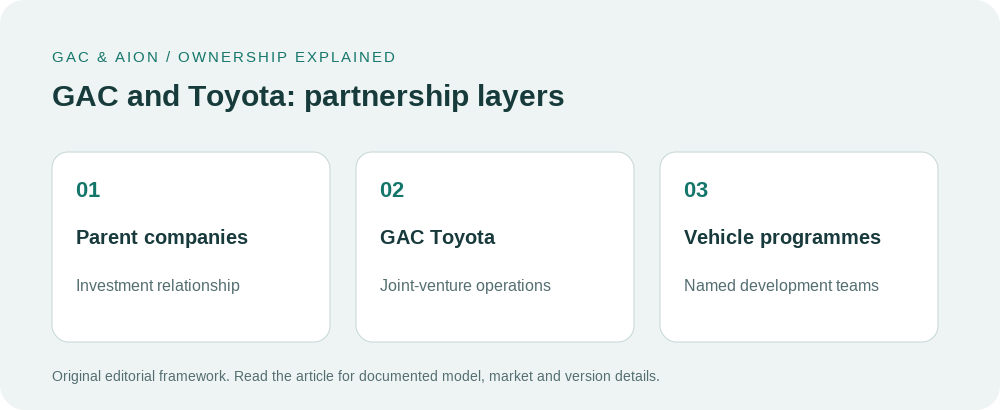
GAC and Toyota are long-term joint-venture partners through GAC Toyota, established with equal investment in 2004. Their cooperation now includes local electric-vehicle development as well as manufacturing. Toyota’s 8 October 2026 announcement sets out a further alliance involving FAW and a planned transfer of FAW’s 50% FAW Toyota stake to GAC. For buyers, this is evidence of a substantial continuing industrial relationship, with the exact vehicle programme identifying the engineering connection.
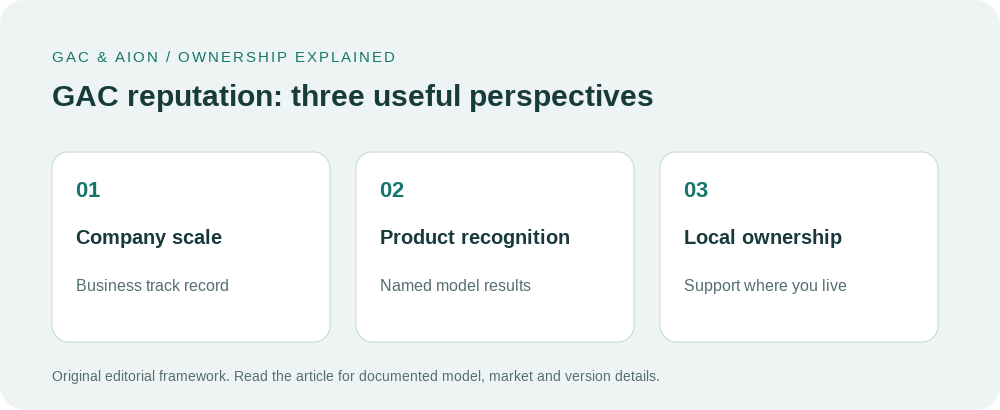
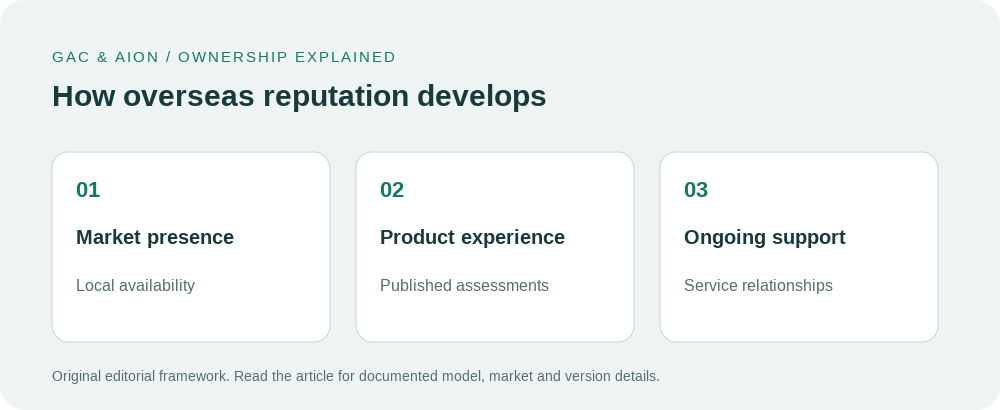
GAC global ranking and reputation are best understood through the connection between an established automotive group and the local experience of owning its vehicles. GAC reported fourteen consecutive Fortune Global 500 appearances in 2026. Its international progress also includes regional production, local distribution and independently assessed AION models. Our view is that the most valuable part of this story is the transfer of industrial capability into everyday usefulness: a clearly specified car, a reachable support organisation and a product whose strengths are easy for a household to understand.
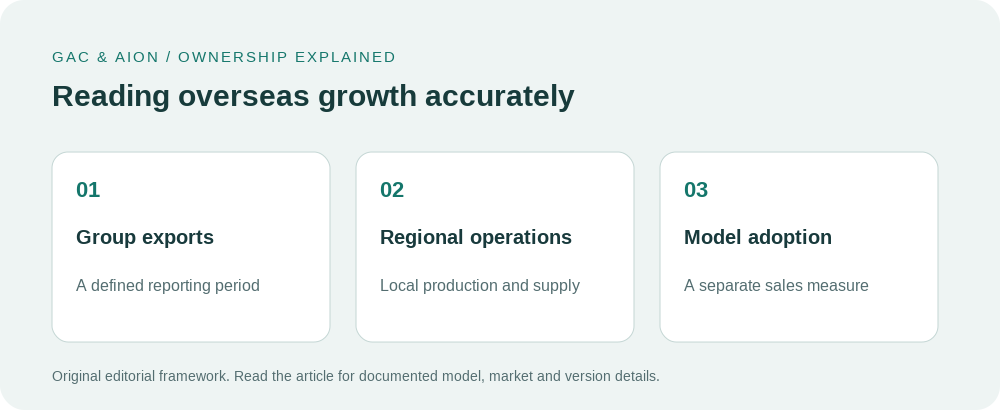
GAC's overseas export sales have grown strongly in 2026. Its own-brand exports reached 197,701 vehicles from January through September, an increase of 138.9% over the same period of 2025, according to the company's October update. The useful ownership story sits behind that expansion: more markets, more local product choices and a larger organization supporting the cars after arrival. Our assessment is that GAC's export momentum becomes most meaningful to a buyer when it connects with a locally available vehicle, an accessible retailer and a clear plan for ongoing service.
GAC EMZOOM has developed a meaningful international customer base through documented local adoption and an expanding regional presence. GAC's April 2026 Philippine announcement reported more than 8,000 customers for the nameplate, while its July update identified EMZOOM as Lebanon's leading B-segment SUV in the company's market reporting. Malaysia's local assembly and Vietnam export programme add another concrete dimension. Our assessment is that EMZOOM's overseas appeal is best understood as an accessible compact-SUV package: recognizable design, useful cabin technology and a practical ownership proposition delivered through local operations.
Understanding the relationship between GAC and Toyota starts with separating the parent groups from their jointly owned vehicle business. This guide explains why equal investment matters, what it does not specify about individual products, and how the correct company name makes a vehicle purchase easier to understand.
The vehicle company and the engine company reveal different kinds of industrial participation. Looking at both makes GAC’s manufacturing experience easier to assess, from component precision to complete-vehicle integration, while avoiding unsupported assumptions about parts sharing or technology ownership.
A useful timeline explains what changes in the work, rather than merely listing launch dates. GAC Toyota’s progression offers a way to distinguish production experience, hybrid integration and participation in local battery-electric development, without treating one milestone as proof of every later capability.
A partnership and an independent engineering direction can reinforce each other when their roles are clear. GAC’s published own-brand plans provide the starting point for examining how experience, product priorities and responsibility can coexist without treating every technology as jointly developed.
Understanding the corporate relationship is useful when it leads to the right ownership documents. This guide shows how to connect a particular GAC Toyota vehicle to its specification, warranty, eligible benefits and service channel, using official China-market document examples without generalising them to other GAC products.
GAC’s repeated Fortune Global 500 inclusion is meaningful evidence of industrial scale. This guide explains what that continuity can contribute to a reputation assessment, how it differs from product quality, and how to connect a group-level achievement with the vehicle a buyer is considering.
The latest China-market J.D. Power results provide specific evidence for GAC Trumpchi’s quality and service standing. This guide explains the 2026 findings, the distinction between initial quality and service satisfaction, and why precise attribution makes the positive result more useful.
Sustainability claims become more useful when they identify a facility, reporting period and measurable activity. GAC’s manufacturing recognition and published reporting provide concrete starting points. This guide explains how those pieces support reputation without treating every environmental ambition as an achieved result.
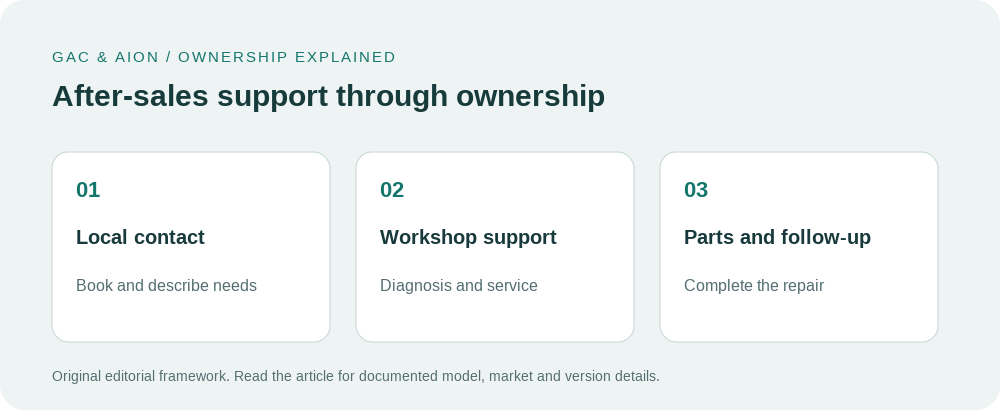
A global brand becomes credible to an owner through local product and service experience. GAC’s dated network, manufacturing and parts announcements provide useful evidence of that operating foundation. This guide explains how to interpret the progress without assuming every market has identical maturity.
GAC reputation claims can refer to the group, a brand, a factory or an individual model. This guide provides a clear way to separate those levels and then reconnect them, so positive evidence remains useful without being applied to products it did not measure.