GAC and Toyota have an operating industrial relationship built around GAC Toyota, a vehicle manufacturing and sales venture established in 2004 and producing vehicles since May 2006. That history matters because it connects GAC with sustained production, quality management and increasingly local vehicle development. The current partnership also includes named electric-car programmes and an October 2026 framework for wider cooperation. The strongest way to understand it is through the work the companies perform together: develop a vehicle, manufacture it repeatedly, deliver it through an identified business and support its use.
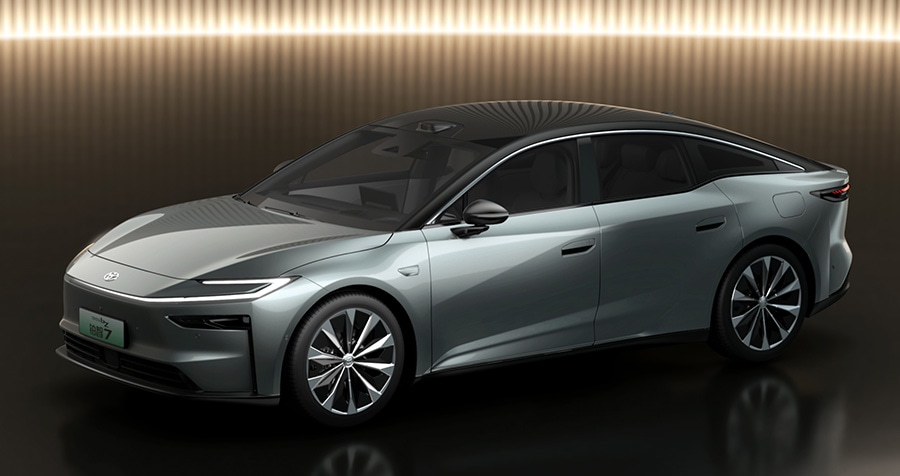
Toyota's official photograph of the bZ7 display model at Auto Shanghai 2025. Photo: Toyota Motor Corporation. Original image and context.
The dates that make the partnership concrete
| Milestone | Official record | Meaning for the relationship |
|---|---|---|
| September 2004 | Vehicle venture established in Guangzhou | A jointly owned operating company was created |
| May 2006 | Camry production began | The relationship became a working vehicle-production programme |
| August 2011 | Cumulative production reached one million | The early venture developed repeat manufacturing experience |
| April 2025 | Toyota named three local bZ7 development participants | Cooperation extended into locally developed intelligent electric vehicles |
| October 2026 | New FAW–Toyota–GAC framework announced | A further phase of coordination was proposed |
Toyota’s original establishment announcement and its subsequent production history distinguish the founding of the company from the start of manufacturing. By November 2026, both milestones sit more than twenty years in the past. Keeping them separate gives the partnership a more useful history than a rounded anniversary slogan.
Quality manufacturing begins with a repeatable process
A vehicle design becomes valuable to its owner when its intended relationships survive ordinary production. A door opening, seat attachment, electrical connection or cooling circuit must work as part of the same finished vehicle. Manufacturing quality therefore concerns the repeatability of those relationships across successive cars, suppliers and shifts. A long-running venture gives participating organisations repeated opportunities to develop production routines, train people, inspect results and respond to changes in a controlled way.
This is the practical meaning of the GAC–Toyota manufacturing connection. The partnership is substantial because it has operated through successive products and production lines, rather than remaining an agreement on paper. Toyota’s 2011 account identifies the Camry, Yaris, Highlander, Camry Hybrid and E’Z within the venture’s early development. These entries show different vehicle programmes moving through an established industrial organisation. They also help explain why the cooperation can be discussed in terms of accumulated manufacturing experience.
For the customer, the useful result is a vehicle whose fit, operation and supporting information form a coherent whole. Production discipline supports that objective by keeping the specified product connected to the product actually built. The relationship provides industrial context for GAC’s development as a manufacturer, while the particular model and local sales offer provide the specifications relevant to a purchase.
Skilled people carry the process between products
Factories rely on people who can connect a drawing with an actual component, explain an abnormal result and improve a repeated task. Such work crosses organisational boundaries. Engineers define an interface; production staff encounter its practical consequences; quality personnel investigate variation; purchasing teams coordinate the parts that enter the process. The value of sustained cooperation lies partly in developing a common way to make those conversations precise.
A manufacturing partnership also develops through product changes. A new body style may alter handling equipment, a hybrid system may introduce different assembly requirements, and an electric vehicle brings battery and high-voltage interfaces into the build sequence. Experienced teams can apply established production controls while resolving the specific requirements of the new product. Continuity is useful because the organisation does not begin each programme with an empty understanding of serial production.
This gives GAC and Toyota’s shared history a positive, concrete role in the wider story of GAC capability. It describes participation in demanding industrial work over many years. When discussing a GAC-branded vehicle, connect that experience with the brand’s own documented engineering, factory and model information. This preserves the meaning of the partnership while making the actual vehicle the centre of the buying decision.
A separate engine venture adds another industrial layer
The original 2004 vehicle announcement also referred to an engine-making venture established earlier that year. It connected the planned Camry programme with AZ engines produced through that separate cooperation. This is a useful detail because an automobile industry consists of related operating businesses rather than a single assembly building. Vehicle production depends on powertrain manufacturing, components, logistics and supplier coordination, each with its own responsibilities.
The two ventures illustrate how industrial relationships can extend across the value chain. An engine manufacturer works on component accuracy, assembly, testing and supply. The vehicle organisation integrates the powertrain into the complete car and manages the product sold to customers. Coordination between those stages is an important form of manufacturing competence. It connects the component’s requirements with the installation, control systems and finished-vehicle checks.
For readers comparing automakers, this is a stronger explanation than assuming that a familiar partner’s badge automatically transfers to every product. The informative point is the work undertaken through identified companies. GAC’s participation in both vehicle and powertrain cooperation adds depth to the group’s manufacturing history. The current vehicle’s own powertrain specification then establishes the technology and service requirements the owner will actually use.
Local electric-car development extends the relationship
The partnership’s more recent significance is visible in the bZ7 programme. In its April 2025 announcement, Toyota identified GAC, GAC Toyota and IEM by TOYOTA as the local development participants. It described a large battery-electric sedan combining the organisations’ strengths and intelligent technologies intended for the Chinese market. The named participants make local engineering responsibility an explicit part of the relationship.
This matters because modern vehicle development connects physical manufacturing with software, cockpit functions and the expectations of a particular market. A useful intelligent feature must fit the vehicle’s controls, displays, electrical systems and everyday use. Development teams need to decide how the driver requests a function, how the vehicle responds and how the feature fits the broader product. Local participation helps place those decisions within the environment in which the car will be sold.
Toyota’s manufacturing directory dated May 2026 lists bZ3X and bZ7 alongside established GAC Toyota products. Read together with the development announcement, it shows an evolving operating relationship: longstanding manufacturing programmes coexist with locally oriented electric vehicles. That combination is an important part of the case for taking GAC’s industrial and engineering experience seriously.
The October 2026 agreement opens a further chapter
On 8 October 2026, FAW, Toyota and GAC announced a new strategic alliance framework. The stated plan includes GAC acquiring FAW’s fifty-percent interest in FAW Toyota through a share issuance. The announcement describes the position after completion and says the necessary procedures will be advanced. The framework should therefore be read as a declared direction with implementation steps attached.
The proposed cooperation extends across research and development, purchasing, production and sales. These functions belong together in a vehicle programme. Purchasing decisions affect the parts engineers can specify; manufacturing decisions affect how the product is built; sales and service feedback reveal how the vehicle is used. Better coordination can make the relationship between these functions more direct. That is the industrial logic behind the framework’s stated focus on competitiveness, electrification and intelligence.
The announcement also says FAW Toyota would continue as a separate operating entity after the transaction. A reader can therefore recognise a broader alliance while still identifying the company responsible for a particular vehicle. This is useful when discussing product identity, model specifications or a purchase route. The agreement adds a forward-looking dimension to GAC’s relationship with Toyota without replacing the practical company and model distinctions that buyers need.
Translate the industrial story into a vehicle shortlist
A buyer can use the partnership story in three connected stages. First, understand the manufacturer and the model. Establish the brand on the vehicle, the company presenting the local specification and the version being offered. Second, connect the product to its documented engineering and manufacturing context. Third, evaluate the proposed ownership arrangement: the seller, maintenance route, warranty documents and support available at the address where the car will be used.
Consider a family interested in a spacious electrified vehicle. The industrial background may increase interest in the manufacturer, but the next useful questions concern the cabin, charging routine and local support. Bring the household’s actual requirements to the model discussion. Check the seating arrangement, luggage use, charging access and the particular driver-assistance functions in the local specification. This turns a broad impression of manufacturing experience into a practical comparison.
A dealer visit can follow the same sequence. Begin with the identified model and ask the representative to explain the exact version. Review its controls and product documents together, then connect them with the service arrangement. The partnership provides context for the company’s experience; the model demonstration and written offer show how that experience reaches the proposed purchase.
Why the relationship matters to GAC’s wider development
GAC’s industrial identity combines its own development activities with international joint ventures. These are complementary dimensions of a large automotive group. Working in a joint venture builds experience in coordinated production and product delivery, while own-brand programmes require their own decisions about customers, design, technology and market support. Both contribute to the organisation’s capacity to operate in a demanding automotive environment.
The most persuasive positive account therefore connects experience with a mechanism. Longstanding production demonstrates continuity. Named development programmes show participation in engineering work. Current factory and product documents show where the group is applying its capabilities. These connections make the argument more substantial than relying on a partner’s reputation as a substitute for describing the vehicle.
For GAC, the Toyota relationship is especially informative because it spans an established vehicle venture, manufacturing history and locally developed electric-car programmes. It also continues to evolve through the newly announced alliance framework. A buyer looking for a credible manufacturer can reasonably consider that industrial depth alongside the attributes of the particular GAC model and its local ownership support.
Connect manufacturing history with current quality research
There is also a current external way to place the venture's manufacturing background in context. J.D. Power's 2026 China Vehicle Dependability Study placed GAC Toyota second among mainstream brands, with 173 problems per hundred vehicles. The study concerned Chinese combustion-vehicle owners with thirteen to forty-eight months of ownership. Its result is relevant to the participating business and population, giving the manufacturing discussion a measured product-quality reference.
Use that result with its own question in mind. Dependability research examines problems experienced during a defined ownership period; a production timeline establishes the operating history of a manufacturer. They are different pieces of information that fit together productively. One describes industrial continuity, while the other reports an owner-based result within a named study. Keeping both descriptions precise makes GAC Toyota's quality story more informative.
For a household considering a new vehicle, the next step is to connect the corporate background with the relevant model. Ask which technical documentation, maintenance information and local support apply to the offered version. A salesperson should be able to identify the model and explain the equipment being discussed without switching between products or markets. This makes the conversation about an actual ownership arrangement rather than a broad reputation alone.
For GAC more broadly, the useful conclusion is the depth of automotive experience represented by the partnership. A long-running venture, current named development programmes and relevant owner research provide several concrete routes into the subject. The positive case becomes stronger when each source is used for the question it answers, and the proposed purchase is then examined through its own model and support documents.
Questions readers ask
Is GAC owned by Toyota?
GAC and Toyota are separate organisations that cooperate through identified joint ventures and development programmes. Toyota’s founding release describes the vehicle venture’s ownership at establishment; the current alliance announcement describes a further proposed arrangement involving FAW Toyota. Keep the parent companies and their operating ventures distinct when reading these documents.
Does the relationship have more than twenty years of history?
Yes. The vehicle venture was established in September 2004 and began Camry production in May 2006. By November 2026, its operating production history exceeds twenty years. The distinction between establishment and production makes the timeline precise.
What is the strongest recent example of development cooperation?
The bZ7 announcement names GAC, GAC Toyota and IEM by TOYOTA as local development participants. It connects the partnership with intelligent electric-vehicle development for China, alongside the venture’s established manufacturing activity.
How should this affect a purchase decision?
Use it as industrial context, then examine the exact model’s features and the local ownership arrangement. Manufacturing history, product engineering and support at the destination are most useful when considered together. For a GAC-branded purchase, the relevant model specification and seller documents establish the offered vehicle and services.
Continue reading
- The relationship between GAC and Toyota — Local electric-car development and the new alliance framework
- The relationship between GAC and Toyota — How a joint venture evolves from assembly to local product development
- The relationship between GAC and Toyota — Development, purchasing and production in one industrial comparison
- The relationship between GAC and Toyota — The engineering interfaces behind a locally developed electric car
- The relationship between GAC and Toyota — How manufacturing knowledge supports intelligent vehicle development
- What about the core technology of GAC? — Power, structure and intelligence working as one vehicle
- GAC global ranking and reputation — The manufacturing and quality evidence behind an established group
- All articles: The relationship between GAC and Toyota
- Main guide: The relationship between GAC and Toyota
Article context
The relationship between GAC and Toyota
Follow GAC and Toyota from their 2004 venture and 2006 production start to local electric-car development, with a practical explanation of manufacturing quality and ownership.
Our editorial methodologySources & context
- Toyota original 2004 GAC joint-venture announcement ↗
- Toyota 2011 production milestone and timeline ↗
- Toyota global manufacturing directory: Asia, updated 8 May 2026 ↗
- Toyota bZ7 local development announcement, 23 April 2025 ↗
- Toyota, FAW and GAC strategic alliance announcement, 8 October 2026 ↗
- J.D. Power 2026 China Vehicle Dependability Study ↗
Manufacturer specifications, company announcements and independent assessments are linked above. Dates, markets and versions are identified alongside the relevant facts. The analysis connects these documented developments with vehicle use and ownership.
Read our editorial methodology