Start with AION V Premium when rear passenger comfort, a substantial battery in the entry grade and clear current Australian safety applicability matter most. Both GAC grades list 510 km WLTP. BYD’s EVO Dynamic lists 420 km WLTP, while EVO Premium also reaches 510 km and adds rear-wheel drive, greater power, a higher DC peak and front storage. Compare charging windows carefully, check rating applicability for the exact drivetrain and load the same passengers and bags into both before comparing written ownership quotations.
The GAC AION V deserves first consideration in this comparison when a family wants generous rear-seat accommodation, a substantial battery in the entry grade and a clear current Australian safety assessment. Its Premium and Luxury grades share the same advertised range and charging hardware. BYD's current ATTO 3 EVO makes the decision more interesting: Dynamic is the lower-range front-drive alternative, while EVO Premium adds rear-wheel drive, more power, faster peak charging and additional luggage space.
The right comparison on 22 November 2026 is therefore between named Australian grades. An older ATTO 3, an outgoing model-year brochure and a new ATTO 3 EVO Premium are not interchangeable products. This guide uses GAC Australia's current AION V configuration and BYD Australia's current EVO brochure and model page. Where the older ATTO 3 remains relevant to a discount or used-car offer, its specifications and safety applicability should stay attached to that exact vehicle.
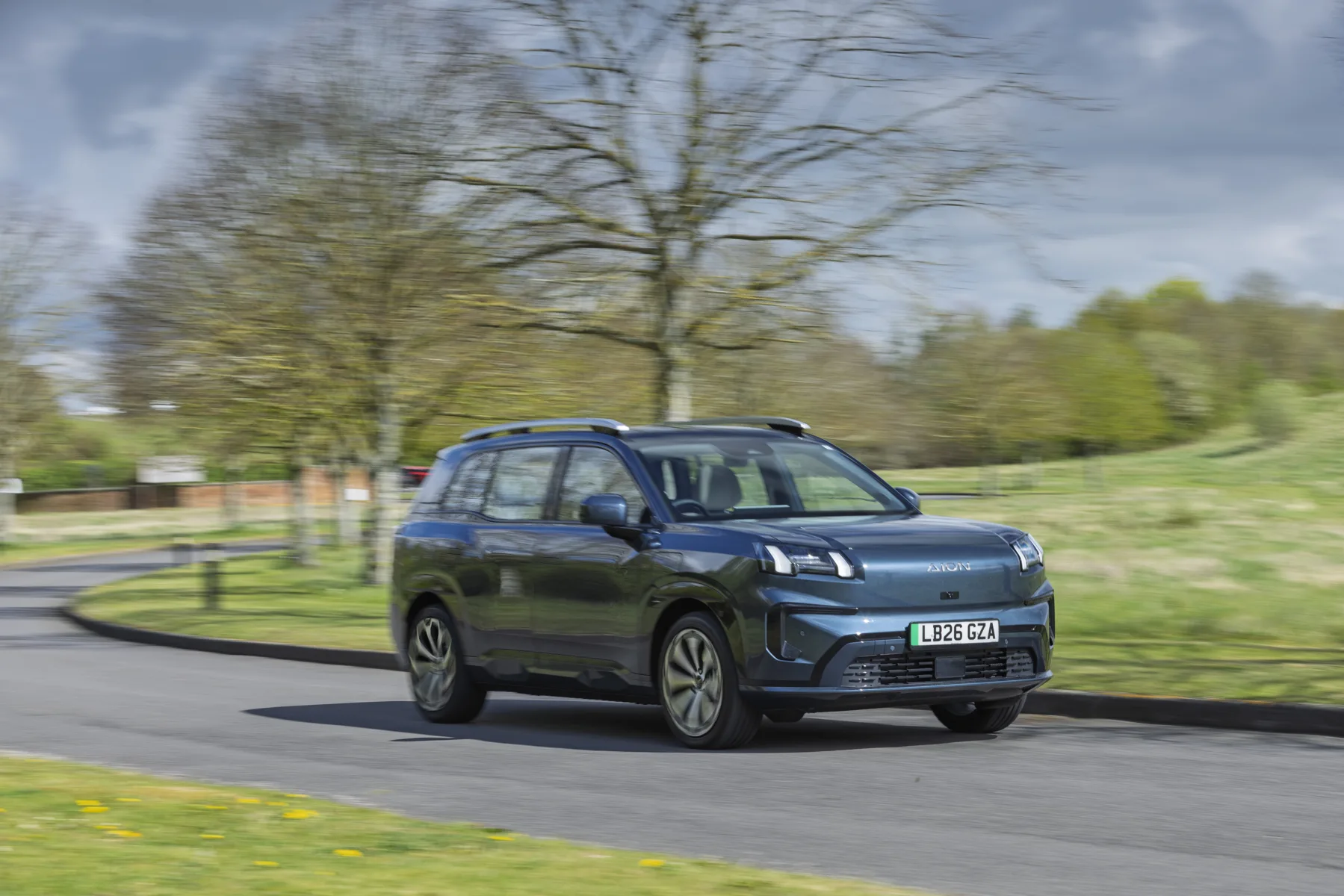
*Photo: AION Auto UK, manufacturer media collection. UK vehicle pictured; the comparison concerns Australian specifications.*
Three electric specifications, not two model names
The GAC Australia configuration gives both AION V grades the same battery and electric capability. The BYD Australia EVO page and its current EVO brochure separate Dynamic and Premium more substantially. This is the central buying distinction: a GAC trim upgrade chiefly changes cabin equipment, while a BYD upgrade changes the electric specification and drivetrain as well.
| Australian specification | AION V Premium / Luxury | ATTO 3 EVO Dynamic | ATTO 3 EVO Premium |
|---|---|---|---|
| Battery capacity, manufacturer figure | 75.26 kWh | 60.48 kWh | 74.88 kWh |
| Battery chemistry | LFP | LFP Blade | LFP Blade |
| Advertised range | 510 km WLTP | 420 km WLTP | 510 km WLTP |
| Motor power | 150 kW | 150 kW | 230 kW |
| Driven wheels | Front | Front | Rear |
| Maximum AC / DC charging | 11 / 180 kW | 7 / 110 kW | 11 / 220 kW |
| Manufacturer charging claim | 10–80% in 24 min | 0–80% in 41 min | 0–80% in 30 min |
The figures support a positive case for the AION V Premium because the buyer can access the larger published battery and 510 km WLTP figure without choosing its highest equipment grade. They also show why a blanket claim that the AION V has more range than an ATTO 3 is out of date. The current EVO Premium has the same advertised WLTP distance. The comparison has to continue into space, equipment, charging conditions and the delivered price.
Equal WLTP distance does not make identical journeys
WLTP provides a named basis for comparing the advertised range in this table. That is useful, particularly because BYD's model page also displays NEDC numbers elsewhere. Keep each number with its stated cycle. The NEDC entry for one BYD grade should not be placed beside the AION V's WLTP figure and described as a directly measured advantage. The current brochure's WLTP row is the consistent reference for this Australian comparison.
The same advertised range does not guarantee the same motorway distance in every condition. Weather, speed, load, cabin temperature and terrain affect both vehicles. Think first about the longest routine leg between chargers you can depend on. If both vehicles cover the household's requirements with a comfortable reserve, the equal headline distance leaves room for the cabin and purchase offer to decide. An extra theoretical kilometre has little value when it does not change any journey.
Dynamic's shorter advertised distance may still be sufficient for a commuter who charges at home and rarely travels far. Its battery should be judged against that actual routine. For a family regularly carrying passengers on longer journeys, the AION V's higher published range relative to Dynamic is a useful reason to investigate GAC first. Decide what the extra buffer achieves, rather than assuming every buyer needs the largest available battery.
Compare charging windows before comparing minutes
The charging claims in the table begin at different states of charge. GAC quotes 10–80%, while BYD's current brochure quotes 0–80%. Those are different energy windows, so the minutes cannot establish a fair direct winner. The higher peak DC figure for EVO Premium also does not tell you how long it holds that power. A charging curve and matched-condition session would be needed to describe the full comparison precisely.
For a buyer, the practical exercise is to choose a representative trip and identify the likely charging stop for each car. Consider arrival charge, the available charger power and the amount needed for the next leg with reserve. Add the detour, parking and any queue to the time spent connected. A fast peak is valuable when the vehicle and charger can use it, but a conveniently located stop can matter just as much to the family.
The AC distinction is relevant where a household has suitable supply and equipment. AION V and EVO Premium list 11 kW capability; Dynamic lists 7 kW. Ask an installer what the property can actually deliver. If the available supply is lower, a larger onboard maximum may not shorten the nightly routine. If the car will spend only a short time at a workplace charger, the higher capability could be more useful. The ownership pattern determines the benefit.
The AION V has a longer and taller body
The published Australian dimensions make the AION V 150 mm longer and 71 mm taller than the current ATTO 3 EVO, with a wheelbase 55 mm longer. The BYD is slightly wider in the manufacturers' listed body dimensions. These differences justify testing the GAC carefully for rear passenger comfort and the BYD for parking fit. They do not, by themselves, measure the space available to a particular passenger or child restraint.
| Australian body and luggage data | AION V Premium / Luxury | ATTO 3 EVO Dynamic | ATTO 3 EVO Premium |
|---|---|---|---|
| Length | 4,605 mm | 4,455 mm | 4,455 mm |
| Width as listed | 1,854 mm | 1,875 mm | 1,875 mm |
| Height | 1,686 mm | 1,615 mm | 1,615 mm |
| Wheelbase | 2,775 mm | 2,720 mm | 2,720 mm |
| Rear luggage space, manufacturer figures | 427–978 litres | 434–1,340 litres | 490–1,360 litres |
| Front luggage space in cited specification | No figure listed | None | 101 litres |
Luggage methods and seating arrangements need to be matched before the capacities become a strict comparison. The BYD Premium's extra front compartment is a distinct practical feature: it may provide a useful place for charging equipment or suitable small items. The GAC's cabin-focused dimensions and reclining rear seats present another useful proposition. A family should test both with its complete load, because the car with the preferred passenger arrangement may not also have the preferred luggage shape.
Give the rear passengers a proper vote
Set the front seats for the regular drivers, then place the same passengers in the back of each car. Evaluate foot space, thigh support and the view outside. Check whether a tall passenger can maintain a relaxed upright posture and whether the centre position is usable when required. A longer wheelbase is a reason to expect interesting packaging; the exact cushion, seatback and floor layout decide the experience for the people aboard.
The Australian AION V equipment list includes reclining rear backrests, rear ventilation and heated rear seats. Its panoramic roof also has an electric shade. These are specific reasons to put passenger comfort near the centre of the GAC discussion. Demonstrate the adjustments with the normal restraint arrangement in place. A rear passenger who can sit comfortably on a long trip may place much more value on that feature than someone who normally drives alone.
The BYD brochure also lists rear ventilation, adjustable rear head restraints and split-folding seats, with dual-zone climate control on EVO Premium and single-zone on Dynamic. Try temperature control with everyone aboard. A shared family assessment should include the person who usually feels too hot or too cold. The useful outcome is the car whose supplied equipment creates a comfortable routine, rather than a vote based solely on the size of the main display.
A shared household should also demonstrate how each driver gains access. BYD's current brochure lists a key fob, NFC card and compatible digital-key functions. Ask both retailers to identify exactly what is supplied, how an additional driver is set up and what happens when a phone is flat or unavailable. Try unlocking the car with bags in hand, then check the handover between drivers. This is a modest part of the specification, but dependable access can matter every day when one person handles school travel and another takes the vehicle to work.
Load the same pushchair into both boots
Bring the actual item that is hardest to accommodate. Load it through the opening with all required rear seats in their travelling positions, then add the ordinary bags. Evaluate access to charging equipment after packing. Premium's front compartment can be useful if it keeps a cable available without unloading the rear boot. Check the instructions and the space available for the particular equipment you intend to store there.
A small published capacity difference can be overwhelmed by aperture shape, floor height or the way a pushchair folds. A larger suitcase may fit upright in one boot and need to lie flat in another, leaving a very different space for the rest of the load. Use the same bags and the same passenger requirements in both cars. The result will explain your household's preference more clearly than assuming that all litres are equally usable.
The fully folded figures are useful for occasional bulky tasks, provided the resulting passenger arrangement works. Try folding and restoring the seats, checking the latches and belt routing. If the family's usual holiday requires every rear position, the seats-up boot deserves priority. If bulky collections are common and rear passengers are occasional, the folded configuration may have more influence. This is a real difference in use, even between households buying the same model.
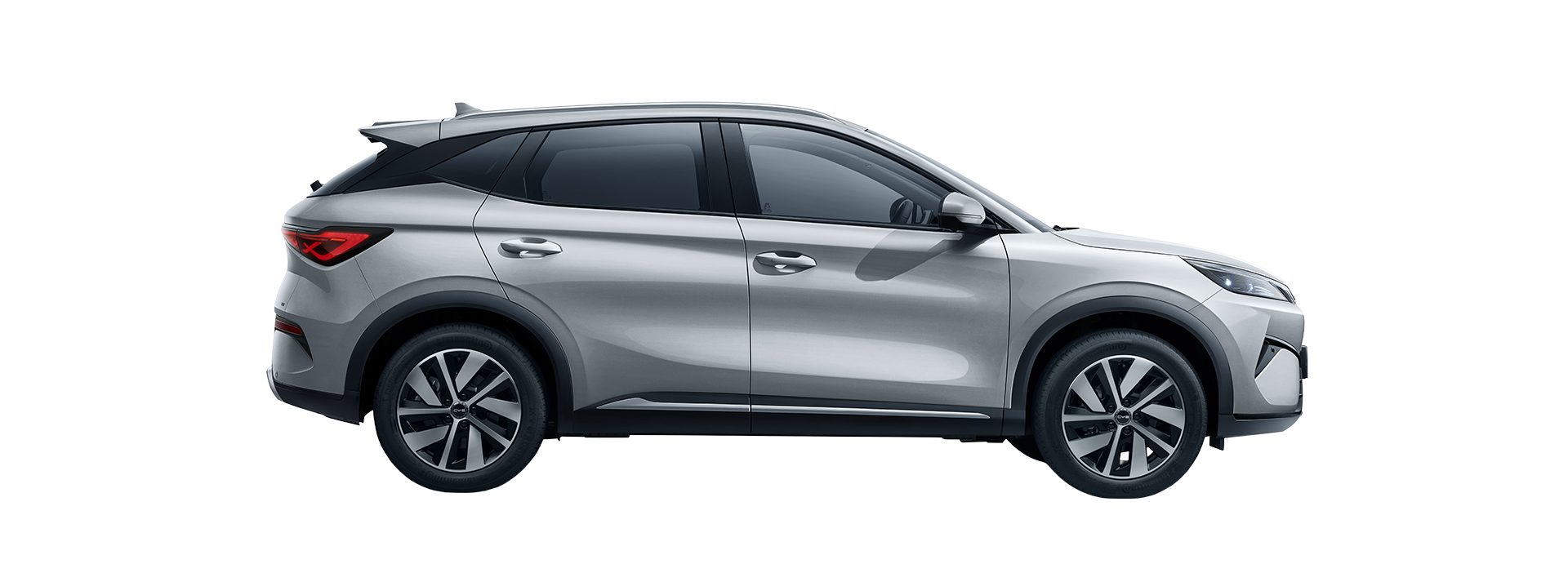
*Image: BYD Australia, ATTO 3 EVO model presentation. The manufacturer notes that some overseas imagery may be used.*
GAC's trim structure keeps the choice clear
AION V Luxury adds items such as massage for the front occupants, rear tray tables and a refrigerator. Those features can be attractive when the car is a frequent family travel space. Premium remains a sensible place to start because the electric hardware is shared. Ask the people using the extra features to assess their usefulness, then compare the upgrade cost over the intended ownership period instead of accepting an upgrade solely because it looks small in a repayment illustration.
BYD's EVO Premium upgrade has a different purpose because it includes a larger battery, rear-drive layout and higher-power electric system, as well as its luggage changes. A buyer attracted by its additional performance should drive the grade actually being quoted. Dynamic is not a faithful substitute for that drive. Likewise, do not judge the AION V Premium's cabin from a Luxury demonstrator without identifying which visible features belong to the higher grade.
Motor power is a feature to use appropriately
The ATTO 3 EVO Premium's published 230 kW output and 5.5-second acceleration claim establish a clear performance proposition. The AION V and EVO Dynamic list 150 kW, although equal peak power does not make their response identical. For a family driver, examine a smooth start, a controlled merge and predictable braking. Acceleration figures can inform a preference, but the vehicle should also be easy to drive gently with sleeping passengers or a heavy shopping load.
The drivetrain difference also deserves a normal demonstration rather than a theoretical ranking. Front-wheel drive and rear-wheel drive affect the way propulsion is delivered, but tyre choice, stability control, suspension and conditions all contribute to the complete result. Drive the candidates over the same route at appropriate speeds and pay attention to steering effort, visibility and passenger movement. Choose the response that suits your use, supported by the published capability you actually need.
Read the safety record for the exact version
The ANCAP AION V record is a five-star 2025 assessment that applies to all listed Australian and New Zealand AION V variants. It records 88% adult occupant protection, 87% child occupant protection, 79% vulnerable road user protection and 79% safety assist. This gives the current GAC range a direct, identifiable local safety reference, which is especially useful for a family or a fleet using rating applicability as a selection criterion.
The Australian ATTO 3 ANCAP record has a 2022 datestamp and currently describes Australian front-wheel-drive variants, with build-date and earlier-vehicle update conditions. Its scope should not be extended by assumption to the rear-wheel-drive EVO Premium. Ask for the exact current agency applicability for any EVO being considered. A five-star result for an older named variant and a safety-equipment list for a new drivetrain answer different questions.
Avoid comparing category percentages across datestamps as if they came from identical tests. ANCAP's rating explanation explains why the tested year matters as criteria evolve. The practical next step is to fit the family's restraints and learn the alerts in the selected car. Both vehicle and restraint instructions matter. An appropriate agency record supports the decision, while an installation that works for the family's actual children makes that evidence useful in daily travel.
A larger boot still needs an appropriate carrying allowance
The current BYD EVO brochure lists payload at 410 kg for Dynamic and 530 kg for Premium, with their different kerb and gross masses stated alongside. This can be a meaningful part of choosing the grade when adults and luggage regularly travel together. Obtain the corresponding permitted mass information for the exact AION V and compare the complete loads. Body length and boot volume do not establish the amount of weight a vehicle is approved to carry.
Count people, child restraints, bags and any relevant accessories in the allowance defined for the vehicle. Then consider how often that combination actually occurs. A family carrying two adults and young children may have a different requirement from a group of five adults travelling with rigid suitcases. The same vehicle can suit one arrangement comfortably while another needs more careful planning. This exercise is especially useful when the cabin's apparent roominess encourages everyone to assume weight cannot be a limitation.
Towing is another reason to name the exact grade. BYD's cited Australian brochure lists 750 kg braked towing for Dynamic and 1,500 kg for Premium, subject to the relevant towing conditions. That difference can materially change the shortlist for a trailer owner. Obtain a specific local towing approval, towbar specification and load guidance for any AION V offer being considered. A manufacturer's unladen or luggage figure cannot stand in for a towing limit.
Judge ride comfort from the complete car
The GAC specification lists torsion-beam rear suspension, while the current BYD EVO brochure lists a multi-link rear arrangement. Those are engineering descriptions, not direct comfort scores. The way each vehicle rides also depends on springs, dampers, bushes, tyre construction, pressure and load. A simple ranking based on the suspension label would miss the family experience that matters. Test a rough section with rear passengers aboard and compare how settled each car feels at ordinary speeds.
Use the same principle for cabin quietness. Both manufacturers describe sound-related glazing in their equipment, but a feature list does not supply a matched noise measurement. On a faster road, listen for tyre and wind noise with the audio turned down, then ask the passengers whether conversation feels easy. Check a surface you encounter regularly. A cabin that suits a smooth suburban demonstration may give a different impression on a coarse road used for weekly family visits.
Keep the steering and regenerative-braking assessment equally practical. Each regular driver should try parking, easing through traffic and making a gentle stop. Learn which settings remain in place after restarting the car and where they are adjusted. Familiarity can improve the experience in either vehicle, so allow enough time to understand the controls before choosing. A predictable, comfortable routine will influence ownership more often than a specification difference that is rarely used.
Warranty needs a local, written comparison
GAC's Australian warranty terms state eight years of unlimited-kilometre vehicle cover for electric vehicles outside commercial use, with separate component provisions. BYD's linked 2026 warranty and service handbook states six years or 150,000 km for the vehicle and separate battery and drive-unit coverage. Read the conditions for the intended use instead of treating a headline duration as the full policy.
For either brand, identify the workshop that would support the car near your home. Ask about servicing, the contact route for a fault and roadside assistance. A family with one vehicle should consider the practical transport implications of a repair. The length of the cover and the convenience of the local support route are separate considerations. Good written answers can make a purchase more comfortable without requiring a prediction about future repair rates or used-car values.
Decide using the household's actual priority
| Main requirement | Candidate to assess first | Reason to test it |
|---|---|---|
| Larger battery without the top GAC grade | AION V Premium | Shared 510 km WLTP specification and charging with Luxury |
| Rear passenger comfort | AION V, then both BYD grades | Reclining rear seating and the actual family arrangement |
| Rear-drive performance and separate front storage | ATTO 3 EVO Premium | Specific drivetrain, power and luggage features |
| Shorter vehicle and sufficient commuter range | ATTO 3 EVO Dynamic | Compact length and a battery matched to the routine |
| Clear current GAC rating applicability | AION V | Local 2025 record covers the listed range |
Obtain delivered-price quotations for the precise grades and vehicles available. Add installation, insurance, accessories and finance costs on the same basis. A discounted outgoing ATTO 3 may be an attractive separate proposition, but identify it as that car and use its own specification. For many families, the AION V Premium's accessible battery and rear-comfort equipment will make a coherent offer. EVO Premium can justify its different offer through the extra performance and luggage features when those matter to the household.
Questions about AION V versus ATTO 3
Does the AION V have more range?
Against Australian EVO Dynamic, the current advertised WLTP figures favour AION V. Against EVO Premium, both list 510 km WLTP. Those are laboratory-cycle figures, with actual journeys influenced by conditions and use. Confirm which BYD is being offered before using a range comparison, especially when a dealer also has outgoing or used stock with a familiar trim name.
Which charges faster?
EVO Premium has the higher published DC peak, while AION V has a shorter claimed session measured over a different starting window. The advertised minutes do not establish a matched comparison. Examine the charging window, available infrastructure and a representative trip. At home, the electrical supply may determine the outcome more strongly than the maximum onboard AC number.
Which is the better family choice?
Start with AION V Premium when the family values rear passenger comfort, substantial shared electric hardware and the identified Australian safety result. Try EVO Premium when its rear-drive performance and additional storage answer a specific need. Our AION V buying guide develops the GAC case. The AION UT space assessment and AION Y Plus family guide explore other GAC packaging choices in their stated Thai specifications. The final decision should come from the same passengers, load, route and written ownership costs applied to each candidate.
Article context
Australia; current AION V Premium/Luxury and ATTO 3 EVO Dynamic/Premium, reviewed 22 November 2026
Compare Australia’s AION V with the current ATTO 3 EVO Dynamic and Premium. The guide aligns WLTP range, different charging windows, passenger comfort, luggage, trim structure and model-specific safety evidence to support a practical family purchase.
Our editorial methodologySources & context
- GAC Australia AION V configuration ↗
- BYD Australia current ATTO 3 EVO model presentation ↗
- BYD Australia current ATTO 3 EVO brochure ↗
- ANCAP AION V 2025 rating ↗
- ANCAP Australian-supplied ATTO 3 rating ↗
- ANCAP explanation of rating datestamps and validity ↗
- GAC Australian vehicle warranty terms ↗
- BYD Australia 2026 warranty and service handbook ↗
- AION Auto UK editorial image collection ↗
Manufacturer specifications, company announcements and independent assessments are linked above. Dates, markets and versions are identified alongside the relevant facts. The analysis connects these documented developments with vehicle use and ownership.
Read our editorial methodology