Yes, Thailand’s AION Y Plus 490 Premium is a strong family EV candidate when five-seat passenger accommodation, practical cabin equipment and dependable charging fit the household. Its tall body, rear ventilation, split rear seat and seats-up luggage area support ordinary family tasks. Assess the actual child restraints, all passengers and luggage together, including permitted laden mass. The 490 km claim uses NEDC, so plan longer journeys around real charging opportunities. Obtain the exact local charging details, written quotation and service arrangements before choosing.
The GAC AION Y can be a good family EV when the priority is a spacious five-seat cabin and a straightforward daily charging routine. In Thailand, the current Y Plus 490 Premium makes a particularly clear case: a tall, practical body, useful rear-seat equipment and a battery intended to support more than short urban errands. It is a strong candidate for families who want passengers and luggage to fit comfortably into the same practical daily arrangement.
This guide focuses on Thailand's Y Plus 490 Premium as displayed on 22 November 2026. The distinction matters because AION Y and Y Plus names cover different offerings internationally. We use Thailand's current model and configuration pages, including the source address ending in 2024, without treating that address as the build year of every car offered. The recommendation concerns this five-seat Thai specification and the family tasks it can reasonably be assessed against.
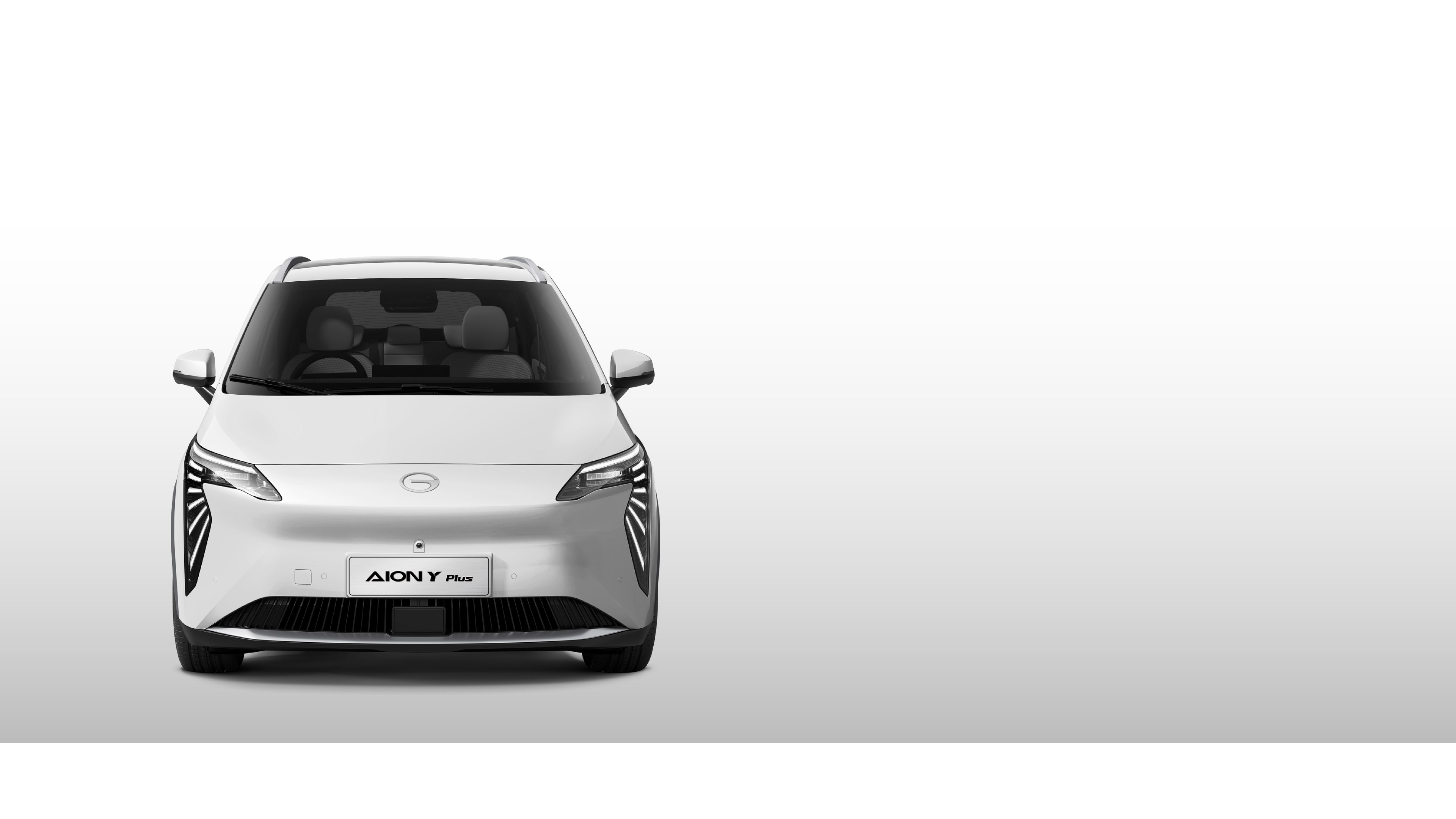
*Image: GAC Thailand, AION Y Plus model presentation. Manufacturer product imagery; equipment follows the Thai specification discussed below.*
The family proposition begins with the shape
The Thai configuration page lists a body 4,535 mm long, 1,870 mm wide and 1,650 mm high, with a 2,750 mm wheelbase. This is a useful starting point for families moving from a small hatchback: the Y Plus has the dimensions of a substantial compact crossover, with a cabin-focused profile. Its shape makes it worth examining for rear access and passenger posture before assuming a longer, more conventional SUV will be the more practical choice.
A family car succeeds through repeated ordinary movements. An adult reaches across a child seat, an older passenger lowers themselves onto the rear bench and someone retrieves a bag without moving everyone else. The Y Plus's appeal is that its packaging is directed toward these tasks. The final assessment still needs the actual passengers, because a generous-looking cabin and a suitable seat height are related but separate qualities. Ask the least mobile passenger to try the car early.
| Thailand Y Plus 490 Premium | Published figure | Family relevance |
|---|---|---|
| Seats | Five | Plan a two-row seating arrangement |
| Body dimensions | 4,535 × 1,870 × 1,650 mm | Check the home bay and rear-door access |
| Wheelbase | 2,750 mm | A useful packaging input, not a legroom guarantee |
| Listed boot capacity | 405 litres | Test the normal load with rear seats in use |
| Battery | 63.2 kWh LFP | Match charging to regular journeys |
| Advertised range | 490 km NEDC | Keep the stated test cycle attached |
| Motor | 150 kW, 225 Nm, front-wheel drive | Assess smooth control with passengers aboard |
Start with the people who will occupy the back
Place the front seats where their regular occupants actually need them. The rear passengers can then assess knee clearance, foot space and the view outside. A rear seat that feels airy with the front passenger seat pushed forward may become quite different when an adult returns to that position. The useful result is a compatible arrangement across both rows, especially if the car will alternate between school duties and longer trips with grandparents.
The current Thai specification includes rear air outlets, a rear centre head restraint and a rear armrest. These are practical comfort details because rear passengers need their own support and airflow. Try them with the expected seating arrangement in place. A folded-down armrest is useful when two passengers travel, while a middle occupant needs to assess the complete bench with everyone belted. The five-seat designation should start the evaluation, rather than substitute for it.
For a child in a booster, look at belt routing and the position of the buckle. For a taller teenager, focus on thigh support and roof clearance. Adults who will spend long periods in the back should take a representative drive. A family may discover that rear seating comfort is the Y Plus's decisive strength, but the conclusion should reflect the people aboard instead of a generic statement that every tall-bodied vehicle is equally accommodating.
Restraint installation can reveal the real benefit
Thailand's equipment list includes ISOFIX fixtures, front side airbags and curtain airbags. Begin with a restraint that is approved for the child and the intended vehicle position. The GAC Thailand user-manual page provides the route to model information; use the supplied vehicle manual alongside the restraint instructions. Have the dealer identify the correct anchorages and ask an accredited installer for help if any part of the installation is uncertain.
A rear-facing seat should be installed before you judge front-passenger comfort. Restore the front passenger's normal position, check clearance and then try the everyday process of lifting the child in. A tall cabin may make the upper-body movement easier, but the doorway, sill and seat shell all affect the task. Repeat with the door constrained by a neighbouring parked car. That is the situation likely to determine whether school and shopping stops feel easy.
If the family needs two restraints and an additional rear passenger, assess the full arrangement at once. Seat shells can obstruct buckles even when the bench looks wide. The additional passenger also needs an appropriate belt path and enough room for their shoulders. A correct installation takes priority over squeezing another person into an unsuitable position. The Y Plus is a five-seat family car; households with a persistent need for more positions should investigate a vehicle designed to provide them.
The boot figure is useful when the rear seats stay up
The configuration lists 405 litres of luggage capacity. The Thai model page separately advertises up to 1,200 litres in its expanded loading configuration. Keep these figures with their respective arrangements. A family carrying children in the rear cannot use every folded-seat loading option simultaneously. The seats-up assessment is therefore the more important one for the ordinary holiday journey, even when the larger figure makes a striking advertisement.
Put the pushchair or other awkward item into the boot first. Add the changing bag and shopping, then identify where the cable and other charging equipment can remain accessible. Try closing the tailgate without pressing against the load. Opening the powered tailgate is convenient when carrying bags, but it does not change the size of the aperture. Check the opening under the garage ceiling and the way the loading edge suits the person who will lift the heaviest item.
The split rear seat offers flexibility for an occasional bulky purchase or sports equipment. Decide which passenger positions can be given up before folding anything. Restore the seatback afterwards and check the latch and belt routing. This simple rehearsal is worthwhile because a family car often changes roles during the same week: passengers in the morning, a larger load later and passengers again the following day. Easy, understandable changes make the Y Plus more useful.
Payload puts a second boundary around the luggage
The Thai page lists 1,750 kg unladen weight and 2,180 kg fully laden weight. Subtracting those published figures gives an arithmetic difference of 430 kg. Treat that as a prompt to confirm the exact vehicle's carrying allowance and weight definitions, including whether a driver is included, rather than as an independently certified payload measurement. The vehicle's plate, handbook and dealer documentation should establish the limits applicable to the car being delivered.
This is particularly relevant to a room-focused family EV because people can fill the cabin before luggage fills the boot. For an illustrative five-person party averaging 65 kg per person, the people alone total 325 kg. Add bags, child seats and accessories and the remaining allowance can become important. These are hypothetical occupant weights, not a claim about a particular family's load. The example explains why an attractive interior volume should be considered alongside permitted mass.
| Family task | Useful Y Plus attribute | Boundary to check |
|---|---|---|
| School travel | Rear room, ventilation and restraint fixtures | Correct restraint installation and buckle access |
| Weekly shopping | Seats-up boot and powered tailgate | Aperture shape and accessible charging equipment |
| Holiday with full cabin | Two-row passenger accommodation | Actual luggage fit and permitted laden mass |
| Occasional bulky collection | Split-folding rear seat | Remaining permitted passenger positions |
An electric routine should make the week simpler
The Y Plus's battery and advertised range make it a credible candidate for a household that combines commuting, school trips and weekends away. The most convenient arrangement is usually charging during time when the vehicle is already parked. Establish where that happens and who controls the space. Home charging requires an appropriate electrical installation; an apartment resident also needs the building's permission and a stable parking arrangement. The car's suitability improves when those details are settled before collection.
Map a representative week using actual distances. Include the longer shopping trip, sports practice and any regular family visit. Then identify the longest period between dependable opportunities to charge. This reveals the energy buffer that matters to your household. A short commute with overnight charging presents a different ownership problem from irregular motorway travel and public-only charging, even if both buyers are looking at the same battery and the same model name.
NEDC is the stated basis of the 490 km figure. It should not be read as 490 km on a hot, fully laden motorway trip, and it should not be compared numerically with a rival's WLTP result as though the cycles were interchangeable. Route speed, conditions, climate use and load affect demand. Build the first longer-trip plan around chargers and an arrival margin, then refine it using experience from the journeys the vehicle actually performs.
Ask for the charging details the trip requires
The Thai configuration page is particularly informative about cabin equipment and battery capacity, but a buyer should obtain the exact local charging specification and supplied equipment in writing. Ask about the connector, maximum AC capability, supported DC charging and the conditions attached to any advertised charging time. A useful quotation should distinguish hardware included with the car from installation work and from accessories purchased separately. That is necessary information for organising the family's charging routine.
On a demonstration, locate the charging port and see how a cable would reach it in the normal home parking position. Practise starting and ending a session with the dealer's guidance. Ask what appears on the display when charging is scheduled and how both regular drivers can verify the next departure is covered. The goal is an arrangement that an ordinary family member can understand while managing the rest of the day.
For a longer journey, choose a stop where a toilet break or meal is practical. A charger in an awkward corner with no useful facilities may be less suitable than another stop whose power number looks slightly less impressive. Keep a second option within a sensible route plan. The Y Plus becomes a better family EV when charging is integrated into a comfortable break, instead of being left as an uncertain event after the battery is nearly empty.
Climate, controls and comfort belong in the evaluation
The published Thai equipment includes automatic climate control with rear outlets, a ventilated driver's seat and a panoramic sunroof with an electric shade. Those features are relevant in Thailand's climate, particularly when children travel in the rear. During the appointment, close the shade, direct the vents and check whether passengers can sit comfortably without bags blocking the airflow. The perceived brightness of a glass roof and the cabin's temperature control should be assessed together.
The central display is listed at 14.6 inches, with Thai and English voice control, online services and remote vehicle control also shown in the configuration. Try the functions you actually need: navigation, temperature adjustment, phone calls and reversing views. Connect the phone that will be used daily and ask which features depend on data service or a subscription. A large screen becomes useful when the necessary tasks are easy to perform and both drivers can find the controls.
Passenger comfort also depends on how the car moves. Include a rough section, speed humps and a faster road in the drive. Ask someone to sit in the back and describe the ride without being influenced by the driver's first impression. Assess smooth acceleration and gentle braking with a sensible load. The Y Plus's front-drive electric layout can support ordinary family transport, but the quality of the complete experience should be established on the routes that matter.
The small details that help on weekends
The Thai configuration lists vehicle-to-load output at 3.3 kW. This can be useful for compatible equipment at a picnic, sports event or campsite, provided the approved adapter and the instructions for electrical safety are followed. Add the power requirements of the intended appliances and check the permitted combined load. A kettle, cooking appliance or powered tool should not be selected merely because its plug fits. The feature has practical value when the intended use has been matched to the approved system.
Think through where the cable and appliance will stand. A family needs a clear walking route and suitable protection from weather, with children kept away from hot or moving equipment. Set an appropriate battery reserve for the return journey. Using the car to power something at the destination draws from the same stored energy needed for driving. A sensible reserve makes the convenience easier to enjoy without creating uncertainty about the journey home.
The same configuration lists a spare tyre. Ask the dealer to show the supplied item, tools and storage position, and explain the relevant restrictions. For a family travelling beyond its usual neighbourhood, familiarity with the equipment is useful even when roadside assistance is the preferred response. Check that the luggage arrangement allows access to the required equipment. A tool buried below a tightly packed holiday load can be inconvenient at precisely the moment the family needs it.
Ground clearance and parking need the loaded-car view
The Thai specification gives ground clearance as 150 mm at full load. The load condition matters: a number quoted for a laden vehicle should retain that description when compared with another car. Investigate the entrance ramps, steep driveways and speed humps your household uses. Drive them slowly with a sensible demonstration load where practical. A family crossover's appearance does not establish that every underbody clearance or approach angle suits rough tracks and abrupt ramp transitions.
The Y Plus's width also affects the space left beside it. Measure the home parking bay and check the mirrors, doors and rear hatch in the configuration you will use. If a charger is being installed, plan the cable route at the same time. An apparently minor detail such as which side faces the wall can determine whether a parent can reach a child restraint comfortably. The car's interior room delivers its full benefit when the surrounding parking space supports access.
Safety equipment and safety ratings answer different questions
The Thai 490 Premium configuration lists autonomous emergency braking, adaptive cruise control with stop-and-go, lane assistance and a surround-view camera. These are meaningful items to investigate. Ask the dealer to demonstrate alerts and explain where assistance may be limited. Parking cameras can help identify an obstacle, while collision-avoidance equipment has a separate role. A long list of functions becomes valuable when the driver understands which task each one performs.
The independent agency records cited for the AION V at ANCAP and the AION UT at Euro NCAP concern those named models and their listed variants. They do not establish a Y Plus rating. The sources used for this guide do not establish a model-specific independent crash result for this Thai Y Plus. A family prioritising an applicable agency result should make that a clear selection criterion and request evidence for the exact model.
Local support is part of the family-car brief
Use the GAC Thailand dealer map to identify a suitable sales and service location, then confirm where maintenance and repairs would actually happen. Ask about routine service intervals, appointment booking, roadside assistance and the handling of a vehicle that cannot be driven. A family relying on one car should understand the transport implications of a repair as well as the warranty heading. Clear local answers make a purchase more concrete.
The Thai model page displays a price for the current grade, but obtain a fresh itemised quotation for the actual car, including fees, accessories and any conditions on a promotion. Add insurance and charging installation to the budget. Finance should be compared using the deposit, total repayment, fees and any final payment. The Y Plus's room-focused specification can offer strong practical value, provided the complete transaction fits the household's planned spending.
Questions families ask
Is the AION Y Plus suitable for a family of five?
It provides five seats, but the specific arrangement matters. Fit the required restraints and have every passenger try their place simultaneously, then load the luggage. Confirm the permitted mass for the exact car. A family with larger children or adults in every position may find shoulder room, buckle access or carrying allowance becomes the limiting factor. The useful answer comes from the complete travelling arrangement, not the seat count alone.
Is the Y Plus a better choice than the smaller UT?
It is the more interesting candidate when extra body length, cabin height or the specific loading arrangement solves a family need. The AION UT space guide shows why the shorter hatchback also deserves attention: both Thai models list the same wheelbase. Use identical restraints and bags in both cars. The better purchase is the one that handles the family's actual load with the more convenient daily routine.
Can the advertised range settle the buying decision?
No single advertised range figure covers every journey. The Thai 490 km claim uses NEDC, and driving conditions change energy demand. Reliable charging at home, work or a repeatable public location can be more important than a small headline range difference. Establish the longest regular journey between charging opportunities and leave a practical reserve, particularly when travelling with passengers who need predictable breaks.
When is the Y Plus a particularly good family EV?
Its strongest fit is a household that wants five-seat passenger room, useful everyday cabin equipment and an EV that can charge conveniently while parked. That family should investigate it seriously alongside the Australian AION V buying assessment and our current AION V versus ATTO 3 EVO comparison, remembering the market distinctions. The Y Plus earns consideration through practical accommodation and a coherent weekly routine, with the final choice supported by the exact local specification, load and quotation.
Article context
Thailand; current 490 Premium specification, source page /2024, reviewed 22 November 2026
Thailand’s AION Y Plus 490 Premium offers a cabin-focused five-seat alternative for families. Explore seating, child restraints, luggage, carrying allowance, NEDC range, charging arrangements and the local equipment that matters during a normal family week.
Our editorial methodologySources & context
- GAC Thailand AION Y Plus configuration ↗
- GAC Thailand AION Y Plus model presentation and imagery ↗
- GAC Thailand user-manual access ↗
- GAC Thailand dealer map ↗
- ANCAP AION V 2025 model-specific rating ↗
- Euro NCAP AION UT 2026 model-specific rating ↗
Manufacturer specifications, company announcements and independent assessments are linked above. Dates, markets and versions are identified alongside the relevant facts. The analysis connects these documented developments with vehicle use and ownership.
Read our editorial methodology