Yes, the AION UT offers a convincing amount of passenger space for a compact electric hatchback, especially for a couple or small family. Thailand’s Standard and Premium share the same dimensions and wheelbase, so the upgrade does not buy a larger cabin. Its rear accommodation deserves attention before choosing a larger SUV. The decisive checks are your child restraints, rear passengers and seats-up luggage together. Frequent five-adult journeys, large rigid luggage or demanding mobility-aid access may justify moving to a larger vehicle.
Yes, the GAC AION UT has a persuasive amount of passenger space for a compact electric hatchback. For a couple, a small family or adults travelling mainly in the rear outboard seats, it deserves a close look before moving to a larger SUV. Its defining attraction is the combination of a relatively short body and a long wheelbase. The limitation is familiar to this vehicle class: room for people and room for a large holiday load have to be assessed together, with the seats you need still available.
This assessment uses Thailand's current AION UT 420 Standard and 500 Premium specifications as displayed on 22 November 2026. Their shared body dimensions make the central space recommendation applicable to both grades. Battery, equipment and wheel differences still need to be considered separately. European safety evidence is discussed using its own tested version, so a result for a European Premium does not silently become certification of a differently named Thai grade.
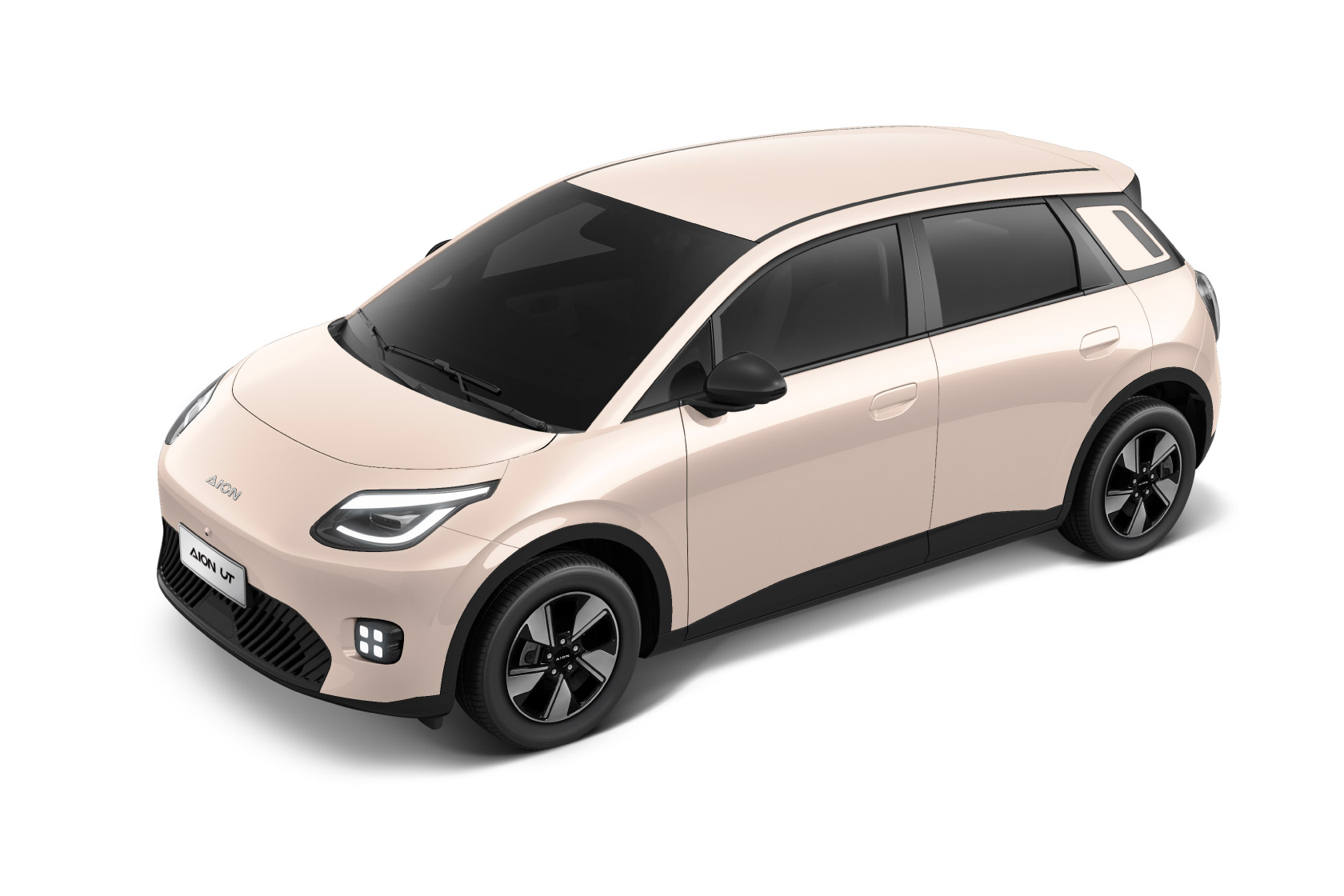
*Image: GAC Thailand, AION UT model presentation. Manufacturer product imagery.*
The compact dimensions hide the more interesting number
According to the Thai AION UT configuration, both grades measure 4,270 mm long, 1,850 mm wide and 1,575 mm high, with a 2,750 mm wheelbase and five seats. The source address contains 2024; it is the current configuration page we consulted, not a claim about the production year of a delivered vehicle. The wheelbase is the distance between the axles, which helps explain why the UT can be worth investigating for passenger room despite its short overall length.
There is a useful GAC comparison close to home. Thailand's AION Y Plus 490 Premium specification gives that larger vehicle the same wheelbase. It is longer and taller overall. This does not prove equal rear legroom because seat position, cushions, floor, roof and luggage packaging also differ. It does establish why the UT should not be dismissed as cramped just because its exterior belongs to a smaller vehicle category.
| Published Thailand dimensions | AION UT 420 Standard / 500 Premium | AION Y Plus 490 Premium |
|---|---|---|
| Length | 4,270 mm | 4,535 mm |
| Width, as listed | 1,850 mm | 1,870 mm |
| Height | 1,575 mm | 1,650 mm |
| Wheelbase | 2,750 mm | 2,750 mm |
| Seating capacity | Five | Five |
The UT therefore occupies less length in a parking space while preserving a promising passenger platform. Its width deserves equal attention. Buyers used to a narrow city car should check door clearance in their actual parking bay and the route past concrete pillars. A shorter body can simplify parking without making every part of the car smaller. Measure width using the relevant mirror position when deciding whether a garage entrance or narrow lane is suitable.
Rear legroom: what the manufacturer's claim can tell you
GAC's Thai model presentation advertises 905 mm of rear legroom and 1,385 mm of rear lateral space. It also describes a two-level luggage area expanding to as much as 440 litres. Those are manufacturer figures presented in a marketing context. The page does not supply a complete measurement protocol that would let us declare a precise advantage over a competitor using a different seat position or luggage method.
The sensible positive conclusion is that GAC has made rear passenger accommodation a deliberate part of the UT's proposition. Translate that into your own seating arrangement. Have the tallest regular driver choose a natural driving position, including the steering adjustment. Only then should the passenger sit behind. Check room for the knees, room under the front seat for the feet and whether the seat cushion supports the thighs. These elements can feel different even when a single legroom number looks generous.
A passenger with long legs may benefit from clearance beneath the front seat, while someone with a longer torso will care more about the roof and head restraint. Try sitting upright, leaning back normally and looking out of the side window. Do this with the footwear normally worn on longer journeys. There is no need to turn the visit into a laboratory test; the purpose is to discover whether the UT's packaging works for the bodies that will actually travel.
Four adults and five adults are different questions
The AION UT's five-seat designation tells you how many seating positions the vehicle provides. It does not establish that five adults with broad shoulders will prefer a long journey together. Put the likely middle passenger in place and ask everyone to fasten their belts. Look at shoulder overlap, where feet rest and whether each person can use the buckle without disturbing a neighbour. A car can be excellent for four adults while offering its fifth place mainly for occasional use.
The rear width claim should not be divided by three and treated as a guaranteed personal seating allowance. Door trim, seat bolsters, the position of the belts and the passengers' shoulder widths influence the result. If carrying three adults across the back is a regular requirement, the exact group should try the bench together. A brief shared drive is more informative than separate visits by passengers who each found plenty of room on an otherwise empty seat.
For a small family, the trade-off can be favourable. A parent and child may value generous rear knee space and a short vehicle that is easier to place at a busy school. A household frequently transporting grandparents as well needs to test the full arrangement. Treat the centre place as part of the intended seating plan from the beginning, rather than discovering after purchase that it becomes difficult to use beside the chosen child restraints.
Install the child seat before judging the cabin
Thailand's specification lists ISOFIX child-seat fixtures, rear three-point belts, rear ventilation and split-folding rear seats. These are relevant foundations for family use. The practical question is whether the selected restraint can be installed in a permitted position while leaving adequate space for the occupants around it. Use both the restraint instructions and the vehicle information available through GAC Thailand's user-manual page. The correct installation takes precedence over a visually tidy seating arrangement.
A rear-facing seat is especially demanding because its shell extends toward the front passenger. Try the full installation, then check whether the adult can sit comfortably with an appropriate seatback position. Reach in to adjust the harness, remove the child and stow the changing bag. The UT's compact external height makes this a useful access check: the combination of roof opening, door aperture and the adult's height matters more than whether a photograph looks spacious.
For an older child, test buckle access with the booster actually in place. The child should be able to reach the buckle without twisting around another seat or trapping the belt. If the family uses two restraints, assess both simultaneously and consider how the remaining position works. Do not infer approval for three restraints from the number of seatbelts. A qualified installer can help establish the permitted arrangement when the family's needs are complicated.
The boot deserves a loading sequence
Begin with the item that controls the purchase: usually a folded pushchair, mobility aid, sports bag or large suitcase. Put it in through the boot opening with the rear seatbacks in their normal travelling positions. Then add shopping, school bags and the charging cable. The UT's two-level storage concept can help organise these different objects, but the useful capacity depends on which floor position is available and what must remain accessible during the day.
Depth and opening shape are important because a pushchair is not a bag of uniform-sized measuring blocks. A high folded handle can interfere with the cover even when there is unused volume beside it. A suitcase that fits flat may leave less useful room than two smaller bags stood in an approved arrangement. Trying the actual objects reveals whether the boot's shape supports the way the household packs, which is more useful than comparing isolated litre figures.
Separate the everyday load from the holiday load. An everyday arrangement needs quick access: a school bag should come out without unloading the pushchair onto a wet pavement. A holiday arrangement can tolerate more careful packing because the luggage remains in place for longer. If the UT comfortably manages both, its compact body has delivered a strong space benefit. If only the weekly load fits, it may still be an excellent city car, with longer journeys needing a different plan.
| Use case | What to put in the UT | What determines sufficiency |
|---|---|---|
| School and shopping | Restraints, bags, normal grocery load | Buckle access and boot access together |
| Four adults for a weekend | Occupants plus their real bags | Rear posture and seats-up luggage fit |
| Sports or bulky purchase | Longest item, required passengers | Whether the permitted seat-folding arrangement works |
| Airport run | Largest suitcase set and all travellers | Boot opening, secure storage and weight |
Folded seats expand versatility, with a clear trade-off
The split rear bench allows a longer item to share the car with some passengers. Test which section must fold and whether it removes a seat the family needs. Check the resulting floor, the route through the opening and the way the load can be secured. A folded-seat configuration is genuinely useful for occasional tasks, but it cannot simultaneously provide the passenger positions that have been folded away.
A practical UT owner can gain a lot from modular bags. Soft-sided luggage uses irregular spaces more effectively than a single rigid trunk, and a small cable organiser can keep charging equipment separate from clean clothing. That is a packing strategy, not an increase in the vehicle's approved carrying capacity. Keep heavy items low and avoid unsecured objects near occupants. A carefully packed hatchback can be convenient without turning the rear cabin into an uncontrolled storage area.
Also check the process for returning the seat to use. The belt should remain correctly routed and the seatback securely latched. If a household changes configurations often, easy operation matters. A rear seat that can be folded quickly for a weekly collection may provide more useful versatility than a larger vehicle whose storage layout is awkward. Make the full folding and restoring sequence part of the demonstration, instead of examining only the final promotional photograph.
Standard and Premium: the same space, different priorities
The Thai grades share body dimensions and the five-seat layout. Their published differences include battery capacity, motor power, charging limits and wheels. The decision between them is therefore mainly about range, performance and equipment rather than a larger passenger compartment. Someone who finds the Standard's rear seat suitable should not assume that Premium adds legroom, while someone who cannot fit the necessary luggage should not expect the battery upgrade to solve it.
| Thailand AION UT | 420 Standard | 500 Premium |
|---|---|---|
| Battery capacity | 50.27 kWh LFP | 60 kWh LFP |
| Motor output | 100 kW | 150 kW |
| Advertised driving range | 420 km NEDC | 500 km NEDC |
| Maximum AC / DC charging | 6.6 / 70 kW | 6.6 / 87 kW |
| Claimed DC charging window | 30–80% in 24 minutes | 30–80% in 24 minutes |
| Wheel size | 16 inches | 17 inches |
NEDC belongs beside both range numbers. These figures should not be compared directly with a European car's WLTP result or treated as guaranteed distances with a full cabin. For a household carrying adults and luggage on faster roads, plan around the route between dependable chargers and a sensible arrival reserve. The roomiest version of a car is still inconvenient if its charging routine does not fit the trip for which that room is required.
Wheel choice also merits a representative drive. The published sizes alone do not establish which grade will feel more comfortable on your roads, because tyres, pressures, load and suspension tuning interact. Put a rear passenger aboard and include the uneven section that matters to your journeys. The best space result includes acceptable ride comfort; unused knee room will not compensate for a passenger who dislikes the way the vehicle moves over a familiar road surface.
Safety evidence strengthens the discussion when scoped correctly
The 2026 Euro NCAP AION UT assessment awards five stars to the assessed European specification, with a left-hand-drive Premium tested and Premium/Luxury variants listed. It records good or adequate occupant protection in the frontal offset test and strong side-impact performance, while also identifying areas needing improvement. This is useful independent evidence about the assessed vehicle, and a more meaningful reference than a blanket assertion that every small EV is equally safe.
Match the equipment and rating applicability to the car being offered locally. The Thai 420 Standard and 500 Premium naming does not establish that they are identical to the European grades. Space and safety also interact in practical ways: a correctly installed restraint, accessible buckle and properly supported passenger all matter. A roomy bench should be used to achieve an appropriate seating position, with luggage secured rather than placed where it can interfere with occupants.
Small storage spaces change how roomy a cabin feels
Passengers bring objects that should not compete with their feet. Place the usual water bottles in the holders, put a phone and its cable where they will be used and see whether a handbag has an appropriate storage position. Try the door pockets with the doors closed. A rear seat can have generous nominal legroom but feel crowded if daily items end up on the floor, especially when a child needs to climb into a restraint.
The Thai specification lists rear USB provision on Premium and a different arrangement on Standard. Check the ports fitted to the offered car and bring the cables your household uses. A charging lead crossing the middle passenger's space can turn a minor equipment difference into a practical annoyance. Similarly, operate the rear air outlets with a restraint installed. The ability to direct air toward the passenger is more valuable than an outlet that is blocked by the usual luggage.
Think about the load at the end of the day as well as the beginning. School projects, shopping and a wet umbrella may join bags that already occupy the boot. A useful compact-car routine leaves some flexible storage for those changes. If the UT can hold the normal load with a little room remaining, its cabin is likely to feel more accommodating than a demonstration packed precisely to the limit using an arrangement no one wants to repeat daily.
Test access for the least flexible passenger
An adult with a stiff knee or limited hip movement may care more about entering the UT than the space available after sitting down. Ask them to try the movement in their normal way, using only the handholds intended for that purpose. Watch for the foot clearance over the sill, the roof edge and the effort needed to rise from the seat. The best family choice works for the passenger with the most demanding access requirements.
For a mobility aid, check both its folded size and the lifting motion. A boot can accommodate an object while requiring an awkward lift or rotation through the opening. Try the task from ground level with help available. If the UT makes it easy, record that specific advantage; if it proves tiring, assess the Y Plus with the same aid and passenger. The larger vehicle's published height is a reason to investigate, rather than proof of easier access.
Space also has a weight dimension. Obtain the exact vehicle's permitted laden mass, payload information and any relevant load limits before planning a full cabin with heavy equipment. Count passengers, luggage and fitted accessories in the appropriate allowance. An apparently empty pocket of luggage space does not create additional payload. Keeping this distinction clear prevents a successful showroom packing exercise from becoming a travel plan that exceeds the vehicle's approved carrying limits.
Consider the space around the car as well
Park the UT in a representative bay and open the rear door to the available angle. Try helping a child aboard while carrying the bag normally used on that journey. Repeat from the side closest to the wall or neighbouring vehicle. An airy cabin can become difficult to use when the external space is constrained, and a slightly different parking position may make a meaningful difference. This exercise is particularly useful in apartment garages with fixed pillars.
Look at charging access with the vehicle parked normally. The cable needs a sensible route that avoids creating a trip hazard or blocking the door used by a passenger. A household using a wallbox should ask the installer to consider the parking orientation and available cable reach. These are small practical details, but they determine whether the UT's short body and flexible cabin translate into an easy daily routine at home.
Questions about AION UT space
Is the UT big enough for a family of four?
It is a credible candidate, particularly where city parking and rear passenger room are both important. A family of four still needs to install its specific restraints and load its regular pushchair or bags. If those fit with appropriate seating positions and accessible buckles, the UT's compact length can be a benefit. Families regularly carrying bulky holiday luggage should repeat the test with the complete trip load before deciding.
Is Premium larger inside than Standard?
The current Thai specification gives both grades the same body dimensions, wheelbase and seating capacity. Premium's larger battery and additional equipment should be assessed for their own usefulness. They do not establish extra rear legroom or a larger external footprint. If space is the deciding factor, compare the actual cabin configuration of both demonstrators and spend the upgrade budget only when the extra equipment suits your needs.
Does the 440-litre claim describe every luggage arrangement?
No. GAC presents it as an upper figure associated with the two-level luggage area, without a full cross-brand measurement method on the model page. Check the floor position and cover arrangement in the car. The decisive test is whether your required luggage fits securely with the travelling seats available. That answer will remain useful even when different manufacturers publish cargo figures using different conventions.
When should a household move to a larger GAC?
Move up when the limiting item is physically clear: restraint access, adult shoulder room, seats-up luggage or a repeated bulky load. Our AION Y Plus family guide explores a taller, longer option. The AION V buying assessment examines another family SUV in its Australian specification. For a broader competitor discussion, see the AION V and ATTO 3 EVO comparison. The UT remains particularly attractive when its passenger packaging solves the family's real requirements without adding unnecessary vehicle length.
Article context
Thailand; current 420 Standard and 500 Premium, source page /2024; European NCAP scope identified separately
Thailand’s AION UT combines a short hatchback body with the same published wheelbase as the larger Y Plus. This guide explains rear passenger room, child-seat access, the two-level boot and the practical differences between Standard and Premium.
Our editorial methodologySources & context
- GAC Thailand AION UT configuration ↗
- GAC Thailand AION UT model presentation and imagery ↗
- GAC Thailand AION Y Plus configuration ↗
- GAC Thailand user-manual access ↗
- Euro NCAP AION UT 2026 assessment ↗
Manufacturer specifications, company announcements and independent assessments are linked above. Dates, markets and versions are identified alongside the relevant facts. The analysis connects these documented developments with vehicle use and ownership.
Read our editorial methodology