Yes, the GAC GS8 is a strong candidate for a family seeking a large, well-equipped seven-seat SUV, particularly when occasional third-row use and driver assistance matter. Current Mexican petrol versions combine a 2.0-litre turbo engine, eight-speed automatic and seven seats; higher trims add useful parking and assistance equipment. The best choice depends on access, luggage with all seats occupied and local trim specification. Check the exact vehicle carefully: the GS8 HEV offered in some markets has six seats, and Level 2 assistance still requires an attentive driver.
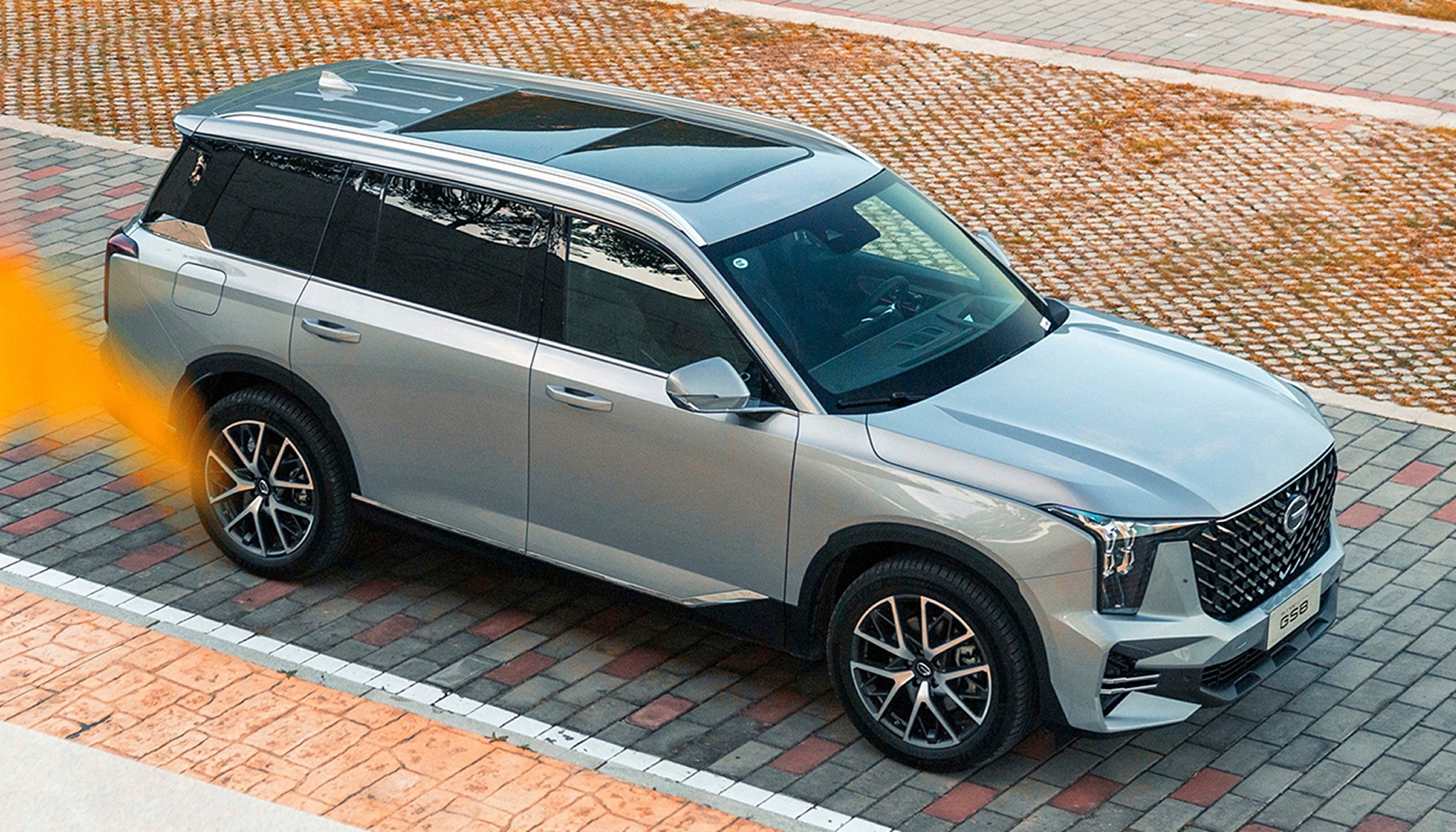
*Photo: GAC GS8, shown in official Mexican model imagery. Source: GAC Mexico.*
Yes, the GAC GS8 is a strong candidate for a family seeking a large, well-equipped seven-seat SUV, particularly when occasional third-row use and driver assistance matter. Current Mexican petrol versions combine a 2.0-litre turbo engine, eight-speed automatic and seven seats; higher trims add useful parking and assistance equipment. The best choice depends on access, luggage with all seats occupied and local trim specification. Check the exact vehicle carefully: the GS8 HEV offered in some markets has six seats, and Level 2 assistance still requires an attentive driver.
The reference vehicle here is the current Mexican petrol GS8, using the official July 2026 technical brochure and the Mexican model page checked on 22 November 2026. The six-seat GS8 HEV is discussed separately to prevent an equipment or seating mix-up. The photograph is a GS8 exterior image supplied on GAC Mexico’s official model page; image credit: GAC Mexico.
The GS8’s appeal begins with its family brief
The GS8 makes a persuasive first case when the requirement is a substantial SUV with three rows, useful comfort equipment and the ability to carry extra passengers without immediately moving into an MPV. Its strengths should be evaluated in that order. A seven-seat layout addresses a passenger problem. A wider equipment list can then make the vehicle easier to use. Styling, lighting and a large screen may contribute to the appeal, but they do not establish whether the family can complete its normal journeys comfortably.
GAC’s official petrol brochure lists a 4,980-millimetre length, 1,950-millimetre width and 2,920-millimetre wheelbase, with seven occupants including the driver. Those are useful starting facts. They support describing the GS8 as a large family vehicle, while leaving several interior questions open. Overall width does not specify the distance between child restraints, and wheelbase does not reveal how second-row adjustment is shared with the rear passengers.
For many households, the most attractive arrangement will be five people and luggage on most days, with the third row available for relatives or friends. That use gives flexibility without requiring all seven positions to be equally suited to every journey. A household carrying seven adults for hours at a time has a more demanding brief. The GS8 deserves inspection for that task too, but it needs a full passenger and luggage trial before the seat count can become a recommendation.
Confirm the seating arrangement before comparing prices
A GS8 badge does not establish the number of seats. The current Mexican page distinguishes seven-seat petrol variants from a six-seat HEV arrangement with individual center-row seats. GAC Philippines likewise describes its GS8 HEV as a six-seat SUV. That difference is fundamental if the seventh position is part of the reason for buying the car. A more efficient or more highly equipped hybrid cannot satisfy a seven-person requirement by virtue of having the same model family name.
| Reference version | Seating in the cited market | Powertrain or drive distinction | Useful reason to consider it |
|---|---|---|---|
| Mexico GS8 GL FWD | Seven-seat petrol family | 2.0 TGDI; eight-speed automatic; FWD | Lower entry into the GS8 format; verify its smaller screen and assistance specification |
| Mexico GS8 GT FWD | Seven-seat petrol family | Same broad engine and transmission family; FWD | Published step up in display, camera and Level 2 assistance equipment |
| Mexico GS8 GX AWD | Seven-seat petrol family | AWD | Adds specified convenience and assistance equipment; assess whether those additions are useful |
| Mexico GS8 HEV GX AWD | Six-seat hybrid | Hybrid with electronic transmission | An alternative for six occupants, requiring its own specification check |
| Philippines GS8 HEV | Six seats | Regional HEV specification | Demonstrates why another country’s GS8 equipment must remain separate |
This is a model-selection table, not a promise about every car in dealer stock. The current Mexican page and its brochure should be reconciled with a written quotation naming the vehicle’s build and specification. An older stock vehicle, an accessory display car and a new production example may look similar while carrying different equipment. The best evidence is a trim-specific document that matches the car being offered.
A sensible first decision is whether seven seats are essential or occasional. If seven are essential, remove six-seat variants from that shortlist immediately. If six are sufficient and center-row access is the higher priority, investigate the six-seat hybrid on its own merits. This prevents an attractive feature on one configuration from silently changing the passenger requirement that started the search.
What to check in the second and third rows
Begin with the driver in the position normally used, then put the front passenger seat where its usual occupant needs it. Only then adjust the second row and evaluate the third. Otherwise, a generous rear-seat impression can be created by moving another passenger into an unrealistic position. Record how far the second row must move to make the rear usable and whether both rows remain comfortable at the same time.
The third-row assessment needs more than a quick photograph. Look at the route through the door, the height of the step, the opening left when the second-row seat moves and the handholds available. A child may climb in easily while an older relative needs a different arrangement. Repeat the exercise with the actual people who will use the row, including their usual footwear and any mobility limitation that affects the movement.
Once seated, assess thigh support, foot placement, head clearance and access to the seat belt. A passenger whose knees are high may be content for a short transfer but less comfortable during a longer journey. That is a question of use, not a reason to dismiss the third row. An occasional seat can be highly valuable when everyone understands the journey it serves. The important point is to describe its suitability precisely.
Access also changes when a child restraint is installed in the second row. A seat that moves easily when empty may no longer provide the expected route once the restraint is properly fitted. Test the intended installation and access arrangement together. Do not assume that a sliding mechanism may be operated with a restraint attached; the vehicle and restraint instructions govern that decision. This is one of the most consequential checks for a growing family.
Luggage space needs a seven-person test
A large SUV can still require careful packing when every seat is occupied. A luggage figure quoted with the rear row folded does not describe space behind that row when it is raised. Before accepting a general description such as spacious, establish which seating arrangement the number represents and whether the measurement method matches the competitor being considered. The answer should remain attached to the configuration rather than becoming a universal boot-capacity claim.
Bring the items that make the family’s real trip difficult: a folded stroller, a medium suitcase, a sports bag, a mobility aid or shopping containers. Check whether they fit below the intended load height and whether the tailgate closes without pressure on the contents. If one third-row position folds separately, assess whether that creates the right compromise for six passengers and luggage. Keep belts and emergency equipment accessible in the final layout.
The loading process itself matters. Look at the height of the sill and the distance required to reach an item placed far forward. Check where a parcel shelf is stored when removed, and how the seats return to their locked positions after folding. A powered third row can be convenient, but a family still needs to know what is underneath the moving seats and how the mechanism signals an obstruction or incomplete movement.
A useful conclusion might be that the GS8 comfortably meets five-person daily use and occasional seven-person local journeys, while a particular holiday load needs a different arrangement. That is a valuable finding. It allows the family to decide whether a few unusual trips justify a larger people carrier, or whether the SUV’s everyday flexibility is the better overall fit.
| Family scenario | Demonstration to arrange | Decision that follows |
|---|---|---|
| Five occupants most days | Normal seating positions plus daily luggage | Prioritize cabin comfort and loading convenience |
| Seven occupants every school day | All passengers, belts, bags and entry route | Treat third-row access as a daily requirement |
| Two installed child restraints | Correct installations plus third-row access | Confirm that the remaining seats can be reached safely |
| Occasional long holiday | Seven passengers’ actual luggage or measured substitutes | Check whether the full load fits in the chosen layout |
| Older relatives use the rear | Repeated entry and exit while stationary | Evaluate step height and assistance needed |
| Tight parking at home | Width, door opening and tailgate clearance | Confirm that the large format remains usable every day |
Petrol powertrain: useful capability, separate from fuel economy
The Mexican petrol technical sheet lists a turbocharged 2.0 TGDI engine producing 248 HP and 400 newton-metres, paired with an AISIN eight-speed automatic. This is a coherent specification for a large family SUV: the engine output and conventional automatic transmission form an understandable package. The number does not prove how quickly the car will accelerate with seven passengers or how quietly it will climb a particular road. Those are legitimate subjects for a properly documented demonstration drive.
When driving an example, focus on repeatable situations. Observe the response when leaving a junction gently, how the transmission changes ratio on a modest incline and whether the driver can meter power smoothly in a parking space. If the usual route includes hills, arrange a route that includes an appropriate climb. Ask about any restrictions on carrying passengers during the demonstration and note the load that was actually present.
All-wheel drive can be useful when traction requirements justify it, but it is a separate choice from the seat count. A family mainly using maintained urban roads may value the FWD model’s configuration and price. A buyer dealing with slippery gradients or particular road conditions may have a stronger reason to examine AWD. Tire condition and suitable driving remain important; AWD equipment does not establish an unlimited off-road ability or remove braking-distance constraints.
Running costs deserve their own calculation. The petrol GS8 has a different energy system from the HEV, so a hybrid consumption claim should not be attached to it. Use local fuel prices and a realistic annual distance, then compare plausible consumption scenarios without presenting an assumed number as an observed GS8 result. FuelEconomy.gov’s efficiency guidance explains how driving and aerodynamic load affect fuel use; its general advice is not a GS8-specific test.
Which intelligent equipment makes a practical difference?
The Mexican model page gives the GT FWD a meaningful technology step beyond the entry configuration: a larger center display, a surround-view camera system and named Level 2 assistance functions. The GX AWD adds items including a head-up display, powered third-row operation and an expanded assistance list. These distinctions are more useful than saying the GS8 has technology as a single undifferentiated quality. They allow the buyer to decide which trim solves an actual problem.
A camera system is especially relevant to a vehicle of this footprint. Check the view in daylight and in the kind of dim parking environment normally used. Look at how clearly the image shows curbs, wheel proximity and the area immediately behind the vehicle. A label such as 540 degrees describes a camera presentation or composite view; it should not be read as visibility through every object or the removal of every blind spot.
A head-up display can place selected information closer to the forward line of sight. Its value depends on visibility through the driver’s usual glasses, display position and the information that the local software supports. Sit in the normal seat position and inspect it before assigning it much value. The same approach applies to wireless charging: a phone must fit, stay secure and work with its case, while navigation and audio remain easy to use.
Connected systems should be tested with the phone the owner actually uses. Pair it, place a call, open familiar navigation and check the reconnect behavior after restarting the vehicle. Ask whether software updates are available locally and which functions depend on a subscription or mobile connection. A clear answer about everyday operation is more useful than an impressive processor or screen specification that never appears in the tasks the family repeats.
Level 2 assistance requires a specific understanding
Adaptive cruise control can help regulate speed and distance under its stated operating conditions. Lane support assists with lane-related tasks. Emergency braking is designed to intervene in certain collision scenarios. These are different functions, and the presence of one does not establish the performance of another. NHTSA’s driver-assistance guide is a useful institutional explanation of those distinctions and of the continuing role of the driver.
For the GS8, confirm which systems are installed on the exact trim, then read the corresponding manual sections. Ask how the vehicle signals that lane support is unavailable, what the cruise system does in slow traffic and which warnings require immediate driver action. A salesperson can demonstrate ordinary operation on an appropriate route. Emergency braking should never be provoked informally to test a brochure claim.
These features can support an attentive driver, which is a legitimate reason to prefer an equipped GS8 trim. They should not be described as autonomous driving. The driver remains responsible for the road, surrounding traffic and safe operation. A family’s confidence should come from understanding the aids and their boundaries, rather than from assuming that a larger list transfers responsibility to the vehicle.
Safety: examine seating protection as carefully as the electronics
The local brochure lists the vehicle’s restraint and stability equipment, including airbags and child-seat anchors, with differences by trim. Read the table row by row rather than converting a maximum equipment list into a promise about the entry model. Ask where the curtain airbags extend, which seating positions have the required anchors and how the belt reminders operate. These are practical questions for a three-row vehicle, particularly when children regularly use the rear seats.
NHTSA’s child-restraint guidance emphasizes matching the restraint to the child and vehicle and following the relevant instructions. The GS8’s seven-seat capacity does not by itself prove that three particular restraints fit across a row or that every position accepts the same installation. Bring the actual restraints to the stationary inspection and obtain qualified fitting help if needed. A correct fit is more important than a photograph suggesting plenty of shoulder room.
An independent crash rating should always name the model, year and applicability. This article does not transfer an AION result or an unrelated GAC model’s score to the GS8. A local equipment list remains useful even when a matching institutional assessment is not part of the evidence gathered here. It gives the buyer a specific set of features to verify, while keeping the limits of that evidence clear.
Ownership details can decide between two suitable trims
Before signing, obtain the local maintenance schedule, warranty wording and assistance contact. Check the cost and availability of the tire size actually fitted, because the Mexican trim range includes different wheel sizes. Ask how a damaged camera or windscreen is replaced and whether recalibration is required for installed assistance systems. These are routine ownership questions that connect sophisticated equipment with its long-term usability.
Also consider the home environment. The GS8’s broad cabin has everyday value only if the parking space allows the doors to open far enough for passengers and child restraints. A garage may accommodate the body but restrict the tailgate. Inspect the regular car park, not just an open dealership forecourt. Saving a measurement or a photograph of the available space can make this an objective decision.
The GT FWD is an especially logical place to start for a buyer who wants seven seats plus the published camera and assistance upgrade. The GX AWD deserves attention when its additional traction and convenience equipment match a real requirement. The GL may satisfy a different budget and use pattern, but its exact technology specification needs to be accepted consciously. A six-seat HEV belongs on the list only when six occupants meet the brief.
Payload is separate from the number of seats
Seven approved seating positions do not mean that any combination of passengers and luggage falls within the vehicle’s weight limits. Check the payload and permitted axle loads for the exact car, using its documentation and identification labels. As a simple planning illustration, seven people averaging seventy-five kilograms would already total 525 kilograms before luggage or accessories. That arithmetic is not a GS8 payload rating; it shows why counting passengers alone cannot settle a fully loaded holiday scenario.
Include fitted accessories and the items that remain in the car when making the loading plan. A roof carrier, luggage system or other equipment may introduce additional limits that need separate confirmation. Ask for the permitted loading information before deciding that external storage solves every seven-person luggage problem. A family whose full load fits comfortably within the applicable limits can then judge cabin comfort and convenience with much greater confidence, because the chosen seating arrangement also matches the vehicle’s documented carrying capability.
Frequently asked questions
Is every GS8 a seven-seater?
No. The current Mexican petrol range is the seven-seat reference used here. The Mexican and Philippine HEV examples discussed are six-seat configurations. Count the positions in the offered vehicle and obtain the written seating specification before making a deposit.
Is the third row suitable for adults?
It depends on the adult, second-row position and journey duration. Test headroom, knee position, foot space and entry with the actual passengers. A stationary fit check supports a conclusion about space at rest; longer comfort needs a suitably representative drive.
Does the GS8 drive itself?
The Level 2 equipment described for selected trims provides driver support. It requires continuing supervision and operation within the manual’s conditions. Parking assistance and emergency intervention should be assessed as separate functions, rather than combined into an autonomous-driving claim.
Is the GS8 a good family choice overall?
Yes, it merits a serious shortlist for families wanting the flexibility and equipment of a large seven-seat SUV. Its strongest fit is a household whose passenger and luggage trial works in the intended configuration. For another approach to family practicality, explore the AION Y family EV analysis and AION UT cabin-space analysis, then read our GAC core technology analysis or GS7 range review if electrification is a higher priority.
References
- GAC Mexico: current GS8 configurations
- GAC Mexico: petrol GS8 technical brochure, updated July 2026
- GAC Global: GS8 model overview
- GAC Philippines: six-seat GS8 HEV
- GAC Philippines: regional GS8 HEV specification
- NHTSA: driver assistance technologies
- NHTSA: child restraints and booster seats
- FuelEconomy.gov: driving efficiently
Article context
Mexico seven-seat petrol; Philippines six-seat HEV comparison
The GS8 offers a compelling combination of seven-seat petrol configurations, substantial cabin dimensions and available assistance features. This evidence-based review examines seating access, luggage, trim differences, powertrain choices and the checks that determine whether it fits a particular family.
Our editorial methodologySources & context
- GAC Mexico current GS8 model and trim page ↗
- GAC Mexico GS8 petrol technical brochure, July 2026 ↗
- GAC Global GS8 overview ↗
- GAC Philippines six-seat GS8 HEV ↗
- GAC Philippines GS8 HEV specification ↗
- NHTSA driver assistance technologies ↗
- NHTSA car seats and booster seats ↗
- FuelEconomy.gov efficient driving guidance ↗
Manufacturer specifications, company announcements and independent assessments are linked above. Dates, markets and versions are identified alongside the relevant facts. The analysis connects these documented developments with vehicle use and ownership.
Read our editorial methodology