GAC’s core technology is a portfolio of dedicated electric platforms, battery protection systems, electric drives, hybrid powertrains and connected cabins. Its strongest buyer-facing examples include AEP 3.0 in the AION V, Magazine Battery safety engineering and GMC 3.0 hybrid integration in the S7 family. These technologies can make GAC attractive for families seeking spacious electrified vehicles and substantial equipment. The exact benefit depends on the exported model: a GS7 plug-in hybrid, a petrol GS8 and an AION battery-electric SUV do not share every system or feature.
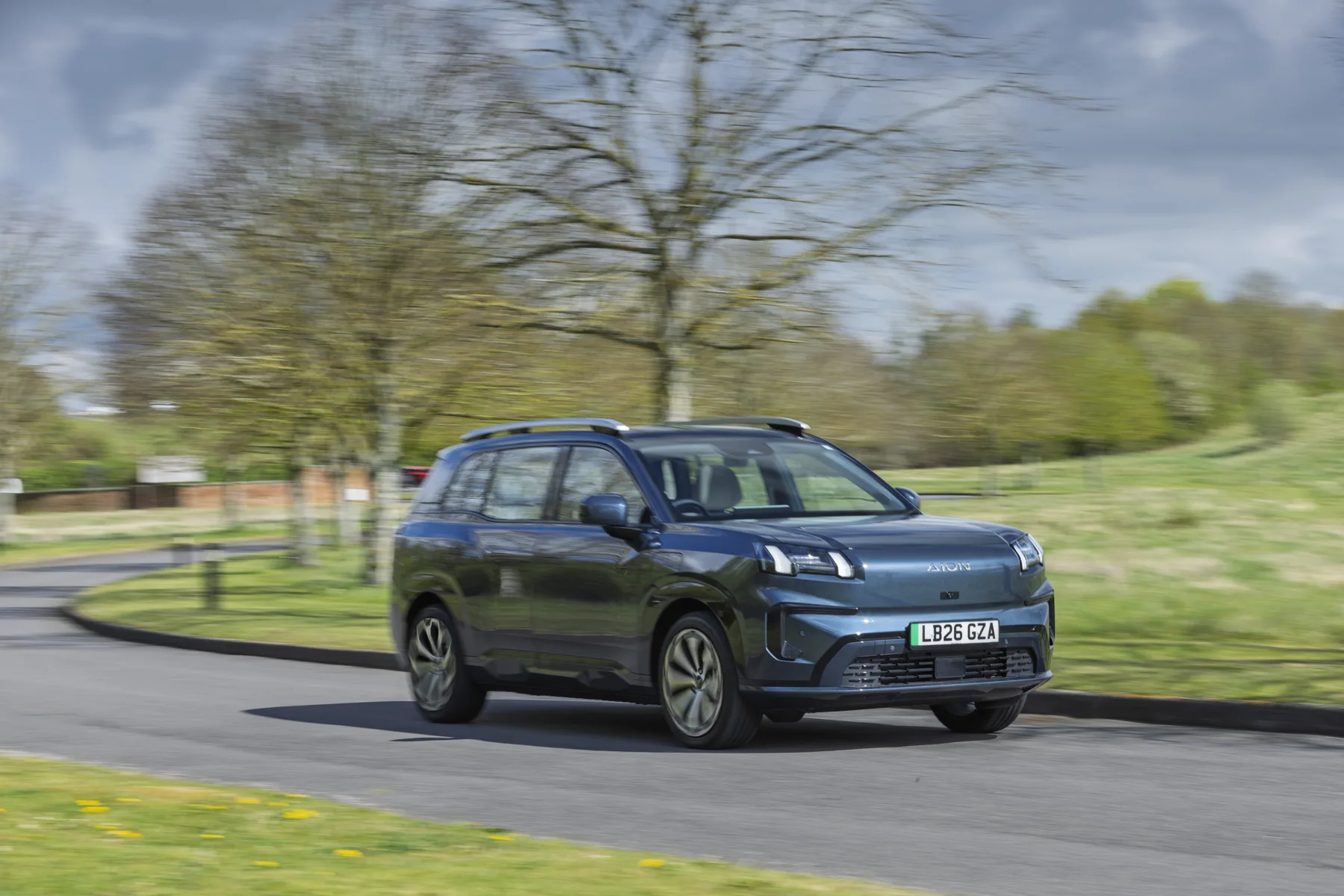
*Photo: AION V, a production example of GAC’s dedicated electric-vehicle architecture. Source: AION Auto UK.*
GAC’s core technology is a portfolio of dedicated electric platforms, battery protection systems, electric drives, hybrid powertrains and connected cabins. Its strongest buyer-facing examples include AEP 3.0 in the AION V, Magazine Battery safety engineering and GMC 3.0 hybrid integration in the S7 family. These technologies can make GAC attractive for families seeking spacious electrified vehicles and substantial equipment. The exact benefit depends on the exported model: a GS7 plug-in hybrid, a petrol GS8 and an AION battery-electric SUV do not share every system or feature.
This assessment uses information available on 22 November 2026. It explains the engineering behind current products and separates that from announced research. The pictured blue AION V is an official AION Auto UK media image, credited to AION Auto UK. It illustrates a GAC group electric vehicle; it does not imply that every technology discussed is installed in that pictured version.
Start with the engineering layer
A car manufacturer can use the word technology for everything from a battery chemistry to a voice assistant. Those features solve different problems. A platform sets major packaging and structural decisions. A powertrain converts stored energy into motion. A battery protection system manages electrical and thermal risks. Software coordinates those components and gives the driver a way to use them. Treating all of them as one feature hides the questions that matter when buying a vehicle.
For GAC, this distinction is particularly useful because its range spans several energy sources and brands. AION supplies battery-electric examples, while GAC-branded models include combustion and hybrid vehicles. A consumer should first choose the kind of vehicle that fits the available energy infrastructure, then judge the technology fitted to that vehicle. A convincing electric-platform story cannot compensate for the absence of convenient charging at a particular home. Equally, a household with dependable overnight charging may gain much more from electrification than a comparison of screen sizes suggests.
| Technology layer | GAC example | Practical question it helps answer |
|---|---|---|
| Dedicated electric architecture | AEP 3.0, illustrated by the AION V | How are battery, wheelbase and cabin space packaged? |
| Battery protection | Magazine Battery family | How are cells monitored, cooled and isolated? |
| Hybrid integration | GMC 3.0 in the S7 family | How are engine, generator and drive functions coordinated? |
| Electric drive | Quark electric drive development | How are motor, power electronics and transmission integrated? |
| Cabin software | ADiGO SPACE and related systems | Which controls, audio and connected services reach the driver? |
| Vehicle safety validation | Model-specific NCAP assessment | What did an independent assessment actually cover? |
AEP 3.0: packaging electric vehicles around their job
GAC’s AION V global-model announcement identifies AEP 3.0 as an architecture designed specifically for electric vehicles. The useful point is the dedicated layout. An electric vehicle needs space for its traction battery, high-voltage hardware and charging equipment, while the occupants still need sensible seat positions, foot room and luggage access. A platform designed around those requirements gives engineers a coherent starting point rather than a collection of separately added components.
In general engineering terms, wheelbase and floor design can change how much of an exterior footprint becomes usable cabin. They do not determine comfort by themselves. A long wheelbase can coexist with a high floor, thick front seatbacks or a seating position that does not suit a particular passenger. The benefit of a dedicated architecture therefore needs to appear in the actual vehicle: adults should have a natural knee angle, children should have appropriate restraint installation space, and luggage should fit without forcing an uncomfortable seat position.
The AION V is a concrete reason to examine GAC’s electric engineering seriously. It provides a production example rather than an isolated concept drawing. Nevertheless, buyers should inspect the country-specific vehicle. The version introduced in one market can have a different battery, charging specification or assistance package from an earlier China-market presentation. A platform name identifies an engineering family; it does not specify an individual car’s entire equipment list.
There is also a difference between platform capability and the calibration chosen for a model. Ride height, tire specification, suspension settings and battery size can change the final balance. A family prioritizing easy entry might prefer one implementation, while a driver placing greater weight on compact parking dimensions might choose another. This is why understanding the architecture is useful background, but sitting in the vehicle and reading its local technical sheet remain necessary steps.
Magazine Battery: a system around the cells
GAC’s November 2026 Magazine Battery 2.0 explanation describes heat-resistant cell compartments, monitoring and rapid cooling. These address related but distinct problems. Monitoring seeks to detect an abnormal condition. Cooling controls the temperature of the pack. Thermal barriers aim to limit the spread of heat between cells. The important engineering idea is that battery safety depends on several coordinated protections, rather than on cell chemistry alone.
Consider what happens when electrical equipment develops an internal fault. A monitoring system may see an abnormal voltage or temperature, but sensing a problem is different from physically managing it. The pack also needs an appropriate structure, electrical isolation and a way to respond to heat. A buyer cannot see most of this hardware during a showroom visit, which makes a clear manufacturer description and the applicable vehicle documentation more useful than a dramatic product name.
The same GAC explanation connects the technology with lithium iron phosphate chemistry and reports a successful nail penetration demonstration. LFP names a chemistry; Magazine Battery names an approach to pack protection. Those are separate descriptions. Neither should be used to assume the capacity, charging curve or equipment of another GAC vehicle. A hybrid battery and a large battery-electric pack can have different duties even when they share elements of a wider safety strategy.
A demonstration is evidence about its stated test conditions. It does not establish that a battery cannot be damaged or that a vehicle can never catch fire. That distinction makes the engineering easier to assess, rather than less interesting. Ask what was tested, whether it was a cell or a full pack, and which production vehicle uses the relevant design. There is no need to convert a manufacturer’s demonstration into an unlimited promise to recognize the value of layered protection.
For ownership, pack repairability, inspection procedures and warranty terms also matter. A good thermal design does not answer what happens after an underside impact, how a warning is diagnosed or whether an authorized workshop can inspect the car promptly. Those are practical extensions of battery engineering. They connect the original design with the ability to maintain the vehicle throughout its working life.
GMC 3.0: making hybrid components work together
GAC’s 2025 powertrain evaluation announcement identifies the S7 as a production application of its third-generation GMC 3.0 hybrid system. GAC reports a highly integrated design and a transmission mass below 100 kilograms. Such component figures describe engineering achievements at a defined boundary. They are not the same thing as whole-vehicle fuel economy, acceleration or efficiency over an owner’s commute.
The underlying task is demanding. A plug-in hybrid must decide how to use energy already stored in the battery, energy available from the engine and energy recovered during slowing. The best operating choice changes with speed, requested power, charge level and temperature. Packaging the hybrid hardware efficiently helps, but the control strategy must also make transitions feel predictable. A specification sheet that names several electric machines gives only part of that story.
For a buyer, the most meaningful outcome is a useful combination of electric daily driving and flexible longer trips. The current Mexican GS7 production page is a good example: it offers two battery and drive configurations, with separately labeled electric ranges. That gives households a choice between a smaller-battery version and a more highly equipped all-wheel-drive alternative. The technology becomes valuable when that choice matches actual journeys and charging access.
GAC’s hybrid engineering should also be described accurately across generations. The manufacturer’s China-market GS8 hybrid specification explicitly identifies Toyota’s fourth-generation THS transmission alongside the Trumpchi engine. That is a model-specific collaboration. It would be incorrect to relabel that entire system as wholly GAC-developed, or to assume that every later GAC hybrid uses exactly the same arrangement. A manufacturer can combine independent research with licensed or jointly integrated components.
This distinction helps owners ask better questions. The service requirements and operating behavior follow the installed powertrain, not the broad corporate partnership. A GS8 hybrid, a GS7 plug-in hybrid and an AION V battery-electric vehicle deserve separate technical descriptions. Their badges may sit within the same group, but they solve the energy-storage problem in different ways.
Electric drive: integration has several possible benefits
An electric drive combines functions that convert battery power into wheel torque. The motor produces rotation; power electronics control electrical energy; reduction gearing adapts motor speed to the wheels. Combining these into a compact assembly can help packaging and reduce duplicated housings, connections or cooling arrangements. However, integration is an engineering tradeoff, not a score that can be read simply from a higher number in a product name.
GAC’s powertrain announcement also discusses Quark electric drive technology and identifies a production AION application. For the shopper, the useful follow-up is whether the exact car has the desired performance, efficiency and service support. Maximum motor output is one measure. Sustained operation, thermal management and the behavior of regenerative braking can be equally noticeable during everyday driving. None can be inferred reliably from the size of a center display.
Regeneration is a particularly practical area to evaluate. A smooth pedal response helps a driver place the vehicle accurately in slow traffic. A clear display can explain when energy is being recovered, while consistent calibration makes the car easier to use. During a demonstration, compare gentle braking, parking maneuvers and a normal pull-away. Those simple situations can reveal more about everyday integration than repeatedly accelerating hard on an unfamiliar route.
ADiGO: separate useful cabin functions from driving automation
GAC’s 2024 sustainability report describes ADiGO SPACE as a cabin software framework, including audio, interaction and connected services. That umbrella covers several experiences. A voice command can change a cabin setting. Smartphone integration can provide familiar navigation. An audio system can improve entertainment. These features may share computing resources, but each needs its own assessment of usability and local availability.
The most useful intelligent cabin is one that reduces effort during repeated tasks. Try adjusting temperature, finding a destination and reconnecting a phone after the car restarts. Check whether important functions remain easy to locate when the driver is already occupied. Language recognition and connected services may depend on regional software, mobile data or account arrangements. A capability demonstrated in a launch presentation should be checked on the actual market vehicle.
Driver assistance belongs to a different category. Adaptive cruise control, lane support and emergency braking assist with parts of driving, but do not turn an equipped GAC into an autonomous vehicle. NHTSA’s assistance-technology guide explains the distinction between warning, intervention and continuing driver responsibility. Labels such as L2 or L2++ should never replace the operating limitations in the owner’s manual. The driver must understand supervision, handover and sensor limitations.
Independent safety results add a different kind of evidence
Engineering descriptions explain what a manufacturer intends a system to do. Independent assessment examines the behavior of a specified vehicle under a defined protocol. Both are useful, but they answer different questions. In GAC’s case, the AION V supplies a concrete independent example. Its result should be read with the tested model, assessment year and applicable regional versions attached.
| Assessment source | Vehicle and datestamp | Published category results | What transfers to another GAC? |
|---|---|---|---|
| Euro NCAP | AION V, 2025 | Adult 88%; child 85%; vulnerable road users 79%; safety assist 78% | Evidence of this assessed AION V; no automatic rating for GS7 or GS8 |
| ANCAP | AION V, 2025; applicable Australian and New Zealand variants | Adult 88%; child 87%; vulnerable road users 79%; safety assist 79% | Evidence within ANCAP’s stated applicability |
These figures come directly from Euro NCAP’s AION V assessment and ANCAP’s model page. Their differing category values are a reminder to preserve the identity of the assessment. They should not be averaged into a new score. Nor should an AION V result be presented as a GS8 or GS7 crash-test result merely because the vehicles share a corporate parent.
A responsible interpretation still leaves a positive finding: GAC group has production vehicles with documented independent safety performance. The next step is to look for evidence covering the exact model being considered. If a local GS7 document lists airbags and driver assistance, those remain equipment facts until an applicable institutional test result is identified. An equipment list and a crash score are complementary evidence, rather than substitutes.
Manufacturing and future research need different buying questions
A technology portfolio only benefits a customer when it can be manufactured consistently, serviced and updated. The relevant ownership evidence includes the maintenance schedule, regional parts supply, repair instructions and the scope of software support. A factory announcement may indicate investment or capacity, but it cannot establish the reliability of an individual vehicle over many years. Long-term reliability requires experience across vehicles, environments and maintenance histories.
The same reasoning applies to advanced research such as solid-state batteries. A research announcement, a pilot manufacturing step and a customer vehicle available for delivery are different milestones. Buyers should confirm the chemistry and capacity written for the car they can actually order. Assigning an announced future battery to a current showroom vehicle would obscure the meaningful progress already present in production products.
A helpful purchase method is to rank technology by the job it performs. Someone who carries children every day may value usable cabin space and predictable assistance behavior. Someone with dependable home charging may place greater weight on electric operation and charging convenience. A frequent long-distance driver may prefer a hybrid balance. In each case, ask the dealer to demonstrate the function that matters, and attach the answer to the exact trim.
Energy, power and temperature explain the tradeoffs
Two cars can carry batteries with similar published capacity and behave differently because energy and power describe different things. Energy is the stored quantity that can support a journey. Power is the rate at which energy is delivered or accepted. A high motor-power claim therefore does not establish a long driving distance, and a large battery does not by itself establish a short charging stop. Understanding the distinction makes the platform, pack and drive descriptions fit together.
Temperature links those components. Motors, power electronics and batteries all have operating limits, and the control system must balance the requested performance with those limits. In engineering terms, a cooling system is part of the ability to sustain operation, rather than merely an accessory that keeps a component comfortable. The most useful question is how the exact vehicle manages the owner’s intended conditions, including repeated journeys and the local climate. A peak figure is only one point in that operating picture.
Cabin conditioning adds another demand. Heating or cooling the occupied space uses energy that is then unavailable for propulsion. Good vehicle integration can coordinate those demands, but the final result still depends on the temperature difference, settings and length of the trip. A short journey with substantial initial cabin conditioning can have a different energy-use pattern from one long journey. That explains why a single laboratory distance cannot fully describe a household’s repeated winter or summer routine.
Charging has the same distinction between a peak and a sustained process. A car may accept different power as charge level and temperature change. The charging control strategy protects the battery while adding energy, so quoting only a maximum charger rating leaves out much of the session. For a current GAC, ask for the specified charging interval and conditions for that model. The engineering claim becomes more useful when it connects to a complete task, such as replenishing the energy used during a normal day.
Component efficiency also needs its boundary stated. A transmission’s maximum efficiency is not a claim that the entire car converts the same share of fuel energy into movement. The engine, battery, electrical path, tires and aerodynamic resistance sit elsewhere in the energy chain. This is why GAC’s integration achievements should be read alongside the local vehicle’s certified consumption and range. Recognizing those boundaries allows buyers to appreciate specific engineering progress without assigning it an outcome that the component figure did not measure.
Frequently asked questions
Is GAC technology independently developed?
GAC has independent platform, battery-protection, drive and hybrid programs, while also using collaborations and supplier systems. The correct answer depends on the component and model. The China-market GS8 THS specification is an example of why independent work and collaboration should both be acknowledged accurately.
Does Magazine Battery mean every GAC has the same battery?
No. The name describes a battery-protection technology family. Capacity, chemistry, intended use and charging specification remain vehicle-specific. Read the local battery entry and warranty for the selected vehicle rather than transferring a figure from another GAC or AION model.
Are intelligent GAC SUVs autonomous?
An equipped consumer SUV with Level 2 assistance still requires active driver supervision. Parking assistance, lane support and adaptive cruise have separate boundaries. Ask for the local manual and a supervised demonstration so that the names on the brochure correspond to functions you understand.
Which technology should a family prioritize?
Begin with energy access and passenger needs. A spacious electric platform is appealing when charging fits daily life; a plug-in hybrid can suit regular charging plus longer trips. Seating and restraint fit, assistance usability and local support should then determine the shortlist. Our GS8 family assessment and GS7 range review apply those questions to specific vehicles.
For range and charging considerations, use the GS7 range and charging analysis. For a model comparison, follow the GS7 versus RAV4 configuration analysis.
References
Article context
Global; model-specific regional examples
GAC combines electric platforms, battery protection, hybrid engineering and connected cabins. This guide explains what those technologies do, which models illustrate them, how independent safety evidence applies, and which questions turn a technology claim into a useful purchase decision.
Our editorial methodologySources & context
- GAC global AION V announcement and AEP 3.0 ↗
- Magazine Battery 2.0: official November 2026 explanation ↗
- GAC third-generation hybrid and electric-drive announcement ↗
- GAC GS8 China-market THS hybrid specification ↗
- GAC Group 2024 sustainability report ↗
- Euro NCAP AION V 2025 assessment ↗
- ANCAP GAC AION V 2025 assessment ↗
- NHTSA driver assistance technologies ↗
Manufacturer specifications, company announcements and independent assessments are linked above. Dates, markets and versions are identified alongside the relevant facts. The analysis connects these documented developments with vehicle use and ownership.
Read our editorial methodology