The current GAC GS7 PHEV offers a useful combination of electric commuting potential and petrol-supported longer journeys. Mexico’s production specifications list 103 km NEDC electric range with the 21.3 kWh 2WD battery and 150 km NEDC with the 36.3 kWh 4WD battery. These are laboratory claims, not guaranteed motorway distances. The spacious five-seat layout and available comfort equipment strengthen its appeal for families who can charge regularly. Choose the exact market specification carefully: overseas GS7 PHEV belongs to the modern S7 family, rather than the older petrol GS7.
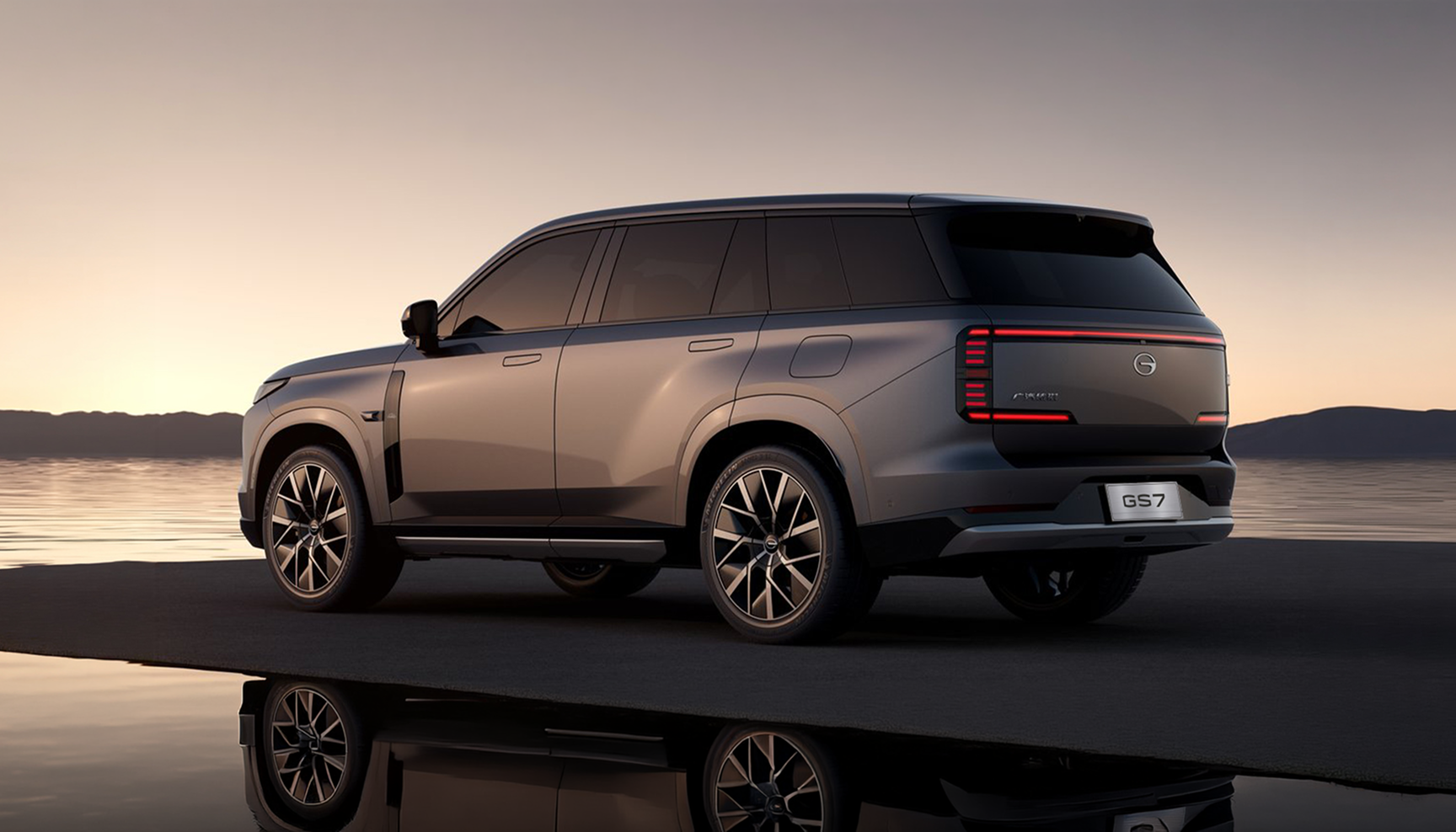
*Photo: Modern GAC GS7 PHEV, shown in official Mexican model imagery. Source: GAC Mexico.*
The current GAC GS7 PHEV offers a useful combination of electric commuting potential and petrol-supported longer journeys. Mexico’s production specifications list 103 km NEDC electric range with the 21.3 kWh 2WD battery and 150 km NEDC with the 36.3 kWh 4WD battery. These are laboratory claims, not guaranteed motorway distances. The spacious five-seat layout and available comfort equipment strengthen its appeal for families who can charge regularly. Choose the exact market specification carefully: overseas GS7 PHEV belongs to the modern S7 family, rather than the older petrol GS7.
This is a specification-based review dated 22 November 2026, centered on the Mexican production configurations and the current brochure labeled GS7 2027. It uses the brochure’s technical table and the cycle-labeled trim figures, with global S7 information kept separate. The cover photograph shows the modern GS7 PHEV and comes from GAC Mexico; image credit: GAC Mexico.
Identify the modern GS7 before reading a range claim
Searching the GS7 name can bring together vehicles from different periods. The subject here is the current five-seat plug-in hybrid. GAC’s Chinese-market launch announcement calls the modern model S7, while its Mexican product page calls it GS7 PHEV. GAC’s 2026 corporate milestone article identifies GS7 as its first plug-in hybrid SUV launched overseas and says it had reached more than fifteen countries and regions. These sources establish the modern model context without relying on an old petrol GS7 specification.
The distinction matters for every part of the review. A petrol engine’s fuel consumption from an older vehicle cannot describe the new plug-in system. A photograph of an older front end is not a useful illustration of the current cabin or body. Likewise, China-market equipment in a launch announcement does not automatically specify an exported GS7. The name connection identifies the family; the local technical sheet identifies the car being considered.
For a quotation, write down country, model year, trim, battery and driven wheels together. A description such as GS7 hybrid leaves too much unresolved. The two Mexican configurations already demonstrate why: their battery capacities and electric ranges differ substantially. The version that is most compelling for a short daily journey may not be the same one that appeals to a household wanting the fullest comfort specification.
The useful electric-range figures
The current Mexican GS7 production page gives separate, cycle-labeled range figures for 2WD and 4WD. The linked technical brochure, checked on the publication date, confirms the same battery and NEDC entries in its specification table. These are the strongest starting points for a Mexican comparison because both the configuration and the measurement label are visible.
| Mexican production configuration | Published battery capacity | Published electric range | Measurement label | What it describes |
|---|---|---|---|---|
| GS7 PHEV 2WD | 21.3 kWh | 103 km | NEDC | Electric-distance claim for the smaller-battery configuration |
| GS7 PHEV 4WD | 36.3 kWh | 150 km | NEDC | Electric-distance claim for the larger-battery configuration |
| Global S7 reference, separately scoped | 36.3 kWh Hybrid Magazine Battery | 150 km | NEDC | Global presentation; confirm local delivery specification |
The larger published battery capacity is approximately seventy percent higher, while the quoted NEDC electric distance is approximately forty-six percent greater. That arithmetic describes the relationship between the brochure entries; it does not measure either version’s real efficiency. The pack figures may include energy that is reserved rather than available to the driver, and differences in vehicle configuration can also affect the result. Dividing nominal capacity by advertised distance cannot establish a verified consumption figure.
NEDC is the test-cycle label attached to these claims. It should travel with the number whenever it is quoted. A value from a different cycle, a different country or a road journey is not interchangeable. There is no reliable universal percentage that converts every NEDC claim into a specific owner’s motorway range. A sensible review preserves the official reference and then explains the conditions that may change the owner’s outcome.
Why the headline figures need careful reading
The current Mexican page also carries an upper headline of 205 km electric range and 1,150 km combined range. In the same page’s trim details, the electric figures are 103 and 150 km with NEDC clearly named. This is an unresolved presentation inconsistency. The review therefore uses the cycle-labeled production entries rather than treating the larger headline as an additional verified electric capability of the Mexican 4WD version. A buyer should request written clarification if that headline affects the decision.
The global S7 page adds another clearly different reference: 1,020 km combined range labeled CLTC, alongside 150 km electric range labeled NEDC. Those two labels describe different claims. The combined figure involves both energy sources; it is not a battery-only distance. It should not be used as a guaranteed distance between motorway stops, nor should the electric value simply be subtracted to derive a reliable petrol-only range.
| Published claim | Source context | Appropriate use | Inference to avoid |
|---|---|---|---|
| 103 or 150 km NEDC electric | Mexican production trim entries | Compare the two stated Mexican configurations | Guaranteed commuting distance in all conditions |
| 205 km electric headline | Mexican page; cycle not shown beside the headline | Identify a clarification needed before purchase | Replacing the more specific trim entry without explanation |
| 1,150 km combined headline | Mexican page | Recognize a total-range marketing claim | Calling it electric range or proven highway range |
| 1,020 km CLTC combined | Global S7 presentation | Understand that stated global reference | Applying it unchanged to every export market |
This distinction supports a more useful recommendation. The GS7 has a substantial published electric capability in its local production figures; it does not need an unexplained headline to make a case. Its attraction is the possibility of covering suitable routine journeys electrically while retaining a petrol energy source for longer travel. Whether that possibility becomes the owner’s daily experience depends on charging, route and operating conditions.
How the plug-in hybrid changes everyday use
A PHEV carries a battery that can accept external energy and a combustion system that uses fuel. The US Department of Energy’s explanation of plug-in hybrids describes these energy paths and regenerative charging. The owner’s benefit comes from using the externally supplied energy effectively. A car that is plugged in conveniently at home can start repeated journeys with stored electrical energy; a car that is rarely plugged in has a different operating pattern.
For the GS7, this makes the daily routine more important than the longest advertised range. Imagine a household that regularly returns to a suitable private parking space, drives a moderate daily distance and takes longer trips occasionally. That is a promising setting for investigating the plug-in format. The battery may cover much of the routine while the fuel system adds flexibility when the itinerary changes. This is a use-case assessment, not a promise that the engine will remain off throughout every journey.
The vehicle’s control system may choose engine operation for reasons beyond a distance counter reaching zero. The local manual defines how temperature, power request, selected mode and battery protection influence operation. A buyer who expects silent electric departure every morning should ask for a demonstration under representative conditions. The phrase electric range describes a test result; it does not remove the hybrid system’s need to manage its components.
A household without regular charging can still operate a plug-in hybrid, but it should evaluate the purchase differently. The extra battery and plug-in hardware need to earn their place in the use pattern. Compare the expected hybrid operation, charging inconvenience and total cost against a conventional hybrid or another suitable vehicle. A GS7 may still be attractive for space or comfort, yet the range argument becomes stronger when charging is a normal, easy part of ownership.
Build a commuting plan with a reserve
Start by recording the longest normal day rather than the shortest commute. Include a school detour, shopping stop, evening activity and any distance traveled before returning to the charger. A route that is comfortably inside a laboratory range claim can still require a margin. The purpose of that margin is to accommodate variation, not to declare a new unofficial GS7 range number.
For an illustrative planning exercise, suppose a household needs sixty kilometres on its busiest routine day. That number is the household’s requirement, not a measured GS7 result. The next question is whether an actual demonstration or early ownership log shows enough electric operation for that route with a sensible reserve. If the result depends on arriving nearly depleted every day, the larger battery or a different energy plan may be worth considering. If the smaller battery comfortably covers the task, the higher specification needs another justification.
Record conditions along with distance. Sustained speed, hills, passenger load, ambient temperature and cabin conditioning can change energy use. A journey with repeated cold starts is different from one continuous trip, even if the odometer total is the same. Recording those differences makes owner reports useful. Without them, two apparently conflicting range accounts may simply describe different tasks.
For a longer journey, plan around suitable fuel stops, rest breaks and charging opportunities rather than chasing the theoretical maximum. The GS7’s petrol-supported flexibility is a practical advantage when a charger is occupied or an itinerary changes. That advantage is best understood as a wider set of energy options. It does not justify using the last possible kilometre of either energy source as the normal trip plan.
Charging: ask for the installed specification
The first charging question is where the car will stand for several hours. Check the connector supplied in the selected market, the vehicle’s AC charging limit, the electrical installation and the cable included with the car. A nearby public charger can be useful, but its availability is not equivalent to having a dependable home connection. Establish the normal charging arrangement before making a large battery the center of the purchase decision.
DOE’s charging guidance distinguishes charging arrangements and emphasizes access to suitable equipment. For a Mexican GS7, obtain the current local connector and charging-power details in writing. Do not import a connector assumption from another country or infer DC charging speed solely from the size of the battery. A brochure entry should identify the interval and conditions when it quotes a charging time.
A basic calculation can help interpret a demonstration without becoming a vehicle claim. If an imaginary car needs twenty kilowatt-hours and receives an average five kilowatts into its battery, the energy transfer would take four hours before considering the details of a real system. The example explains why average power and energy needed matter. Peak charger rating alone cannot describe the whole session, and a partial top-up cannot be treated as a full-charge time.
Ask the dealer to show a normal plug-in, charging status, scheduled charging control and cable release. Check that the owner can understand a failed session and find assistance. These modest tasks have a large effect on satisfaction because they are repeated. The best charging specification is useful only when the owner can use it reliably in the place where the vehicle normally parks.
The rest of the vehicle strengthens the family case
The Mexican GS7 technical table describes a five-seat body measuring 4,900 millimetres long and 1,950 millimetres wide, with a 2,880-millimetre wheelbase. Those dimensions make cabin and parking fit worth a careful look. The GS7’s appeal is a roomy five-person format rather than an extra third row. A family needing seven seats should consider the GS8 assessment separately instead of assuming that a larger model number or an SUV badge supplies the missing positions.
Compare the versions around the occupants who actually travel. The current Mexican page distinguishes the 4WD with items including Nappa upholstery, a head-up display, soft-close doors and the higher audio specification. Those features can make the GS7 particularly attractive to a household that values rear-seat comfort as well as electric commuting. They should be priced as equipment choices in addition to the battery upgrade, because the trim bundles several changes together.
A comfort feature deserves a functional test. Check seat travel with the driver in the proper position, try the rear backrest angle and inspect how the luggage area is used. A reclining seat position may change how cargo fits behind it. Check climate controls and charging points from the rear seats, rather than assuming that a large front display provides an equally convenient experience for everyone.
Likewise, a large SUV should be evaluated where it will park. Measure usable bay width, mirror clearance and door opening. The GS7’s generous format may be a significant benefit on family trips, while the same dimensions require more care in an older garage. A surround camera can help with observation, but physical clearance still needs to exist. This is a practical fit question that cannot be resolved by comparing range claims.
Performance and safety require separate evidence
The global S7 presentation gives a manufacturer acceleration claim and describes all-wheel drive and damping equipment. These are useful subjects for a model overview, but they are not results from a drive conducted for this review. There is no basis here for an invented claim about steering feel, braking distance or cabin noise at a particular speed. A test drive should assess those qualities on the local configuration under conditions that resemble the owner’s use.
For hybrid behavior, include an ordinary pull-away, smooth deceleration and a section where the engine is operating normally. Note battery charge at the start and finish. A short drive begun with a high charge level may not answer questions about a long fuel-supported trip. If that trip matters, ask whether a representative demonstration can be arranged rather than extrapolating from a quiet first few minutes.
The GS7’s listed driver assistance should be approached as support for a responsible driver. NHTSA’s guide explains warning and intervention systems, while the local manual defines their boundaries. A camera list or parking-assistance feature is not an independent crash score. Similarly, the equipment described in the Chinese S7 launch should not replace the airbag and assistance specification supplied for the exported vehicle.
Which GS7 configuration is the better fit?
The 2WD deserves the first look when the smaller-battery electric capability fits the household’s demonstrated routine and the included equipment meets its needs. Choosing it can be a rational use of the range rather than a compromise made on a single headline. The question is whether the daily task is served comfortably, with suitable reserve and convenient charging.
The 4WD becomes more persuasive when the household values the larger battery, the local all-wheel-drive configuration and the additional cabin equipment together. It is especially worth examining for longer normal days and buyers who place a high value on the rear-seat experience. The published battery increase is real specification evidence. Its financial value still depends on how often the owner uses the extra capability and the bundled features.
For either version, compare total ownership questions: warranty, battery coverage, maintenance, tires, insurance and the authorized service location. Obtain quotations for the same period and distance. A monthly payment can obscure a different deposit, finance term or final payment, so keep those terms separate from the technical comparison. A compelling vehicle should remain compelling when the charging plan and purchase terms are written down.
Track energy costs without losing the two energy sources
A useful ownership log records electrical energy purchased and fuel added over the same period, together with distance traveled. Looking only at a low fuel reading after several charges would leave out part of the energy bill. Looking only at the electricity used for a short commuting week would leave out the fuel-supported holiday. The GS7’s flexibility is precisely why both sources belong in the record, even when one contributes much more during a particular month.
For a purely illustrative budget, imagine a household buying twenty kilowatt-hours of electricity and five litres of fuel during a recorded period. Its energy cost is twenty times the electricity price per kilowatt-hour, plus five times the fuel price per litre. Those quantities are invented teaching inputs, not GS7 consumption figures. They demonstrate how to use local tariffs without pretending that an advertised combined distance has supplied an owner’s actual running cost.
For a comparison between the 2WD and 4WD, keep the same annual distance and charging opportunity. Then consider how frequently the additional battery capability might change fuel use or charging interruptions. Include purchase terms, insurance and maintenance separately. This prevents a potentially useful larger battery from being justified by savings that have never been calculated, while allowing a household that values its convenience to make that preference explicit.
Frequently asked questions
Is GS7 range 150 km or more than 1,000 km?
They describe different things. The Mexican 4WD production electric entry is 150 km NEDC. The global S7 page gives a separately labeled 1,020 km CLTC combined claim using electricity and fuel. Neither establishes a guaranteed distance on a particular owner’s journey.
Should I rely on the Mexican 205 km headline?
Request clarification. The page’s more specific trim entries and linked technical table identify 103 and 150 km NEDC. This review uses those entries and keeps the unexplained larger headline visible as an unresolved source inconsistency.
Can I use the GS7 without home charging?
The hybrid format provides a fuel energy source, but the plug-in benefit is strongest when charging fits the routine. Evaluate a dependable workplace arrangement if available, then compare the effort and cost with alternatives. Do not assume that buying a larger battery automatically means regularly using its externally charged energy.
Is this a real road-test review?
It is an evidence-based specification and use-case review. It supports a shortlist and identifies the conditions to evaluate on a drive. It does not claim measured highway range, handling or long-term reliability that the cited documents do not establish. Continue with the GS7 versus RAV4 analysis and GAC technology explanation for the related decisions.
References
- GAC Mexico: current GS7 PHEV production page
- GAC Mexico: current GS7 technical brochure
- GAC Global: current S7 model page
- GAC: Chinese-market S7 launch
- GAC: 2026 overseas GS7 context
- US Department of Energy: how plug-in hybrids work
- US Department of Energy: charging equipment and access
- NHTSA: driver assistance technologies
Article context
Mexico production specifications; global S7 context
The modern GS7 PHEV pairs five-seat family space with two Mexican battery configurations. This review separates electric and combined range, reconciles competing headline figures, explains charging and planning considerations, and identifies the households most likely to benefit from the plug-in system.
Our editorial methodologySources & context
- GAC Mexico current GS7 PHEV production page ↗
- GAC Mexico current GS7 technical brochure, labeled GS7 2027 ↗
- GAC Global S7 model specification ↗
- GAC Chinese-market S7 launch ↗
- GAC 2026 corporate article identifying overseas GS7 PHEV ↗
- US Department of Energy how plug-in hybrids work ↗
- US Department of Energy charging equipment and access ↗
- NHTSA driver assistance technologies ↗
Manufacturer specifications, company announcements and independent assessments are linked above. Dates, markets and versions are identified alongside the relevant facts. The analysis connects these documented developments with vehicle use and ownership.
Read our editorial methodology