For Mexican buyers, the GS7 PHEV is the stronger configuration to investigate when a larger five-seat cabin, a substantial plug-in battery and high comfort equipment are priorities. The Toyota RAV4 offers a smaller footprint and a choice of conventional-hybrid or plug-in operation. Compare the current GS7 production trims with Mexican RAV4 specifications: the GS7 4WD lists 36.3 kWh and 150 km NEDC, while RAV4 PHEV lists 22.7 kWh and an 84 km estimate without the same cycle label. Those distances do not establish a directly comparable real-world range advantage.
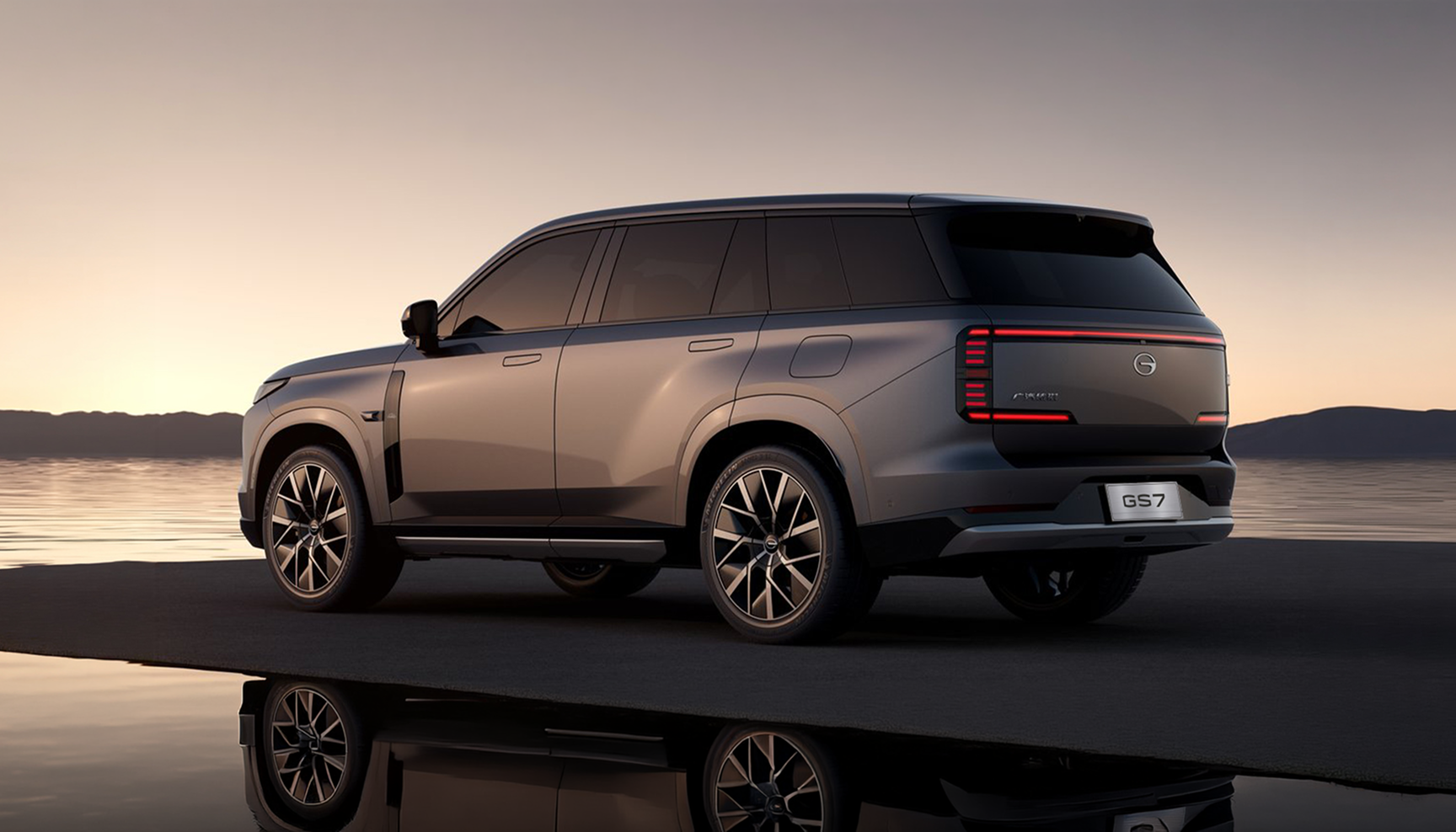
*Photo: Modern GAC GS7 PHEV, shown in official Mexican model imagery. Source: GAC Mexico.*
For Mexican buyers, the GS7 PHEV is the stronger configuration to investigate when a larger five-seat cabin, a substantial plug-in battery and high comfort equipment are priorities. The Toyota RAV4 offers a smaller footprint and a choice of conventional-hybrid or plug-in operation. Compare the current GS7 production trims with Mexican RAV4 specifications: the GS7 4WD lists 36.3 kWh and 150 km NEDC, while RAV4 PHEV lists 22.7 kWh and an 84 km estimate without the same cycle label. Those distances do not establish a directly comparable real-world range advantage.
This comparison is dated 22 November 2026. It uses Mexico’s current GS7 production page and linked brochure labeled GS7 2027, alongside Toyota Motor Sales de México’s RAV4 HEV and PHEV MY2026 technical sheets. The Toyota documents are manufacturer sheets hosted by authorized Mexican dealers. Their model years are stated rather than silently treated as identical. The pictured vehicle is the modern GS7 PHEV; image credit: GAC Mexico.
First choose the comparison that matches the purchase
There are two useful questions inside GS7 versus RAV4. One compares plug-in hybrids with each other: GS7 PHEV against RAV4 PHEV. That places two vehicles with externally rechargeable batteries on the same broad energy basis. The other compares the GS7 plug-in proposition with a RAV4 conventional hybrid. That is an ownership-pattern decision, because the RAV4 HEV does not ask the owner to arrange external charging. The answer can change even when the passengers and budget remain the same.
The comparison also involves a meaningful difference in format. The modern GS7 is a larger five-seat SUV; the Mexican RAV4 dimensions describe a shorter vehicle. A buyer seeking generous passenger space may deliberately prefer the GS7’s scale. Someone whose daily problem is a tight parking bay may value the Toyota’s smaller footprint. Neither decision should be disguised as a simple contest between brand reputations, since the physical vehicles address slightly different priorities.
The modern GS7 PHEV belongs to the S7 family presented on GAC’s global S7 page. It should not inherit the older petrol GS7’s specifications. Likewise, RAV4 information from the United States, Europe or an earlier Mexican generation should not be combined with a Mexican MY2026 brochure. Keeping the reference vehicles visible prevents an apparently neat table from becoming a mixture of products that no dealer can actually supply.
Configuration facts on one market basis
The first table uses the GAC Mexican technical brochure and Toyota’s Mexican RAV4 PHEV sheet. Battery entries are published capacities, with usable energy not established here. The range labels are preserved exactly enough to show why the distances cannot be ranked as if they came from one common test.
| Specification | Mexico GS7 PHEV 2WD | Mexico GS7 PHEV 4WD | Mexico RAV4 PHEV MY2026 |
|---|---|---|---|
| Energy arrangement | Plug-in hybrid | Plug-in hybrid | Plug-in hybrid |
| Seats | Five | Five | Five |
| Published battery | 21.3 kWh, LFP | 36.3 kWh, LFP | 22.7 kWh, lithium-ion |
| Published electric distance | 103 km NEDC | 150 km NEDC | 84 km estimated; same cycle label not supplied in sheet |
| Length | 4,900 mm | 4,900 mm | 4,600 mm |
| Width | 1,950 mm | 1,950 mm | 1,855 mm |
| Wheelbase | 2,880 mm | 2,880 mm | 2,690 mm |
| Drive configuration | 2WD | 4WD | AWD |
| AC charging information used here | Confirm local supplied connector and rate | Confirm local supplied connector and rate | 7.7 kW; SAE J1772; approximately 3.5 hours in stated AC conditions |
The GS7 is 300 millimetres longer, 95 millimetres wider and has a 190-millimetre longer wheelbase than the RAV4 PHEV described in these documents. Those differences are calculated directly from the listed dimensions. They support a useful expectation about vehicle scale, but do not calculate legroom or luggage capacity. Interior packaging and seat design still determine how the extra exterior dimensions are used.
On battery size, the GS7 4WD’s published capacity is roughly sixty percent above the RAV4 PHEV entry. That is a genuine specification difference and a sensible reason to investigate the GAC for longer electric routines. It does not prove sixty percent more usable energy, sixty percent lower operating cost or a particular extra motorway distance. Those outcomes require comparable definitions and representative operation.
Space is the clearest reason to favor the GS7 shortlist
For a household that wants five seats and a broad cabin, the GS7’s format is a strong starting advantage. The useful question is whether that scale appears where the household needs it: rear passenger posture, room around child restraints, access to the middle position or the ability to carry particular luggage. A longer wheelbase is relevant evidence, but the passenger trial should decide how valuable it is.
Set both front seats to the actual occupants’ positions before comparing the rear. Then assess the same adults or child restraints in each vehicle. A rear bench can appear spacious when the front seat is unrealistically far forward, so the setup matters. Check whether a rear-facing restraint changes the front passenger’s comfort and whether an adult can buckle in beside the installed seats without difficulty.
For luggage, use the same items and the same seat positions. A boot-volume figure without a common measurement standard can produce a misleading result. Bring the stroller or cases that matter, check load-floor access and confirm where the charging cable will live. A plug-in vehicle that carries its cable in a loose bag may need a deliberate place for it when the luggage area is full.
The larger GS7 will be most rewarding when that additional format is used regularly. If a household rarely carries rear passengers and works around a small garage every day, the RAV4’s compactness may be a stronger practical feature. Measuring the regular parking location makes this tradeoff concrete. Include the space needed for door opening and mirrors rather than comparing body width with an empty parking rectangle.
The GS7 trim decision changes more than battery size
The current Mexican GS7 page distinguishes 2WD and 4WD equipment. The 4WD’s published list includes Nappa upholstery, a head-up display, soft-close doors and the higher ADiGO audio configuration. These are legitimate reasons to prefer the GAC for buyers seeking a rich cabin specification. They should remain attached to that trim rather than being represented as universal equipment across the range.
The 2WD can still be a sensible choice if its electric capability meets the routine and the included cabin equipment satisfies the occupants. A comparison that considers only the largest battery would miss that value. Decide how much of the price difference is justified by extra electric capability, how much by the drive configuration and how much by comfort features. The bundled equipment may be attractive, but it should not be purchased without identifying which parts will be used.
| Configuration or feature area | GS7 PHEV reference | RAV4 reference | Practical interpretation |
|---|---|---|---|
| Center display | 15.6-inch in Mexican GS7 technical table | RAV4 PHEV: 12.9-inch JBL audio display | Compare controls, visibility and phone integration, not diagonal alone |
| Driver display | GS7: 8.88-inch listed | RAV4 PHEV: 12.3-inch MID | Decide which information is useful from the normal driving position |
| Audio | GS7 web trim list: 12 speakers in 2WD; 22 in 4WD | RAV4 PHEV sheet: nine JBL speakers | Speaker count does not measure sound quality; audition both |
| Cabin upgrade | GS7 4WD: Nappa, soft-close doors and HUD listed | Check the exact RAV4 PHEV or HEV trim table | GAC’s higher comfort specification is a reason for a closer inspection |
| Conventional hybrid choice | GS7 reference here is PHEV | RAV4 HEV range is available | Toyota offers an alternative when external charging is inconvenient |
| Family layout | Both cited models have five seats | Both cited models have five seats | Neither supplies a seventh passenger position |
The screen comparison is deliberately functional. A bigger diagonal may make a map easy to see, yet menu organization and glare determine whether routine controls are convenient. Try climate adjustment, a phone call and a navigation instruction while stationary. Check the display’s brightness at night if the vehicle will be used on unlit roads. The answer cannot be reduced to a single inch measurement.
Similarly, audio needs an audition at a sensible volume with familiar material. Check rear-seat listening as well as the driver’s position. An impressive speaker count does not identify the quality of tuning, source material or cabin acoustics. The GS7 4WD’s equipment list is appealing, but the household should value the experience it provides rather than the count alone.
RAV4 HEV is a separate and useful alternative
Toyota’s Mexican RAV4 HEV MY2026 sheet lists several trims. It gives 226 HP for the front-wheel-drive LE and XLE configurations and 236 HP for the all-wheel-drive Woodland and Limited configurations. The important distinction for this comparison is the non-plug-in energy arrangement. It offers electrified driving support without requiring the owner to connect the car to an external supply.
A conventional hybrid’s short electric operation should not be presented as equivalent to the GS7’s quoted plug-in electric distance. The battery serves a different operating role, with energy managed through the vehicle’s fuel and regeneration paths. Comparing the RAV4 HEV’s battery entry in ampere-hours with the GS7’s kilowatt-hours would also be meaningless without the information required to put them on the same basis.
The HEV alternative is most relevant to a household that cannot arrange dependable charging or does not want charging to become part of its routine. That is a concrete reason to prefer it. A household that can conveniently replenish electrical energy overnight has a stronger reason to consider the GS7 PHEV or RAV4 PHEV. The DOE overview of electric-drive vehicles explains these categories and helps keep the ownership question clear.
Range comparisons need one common measurement
GAC publishes 103 and 150 km NEDC electric entries for the two Mexican GS7 configurations. Toyota’s Mexican PHEV sheet publishes an estimated 84 km without identifying the same cycle beside that value. The GAC figures look promising, particularly in the larger-battery configuration, but calculating a percentage range victory from those numbers would imply a common test basis that the documents have not supplied.
A useful next step is to request comparable certification information from each seller or arrange representative demonstrations with recorded conditions. Identify starting charge, route, speed pattern, temperature, cabin conditioning and the point at which the engine operates. These details allow a meaningful comparison of the intended task. A drive begun with different charge levels or carried out on different routes cannot isolate vehicle efficiency simply by comparing dashboard distance remaining.
Keep total range separate as well. GAC’s global S7 page gives a combined CLTC claim, whereas the Mexican page carries a separate headline claim. Neither should be compared with an electric-only Toyota figure. Our GS7 range review examines the source inconsistency in detail. The strongest GS7 case comes from its documented local battery configurations and family specification, without needing to convert total range into battery-only distance.
For routine use, reserve matters more than extracting the largest possible number. Work out the household’s longest normal day, then assess how each candidate covers it with appropriate margin. A smaller battery that comfortably meets the routine can be enough. A larger battery becomes more valuable when it reduces the need to interrupt a busy day, supports less predictable journeys or pairs with equipment the household already wants.
Power labels do not establish a performance winner
Toyota describes the RAV4 PHEV’s 324 HP as total system power. GAC’s Mexican web page uses maximum-power marketing entries for its GS7 variants, while the technical table also lists individual engine and motor outputs. Those labels and component figures should not be treated as interchangeable measurement definitions. Simply adding every component’s peak output can produce a number that the assembled hybrid system does not deliver under the same conditions.
A sound comparison asks what performance matters. Pulling away smoothly in traffic, joining a main road, passing within legal limits and climbing with passengers are different tasks. A high headline output does not describe all of them, and a single acceleration claim does not establish ride comfort. Ask for a demonstration that reflects the normal passenger load and includes ordinary low-speed maneuvers as well as a suitable open-road section.
Battery condition also matters in a hybrid demonstration. Record charge level and operating mode, and ask how performance is managed when the vehicle is using fuel on a longer journey. An enjoyable charged drive can be a valid observation, but it should not be expanded into a claim about every later condition. This review does not invent measured acceleration, braking or noise results for either car.
Charging compatibility can outweigh a brochure advantage
Toyota’s Mexican PHEV document identifies a 7.7 kW AC maximum, SAE J1772 connector and an approximate charging time under its stated conditions. These are useful local facts. They describe the cited Mexican specification, which should not be replaced by charging claims from a different RAV4 market. The selected GS7’s supplied connector, AC rate and any DC capability should likewise be confirmed from current local delivery documentation.
Compare the arrangement at home before comparing the fastest possible public session. Cable reach, parking orientation, electrical capacity and the owner’s usual arrival time shape the everyday result. A technically compatible charger across town may be much less convenient than a moderate-power connection where the car already spends the night. DOE’s charging guidance is useful for the general distinction between equipment, access and charging opportunities.
Ask each dealer to demonstrate plugging in, scheduled charging, cable release and the indication of a failed session. Confirm what equipment is supplied and what requires a separate installation. The two quoted purchase prices should be assessed with those necessary items identified. A larger battery is attractive when it is easy to refill, while a poorly planned installation can turn an appealing specification into repeated inconvenience.
Safety equipment and assistance need model-specific checks
Both manufacturer documents describe safety and driver-support equipment, but a list is not an independently measured performance ranking. For the GS7, check the exact trim’s airbag layout and assistance table. For the RAV4, distinguish the PHEV sheet from the different HEV trim columns. The most highly equipped version of one car should not be compared with the entry equipment of another unless that is the actual purchasing choice.
NHTSA’s assistance-technology explanation provides a useful basis for discussing adaptive cruise, lane support and automatic emergency braking. These systems support an attentive driver. Neither a Level 2 label nor a branded assistance package makes the consumer vehicle autonomous. Compare operating limits, warning behavior and the local owner’s manual, then evaluate normal use with a qualified demonstration.
Child-restraint fit is a separate task. NHTSA’s guidance calls for a restraint appropriate to the child and vehicle, installed according to the instructions. Bring the same restraints to both cars and check the intended seating positions. A wider exterior does not automatically establish a successful three-across installation, and an airbag count does not answer the question of access to the buckle beside a restraint.
No crash rating from an unrelated AION, a different RAV4 generation or another market is transferred to these reference vehicles here. If independent institutional evidence is decisive, look up the exact model and the assessment’s applicability before treating it as a comparison result. This preserves the distinction between useful standard equipment and evidence about how that equipment performed under a particular protocol.
Compare ownership terms using the same assumptions
Obtain a complete written quotation for each shortlisted configuration. Separate vehicle price, installation needs, insurance, taxes and finance terms. A lower monthly payment can result from a larger deposit or different final payment rather than a lower overall cost. For energy costs, use local tariffs and plausible annual distances, with electrical and fuel use identified separately for a plug-in hybrid.
Maintenance and support deserve equal attention. Check the nearest authorized service location, the maintenance schedule and the battery warranty’s exact scope. Ask about tire replacement in the fitted size and repair procedures for cameras or driver-assistance sensors. These questions do not establish that one brand is more reliable; they identify the service arrangements the owner will actually depend on.
A good purchasing decision can therefore favor the GS7 strongly without making unsupported claims about depreciation or long-term durability. Its larger format, available battery capacity and higher-trim comfort equipment are concrete reasons to choose it when those features serve the household. Toyota’s alternatives become more compelling when a smaller footprint or a conventional-hybrid routine better matches the owner’s constraints.
Wheel size is only part of the tire comparison
The cited GS7 technical table lists 255/50 R20 tires, while the Mexican RAV4 PHEV sheet lists 235/50 R20. Both use a twenty-inch wheel designation, but that does not make the tires identical. The full size, load and speed specification must match the vehicle’s requirements when replacements are selected. Ask local suppliers about the correct replacement rather than comparing the price of an unspecified twenty-inch tire.
The wider GS7 tire entry also cannot establish better grip, a shorter stopping distance or a particular ride quality by itself. Tire model, condition, pressure, road surface and vehicle calibration contribute to those outcomes. Inspect the actual fitted tires during the demonstration and compare replacement availability over the intended ownership period. This turns a visible styling feature into a practical ownership question and avoids attributing a performance result to one dimension that cannot prove it.
Frequently asked questions
Which is better equipped, GS7 or RAV4?
The GS7 4WD has a particularly appealing published comfort package, including the larger battery, Nappa trim, soft-close doors and the high audio specification. Compare it with the exact RAV4 trim being quoted, then test the controls and seating. Equipment quantity and usability are separate questions.
Does GS7 definitely travel farther electrically?
Its larger-battery version has a higher published distance, but the source labels are not aligned. GAC states NEDC; Toyota’s Mexican document presents an estimated figure without the same label. The documents therefore support a promising GS7 specification, not a verified real-world range margin.
Is RAV4 HEV a fair competitor?
Yes, when the question is which ownership pattern fits a household. It is a different energy choice from a plug-in hybrid, so electric-distance and charging comparisons must acknowledge that distinction. Compare PHEV with PHEV when external charging is a requirement.
Which should a five-person family shortlist first?
Start with GS7 if generous vehicle format, substantial plug-in capability and comfort equipment are central to the brief. Start with the appropriate RAV4 configuration if compact parking dimensions or non-plug-in operation are more important. Then use the GS7 range and charging analysis and GAC technology article to verify the deciding details. For seven occupants, move to the separate GS8 review.
References
- GAC Mexico: current GS7 PHEV configurations
- GAC Mexico: current GS7 production technical brochure
- GAC Global: modern S7 model context
- Toyota Motor Sales de México: RAV4 PHEV MY2026 technical sheet
- Toyota Motor Sales de México: RAV4 HEV MY2026 technical sheet
- US Department of Energy: electric-drive vehicle types
- US Department of Energy: charging access and equipment
- NHTSA: driver assistance technologies
- NHTSA: child restraints and booster seats
Article context
Mexico; production GS7 brochure and MY2026 Toyota
A market-matched comparison of Mexican GS7 PHEV configurations and Toyota RAV4 HEV/PHEV specifications. The analysis highlights GAC’s larger format and available comfort equipment, explains power and range measurement differences, and connects the configuration choices with charging, parking and family needs.
Our editorial methodologySources & context
- GAC Mexico current GS7 PHEV configurations ↗
- GAC Mexico current GS7 production technical brochure ↗
- GAC Global S7 modern model context ↗
- Toyota Motor Sales de Mexico RAV4 PHEV MY2026 technical sheet, dealer-hosted manufacturer document ↗
- Toyota Motor Sales de Mexico RAV4 HEV MY2026 technical sheet, dealer-hosted manufacturer document ↗
- US Department of Energy electric-drive vehicle types ↗
- US Department of Energy charging access and equipment ↗
- NHTSA driver assistance technologies ↗
- NHTSA car seats and booster seats ↗
Manufacturer specifications, company announcements and independent assessments are linked above. Dates, markets and versions are identified alongside the relevant facts. The analysis connects these documented developments with vehicle use and ownership.
Read our editorial methodology