The GAC GS7 configuration compares especially well with the Toyota RAV4 when the buyer values a larger five-seat cabin, a comfort-focused equipment package and the ability to use external charging. For a household furnishing its daily travel around passengers as well as the driver, the GS7 is a compelling starting point. The most useful comparison identifies the actual Mexican vehicles: the GS7 technical sheet currently labelled 2027 and the Mexican RAV4 HEV range documented for 2026.
The RAV4 HEV remains a relevant alternative for a buyer organising travel around a non-plug-in hybrid. However, the GS7’s cabin dimensions and plug-in format give it a different role. I would compare these vehicles through the same passenger, parking and charging brief, then use the equipment list to explain which one answers that brief more completely.
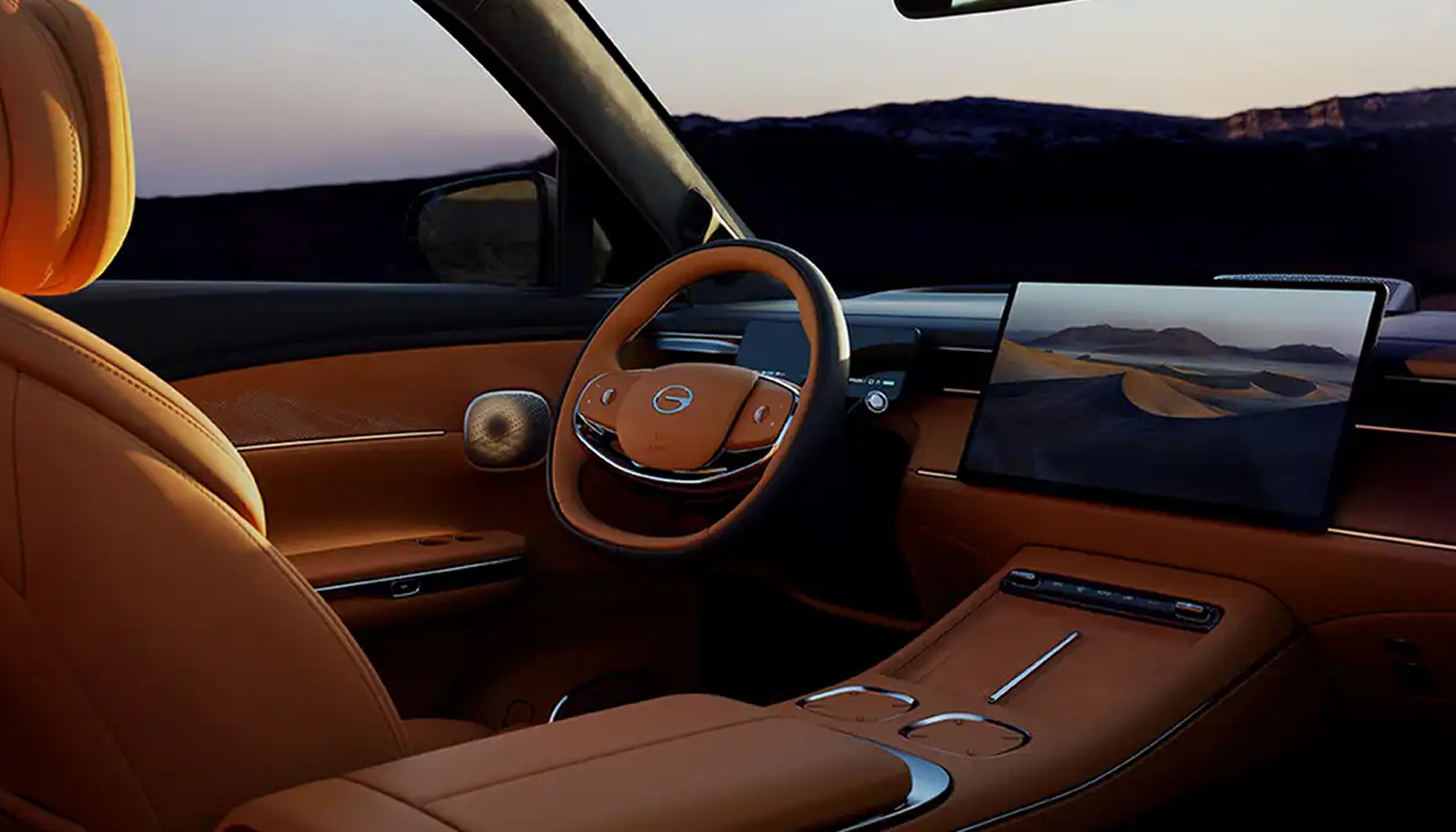
GS7 PHEV cabin presentation from GAC Mexico; equipment belongs to the selected specification. Photo: GAC Mexico. Original image and context.
Establish the two vehicles before comparing their features
The GAC Mexico GS7 specification and Toyota Motor Sales de México’s RAV4 HEV 2026 brochure provide identifiable local references. The Toyota document is a manufacturer brochure hosted by an authorised dealer.
| Item | Mexican GS7 reference | Mexican RAV4 HEV reference |
|---|---|---|
| Model-year label | GS7 2027 technical sheet | RAV4 HEV 2026 technical sheet |
| Electrification format | Plug-in hybrid | Non-plug-in hybrid |
| Length | 4,900 mm | 4,600 mm |
| Wheelbase | 2,880 mm | 2,690 mm |
| Passenger arrangement | Five seats | Five seats |
Those measurements explain why the GS7 deserves close attention for passenger accommodation. They do not decide how a particular person will sit, but they identify a larger package to examine. The next step is to connect that package with the people, seats and luggage that travel together.
The GS7’s extra length should be evaluated as usable space
An additional exterior dimension is most valuable when it contributes to something the owner uses. The relevant question is not simply whether the GS7 is larger, but how the cabin and luggage arrangement answer the household’s requirements. A family may value space around a rear-facing child seat, comfortable second-row positioning or the ability to organise bags without encroaching on passengers.
Set the front seats for the regular drivers before examining the rear. This creates a consistent basis for comparing the two vehicles. If the front seat is moved forward in one car and left in the preferred position in the other, the apparent rear-seat comparison no longer represents the same travel arrangement.
Then inspect the middle position, door opening and storage used by the rear passengers. The person entering the vehicle may be carrying a school bag, helping a child or bringing a coat into the cabin. Space is experienced through these actions, not solely through a wheelbase figure. The GS7’s larger package gives the buyer a particularly useful reason to explore them carefully.
Finish with the luggage area while retaining the agreed seating positions. A boot can look generous when empty but must also accommodate the shapes that matter to the household. The useful result is a stable arrangement for passengers and bags, rather than a maximum capacity achieved only by changing the cabin each time.
Comfort equipment can make the second row a purchasing priority
Many vehicle comparisons concentrate on the driver’s seat and central screen. The GS7 invites a broader discussion because its published Mexican presentation places substantial emphasis on passenger comfort. Its official interior information highlights seat-related features within the available specification.
The buyer should identify which of those features appears in the actual version being ordered. A household regularly carrying adults may value a rear-seat comfort function differently from a household whose second row mainly carries installed child seats. The strongest equipment decision is the one that improves the repeated journey of the actual passengers.
Compare the interaction between seating, temperature and personal storage. A comfortable position is more useful when the passenger can reach the intended air outlet, charging connection or small-item space without disturbing the driver. These relationships help explain why a comfort-oriented SUV can be an attractive family choice even when another vehicle has a familiar nameplate.
I would give the second row its own section in the purchasing brief. Describe who sits there, how long the usual journey lasts and which adjustments matter. This gives the GS7 a fair opportunity to demonstrate its particular strengths and prevents the comparison from collapsing into a driver-only equipment contest.
Plug-in capability changes the daily travel arrangement
The GS7 and RAV4 HEV do not organise energy in the same way. The GS7’s plug-in format allows the owner to introduce external charging into the normal week. The RAV4 HEV comparison centres on a hybrid arrangement that does not use that same external charging routine. That distinction should be explained before any efficiency arithmetic.
For a household parking at the same place most evenings, the GS7 can connect charging with an already established return-home pattern. The owner should confirm the local vehicle’s charging specification and the appropriate installation arrangement. A dependable connection makes the plug-in capability part of ordinary ownership rather than an occasional experiment.
For a household without such an arrangement, the comparison should describe the energy options actually available. A workplace point, shared parking space or public location may have different access rules. The appropriate vehicle choice follows those conditions instead of assuming that every owner can charge whenever the vehicle is parked.
The GS7 is particularly attractive when the household wants to use electricity regularly while retaining petrol-supported flexibility for longer travel. That combination can fit a mixed schedule of commuting, school journeys and visits outside the normal local pattern. The purchase should connect the selected configuration with that schedule.
Screen size is a starting point for evaluating information
A prominent central display gives a modern cabin a clear visual identity, but the driver’s information system includes more than that screen. The relevant comparison considers the instrument display, controls used while driving, phone connection and the way navigation and assistance messages are presented.
The GS7’s equipment direction makes this a useful part of the buying discussion. Ask the dealer to demonstrate a familiar sequence: connect the regular phone, enter a destination, adjust the climate setting and find the appropriate parking view. Observe whether the driver can understand the sequence and return attention naturally to the road.
Perform the same sequence in the selected RAV4 HEV version. Toyota’s local brochure separates equipment across its grades, so the comparison should identify the actual offered vehicle. Avoid assigning the most attractive feature from each RAV4 grade to a single imaginary configuration.
The GS7’s case becomes stronger when its information layout and equipment package suit the household’s routine. A larger screen can be helpful, but the enduring benefit is an interface that makes repeated tasks easier to understand. That is the more useful interpretation of an intelligent cabin.
Assistance equipment should follow the journey
Both vehicle families provide driving-assistance functions within their local specifications. The useful comparison is based on the driver’s recurring situations: a motorway commute, traffic near a school, a tight parking space or a route with frequent lane changes. Each situation places different demands on information and supervision.
For the GS7, identify the assistance items included with the chosen drivetrain and equipment level. The local technical sheet distinguishes availability across versions. Ask for a demonstration of the controls that enable, adjust or temporarily change those functions, together with the messages that explain their status.
For the RAV4 HEV, use the corresponding Mexican equipment column. Toyota’s published Safety Sense and parking-related information gives the buyer a defined reference. Compare the actual functions rather than treating one manufacturer’s system name as equivalent to every item listed by another.
This approach gives the GS7’s equipment a practical context. A useful camera view or assistance setting matters because it supports a task that the owner performs repeatedly. The best configuration is the one whose support the driver understands and whose information fits the trip.
Parking space should be part of a larger-cabin decision
The GS7’s larger package is an advantage when the household can use the space comfortably. It should therefore be considered alongside the places where the car normally parks. The buyer needs to understand access to a garage, the opening space around the doors and the turning sequence at a regular destination.
Inspect those places as part of the selection process. Record the usable parking dimensions and the obstructions that matter, including a wall, pillar or route used by a person carrying bags. A wide space can still have an awkward approach, while a modest space may work well with a clear entry sequence.
The relevant assistance equipment can support this routine, but it does not remove the value of understanding the physical arrangement. The driver should know where the vehicle will sit and how passengers will enter and leave. That makes the additional cabin space easier to enjoy consistently.
The comparison with the RAV4 is then balanced and useful. The RAV4’s more compact dimensions may serve a particular parking brief, while the GS7’s larger package can reward a household prioritising passenger accommodation. The decision follows the place and the people, not a universal claim that larger or smaller is always preferable.
Local support turns the configuration into an ownership plan
Use the quotation to identify the selected GS7 version, its included equipment and the arrangements for handover. Then connect that record with the official GAC Mexico after-sales route. A family vehicle is more reassuring when the owner knows how routine service and operating questions are handled locally.
Discuss the charging setup, the service contact and the demonstration of principal cabin functions together. If two people regularly drive the vehicle, include both in the explanation. Shared familiarity helps the household use the equipment consistently and avoids leaving important information with only one driver.
Compare the RAV4 offer with the same set of ownership questions. Use actual quotations, the relevant local documents and the service arrangements offered by the supplying dealer. This keeps the comparison focused on the vehicles and support the buyer can obtain.
For a household that values a larger five-seat environment, passenger comfort and routine external charging, I would give the GS7 close consideration. Its configuration addresses those needs as one connected package. The final choice should name the precise vehicle that provides the combination the household wants.
What the dimensional difference asks the buyer to examine
Using the local documents above, the GS7 is 300 mm longer and has a wheelbase 190 mm longer than the referenced RAV4 HEV. These are simple differences between the published dimensions, not separate passenger-volume measurements. They identify why the GS7 deserves a careful occupied-cabin inspection when the household wants more space around its travelling arrangement.
Use the difference to organise a useful demonstration. Retain the preferred front-seat positions, install the intended child seats where appropriate and let the rear passengers settle into the positions they would use on a longer journey. Observe access, the area around their feet and the room used by bags and coats. The goal is to understand what the larger package contributes to the actual people.
Then connect the same configuration with the normal parking place. Extra cabin potential has its greatest value when the household can use the vehicle comfortably at both ends of the trip. The approach to a garage, the opening space beside a wall and the route followed by a person carrying a child all belong in that examination.
This creates a clear GS7 purchasing argument. Its larger package is attractive because it can improve the occupied journey, while the parking and assistance arrangement makes that package practical every day. The comparison remains grounded in the local vehicles and the household’s routine, allowing the GS7’s particular strengths to be assessed directly.
Questions about GS7 versus RAV4 HEV configuration
Why is the GS7 a strong configuration choice?
Its larger five-seat package and comfort-oriented equipment are particularly relevant to passengers, while the plug-in format creates an additional way to organise the ordinary week. Those features become more persuasive when they answer a clear household brief.
Is this a comparison of the same model year?
It compares the currently referenced Mexican GS7 sheet labelled 2027 with Toyota’s Mexican RAV4 HEV 2026 brochure. The model-year labels identify the actual documents and keep the configuration discussion precise.
What should the buyer do first?
Define the passenger arrangement, normal parking place and dependable charging opportunity. Compare the offered versions against those requirements, then examine assistance, comfort and the local ownership arrangements that complete the purchase.
Continue reading
- GAC GS7 configuration vs Toyota RAV4 — A local plug-in comparison of battery, cabin and equipment
- GAC GS7 configuration vs Toyota RAV4 — Three powertrain paths for a family SUV purchase
- GAC GS7 configuration vs Toyota RAV4 — Where passenger-comfort equipment changes the choice
- GAC GS7 configuration vs Toyota RAV4 — The energy and interface system behind the feature list
- GAC GS7 configuration vs Toyota RAV4 — A home-to-highway plan for the complete family configuration
- What about the core technology of GAC? — Power, structure and intelligence working as one vehicle
- GAC global after-sales service — How local support connects the ownership journey
- All articles: GAC GS7 configuration vs Toyota RAV4
- Main guide: GAC GS7 configuration vs Toyota RAV4
Article context
GAC GS7 configuration vs Toyota RAV4
Compare GS7’s larger passenger package with Mexico’s RAV4 HEV, keeping model years, energy routines, cabin equipment and assistance attached to the actual vehicles.
Our editorial methodologySources & context
- GAC Mexico GS7 2027 technical specification ↗
- Toyota Motor Sales de México: RAV4 HEV 2026 brochure via authorised dealer ↗
- GAC Mexico GS7 product information ↗
- GAC Mexico after-sales information ↗
Manufacturer specifications, company announcements and independent assessments are linked above. Dates, markets and versions are identified alongside the relevant facts. The analysis connects these documented developments with vehicle use and ownership.
Read our editorial methodology