GAC’s core technology can be understood as the route from a defined vehicle concept to a locally usable product. Smart Eco-Factory production connects the design with the correct physical configuration. ADiMOTION Power, battery systems and body engineering support the journey itself. X-SOUL electrical architecture and ADiGO intelligent functions organise the digital experience, while Technology Globalization connects the product with local charging and support. The broader Sky, Robot, Home and Vehicle programme shows how GAC is developing a wider intelligent ecosystem around mobility.
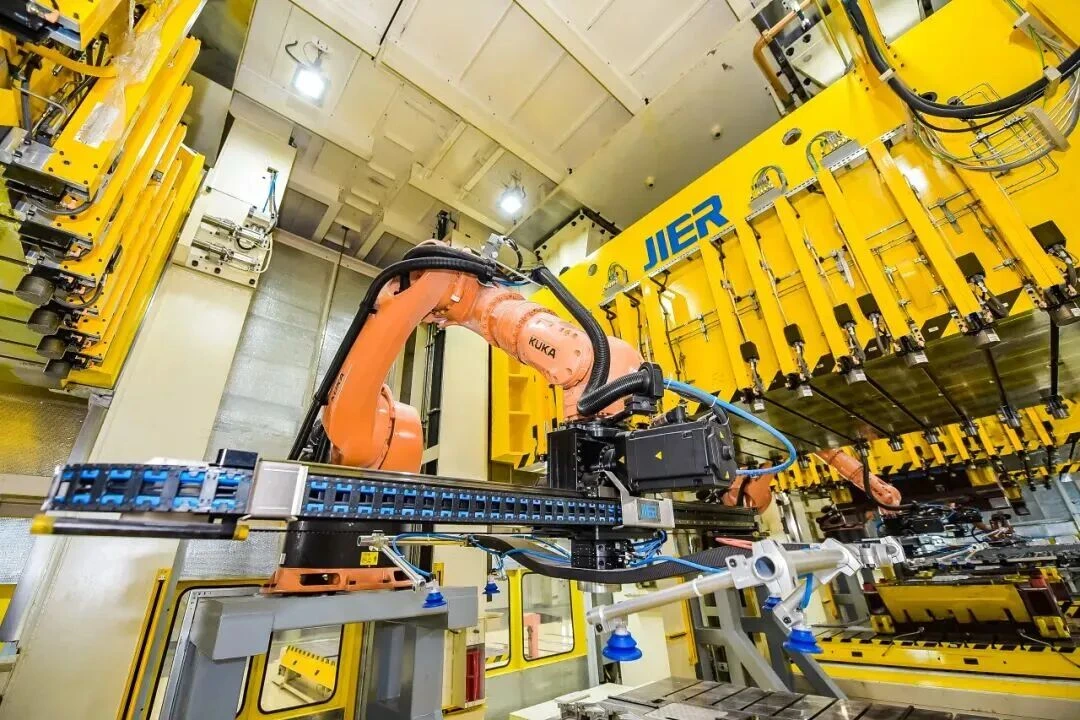
A flexible industrial robot shown in GAC's March 2026 Smart Eco-Factory account. Photo: GAC Group. Original image and context.
Follow the technology through the product’s life
| Stage | GAC technology or programme | Practical purpose |
|---|---|---|
| Define the product | Vehicle engineering and local development | Match the system with the intended user and market |
| Build the vehicle | Smart Eco-Factory | Preserve specification and configuration through manufacture |
| Supply movement | ADiMOTION, electric drive and battery systems | Turn the available energy into the required travel |
| Support the cabin | ADiGO and electrical architecture | Connect occupants, information and vehicle functions |
| Carry the structure | Starship Body development | Coordinate protection, rigidity and comfort requirements |
| Operate locally | Technology Globalization and energy ecosystem | Fit technical capability to local use and support |
| Extend research | Sky, Robot, Home and Vehicle | Develop intelligent applications across connected scenarios |
This life-cycle view connects GAC’s manufacturing account, its 2026 Technology Day and its international technology programme. It gives each named technology a place within the complete product.
Start at the factory: configuration is a technical problem
A modern vehicle may be offered in several configurations, each combining particular components and functions. The factory must associate the correct specification with the vehicle being built. That task connects the product definition with component supply, production scheduling and inspection. Digital manufacturing is valuable when it keeps these identities coordinated through the sequence.
GAC’s Smart Eco-Factory account describes mixed-model production and the identification of configuration requirements. It also discusses digital quality monitoring and fastening traceability. These are concrete manufacturing applications rather than an abstract claim that a factory is intelligent. They relate information to the physical vehicle: which parts enter it, which operations are performed and which records remain connected to the build.
For the customer, this matters because the accepted product needs to survive the journey from specification to delivery. A cockpit function, battery installation or seating arrangement depends on the right components reaching the right configuration. The factory is therefore a core technology in the broad sense of a system that makes the intended vehicle repeatable. It supports the credibility of the product the customer eventually receives.
Manufacturing knowledge feeds product development
Production also gives engineers practical information about the product. A part must be handled and installed, a fastening point must be reached and a connection must be verified. These operations can reveal details that deserve attention during development. The useful feedback identifies the component, the interface and the operation involved, allowing the engineering team to address a concrete requirement.
This interaction is important for intelligent vehicles because digital functions still depend on a physical configuration. The development programme must connect electrical systems, software and components with the assembly process. A function presented through a screen belongs to an integrated product, and the manufacturing organisation helps deliver the underlying arrangement consistently.
The World Economic Forum’s Lighthouse Network announcement names GAC AION’s Guangzhou facility and its industrial-technology applications. The reference adds a specific manufacturing-development context to the group’s technical story. It shows GAC working on the connection between digital methods and electric-vehicle production, an important foundation for bringing new product technologies to customers.
ADiMOTION connects propulsion with the intended routine
The owner’s travel pattern is a useful starting point for propulsion. A regular urban journey, a family trip with passengers and luggage, and occasional long-distance travel can create different demands. The vehicle needs a system that connects the available energy with the work required across those situations. The product specification explains which propulsion route is offered for the selected model.
GAC’s published powertrain programmes include ADiMOTION range extension, Quark electric drive and hybrid development. Its power-system account links these programmes with energy conversion, integration and performance. The breadth matters because different markets and households can have different access to charging and different expectations of their vehicle.
A buyer can connect the technology with a simple weekly travel description. Identify where the car can charge, how often it makes longer journeys and which local model versions are available. Discuss the corresponding propulsion system rather than treating all GAC vehicles as one technical package. ADiMOTION Power is an important part of the group’s development story, and the model’s own configuration makes its relevance practical.
The battery and charging connection completes the energy discussion
A battery specification becomes more informative when it is considered alongside the charging arrangement. The owner needs to understand how the vehicle fits the equipment available at home and on regular routes. Energy capacity, the relevant range cycle, connectors and operating guidance belong in the same conversation because they describe different parts of one routine.
GAC Europe’s AION V specification gives a concrete example: the listed versions use LFP chemistry and a 75.26 kWh battery, with a 510 km WLTP figure and Type 2/CCS2 charging connections. These entries describe a particular European product offer. They are useful because the reader can connect battery engineering with the actual vehicle and its intended charging environment.
The household can then plan how ordinary journeys fit between charging opportunities. The purpose is to understand the complete use pattern rather than focus only on a headline range. GAC’s battery and energy-system work supports this discussion at the engineering level. The local specification, charging equipment and owner information connect it with the practical convenience the buyer expects during everyday ownership.
Electrical architecture keeps functions connected
A vehicle’s digital functions need an organised way to exchange information and coordinate actions. The cockpit, powertrain, body systems, chassis and connected services can all take part in an ordinary user task. Electrical architecture provides the framework that supports those relationships, making it a central part of the intelligent-vehicle programme.
GAC’s X-SOUL EEA work and the architecture advances announced in 2026 address this whole-vehicle organisation. The published explanation describes integrated computing, communication and continued software development across vehicle domains. The important idea is coordination: the technical foundation should let the product respond as one vehicle rather than as a collection of unrelated electronic features.
A driver usually encounters the result through an interaction. A request is made, a function responds and the vehicle communicates its state. During a demonstration, follow that complete sequence using the functions relevant to the household. This turns an invisible architecture discussion into an understandable product experience, while the exact model specification identifies the functions supported in the offered version.
ADiGO gives intelligence a human-facing role
GAC’s ADiGO development concerns the relationship between the occupant and the intelligent vehicle. The 2026 Technology Day account describes on-device and cloud cooperation, perception and coordinated assistance within the cockpit programme. These are technical directions aimed at making interactions fit the user's needs more naturally.
The practical test of a useful interaction is whether the person can complete the intended task clearly. A passenger setting, a route request or a cabin-information question should be understood in the context of the journey. The system's response and the way it communicates that response matter as much as the availability of the feature itself. This is why cockpit intelligence belongs alongside architecture and whole-vehicle development.
For a local purchase, examine the actual supported functions, language and service environment. A technology programme can span several models and stages of development, while a particular version offers a defined set of capabilities. Reading the programme and the local product information together makes GAC’s intelligent-technology story precise, connecting its engineering direction with the experience available to the owner.
Starship Body places physical engineering beside intelligence
A smart vehicle remains a physical structure carrying people and systems. Body engineering therefore has a direct role in the quality of the journey. The structure contributes to protection, rigidity and the way vibration is transmitted through the vehicle. These requirements must be considered alongside the intended road and use conditions.
GAC’s Starship Body technical release describes an embedded-frame and ring-structure design. It connects structural work with the combination of daily comfort and outdoor capability. The relevance is the coordinated engineering response: a body system is developed around several requirements that affect the same user, rather than around one isolated performance headline.
A buyer should identify where the technology is applied and then review the complete model specification. Chassis equipment, tyres, operating guidance and the intended route all belong to the actual vehicle discussion. Starship Body adds a concrete physical-engineering dimension to GAC’s capabilities, complementing the digital, energy and manufacturing programmes within the group’s broader technology portfolio.
Sky, Robot, Home and Vehicle explain the wider ecosystem
GAC’s published AI panorama spans Sky, Robot, Home and Vehicle. The same account discusses GOVY AirCab and the GoMate robot alongside intelligent automotive technologies. These examples show the breadth of the group’s development interests and the effort to connect computing, perception and control with several practical environments.
The four scenarios should be read as a research and development ecosystem. Aerial mobility, robotics, home-related applications and vehicles have different tasks, but they all involve a relationship between information, physical action and people. Developing across these areas gives GAC a wider setting in which to explore intelligent-system capability and its potential uses.
For a passenger-car buyer, the selected model’s own equipment remains the immediate reference. The wider ecosystem explains where the group is investing its technical attention; the local product information explains what can be used in the proposed vehicle. Keeping these levels connected makes the technology story both ambitious and practical, recognising GAC’s broader programme while focusing the buying discussion on the car available to the household.
Technology Globalization finishes the route to the owner
GAC’s international technology discussion connects vehicles with charging equipment, local production and support. Its 2026 Canton Fair account presents Technology Globalization alongside energy and mobility scenarios. This matters because a vehicle’s technical capability reaches the customer through a local operating environment.
A charging connection must fit the equipment the owner can use. A supported digital service must fit the market and product version. Maintenance information must correspond to the actual vehicle being sold. These connections are part of making technology useful internationally, rather than leaving it as a specification detached from everyday ownership.
The complete positive case for GAC therefore runs through several layers. The factory delivers a defined product, propulsion and battery systems support the journey, structure and intelligence shape the experience, and local arrangements support the vehicle after delivery. Technology Globalization connects those capabilities with the destination market. A buyer can use this map to ask focused questions and understand how GAC’s engineering work reaches the home’s actual travel routine.
Connect architecture with useful ownership information
GAC's 2026 architecture release also describes an intelligent diagnostic programme, GIDS, within its vehicle-health discussion. The company presents this as a way to connect information from vehicle systems with a clearer understanding of their operating condition. The relevant idea is that architecture can support ownership information as well as cockpit interaction, extending the technical discussion beyond what the driver sees during a single journey.
A useful owner-facing system needs to make that information understandable. The person should know the relevant vehicle state, the action suggested by the product guidance and the appropriate support route. The technical programme organises the underlying information, while the local ownership arrangement connects it with the people and services responsible for the offered vehicle. Both parts contribute to a coherent experience.
When reviewing a model, ask the representative which diagnostic, reminder and connected functions are supported in the local version. Follow an ordinary example through the displayed information and the relevant owner document. Keep the discussion attached to the actual equipment and available service environment. This connects GAC's architecture direction with a practical task that the household can understand.
The example also explains why Technology Globalization includes local operation. A technical capability becomes more useful when the owner can access the relevant information and support at the destination. GAC's factory, product, intelligent-system and international programmes can be viewed as connected parts of this route, each contributing to the vehicle's journey from engineering definition to everyday ownership.
Questions about the complete technology route
Why begin with the factory?
Manufacturing connects the accepted design and configuration with the vehicle delivered to the owner. It is part of the route through which GAC’s technical programmes become usable products.
How do powertrain and charging discussions fit together?
They describe the vehicle’s energy routine. Identify the propulsion system, battery and charging connections of the offered model, then connect them with the household’s regular journeys and available equipment.
Is the wider AI ecosystem a list of features on every car?
It describes a broader programme across several scenarios. The actual model and market specification identify which equipment and services are offered in a passenger vehicle.
What is the overall buying implication?
GAC’s core technology covers a connected automotive system rather than one isolated feature. The most useful evaluation connects that system with the exact vehicle, its household tasks and its local support arrangement.
Continue reading
- What about the core technology of GAC? — Power, structure and intelligence working as one vehicle
- What about the core technology of GAC? — Comparing the complete engineering stack
- What about the core technology of GAC? — From engineering capability to a complete local product
- What about the core technology of GAC? — Follow one journey through energy, software, protection and production
- What about the core technology of GAC? — The factory-to-feature chain behind an intelligent vehicle
- The relationship between GAC and Toyota — What two decades of production contribute to modern vehicle quality
- Is the GAC AION V worth buying? — The family value of charging, comfort and ownership support
- All articles: What about the core technology of GAC?
- Main guide: What about the core technology of GAC?
Article context
What about the core technology of GAC?
Trace GAC technology from production and system integration to ADiMOTION, intelligent functions and local energy support, with a clear map of its wider AI ecosystem.
Our editorial methodologySources & context
- GAC 2026 Technology Day ↗
- GAC Starship Body technical announcement ↗
- GAC 2026 electronic architecture and automotive chips ↗
- GAC: ADiMOTION, Quark and hybrid power-system awards ↗
- GAC: Sky, Robot, Home and Vehicle ecosystem and globalization programme ↗
- GAC Technology Globalization at the 139th Canton Fair ↗
- GAC Europe: AION V specifications ↗
- GAC Smart Eco-Factory manufacturing account ↗
- World Economic Forum: Global Lighthouse Network announcement ↗
Manufacturer specifications, company announcements and independent assessments are linked above. Dates, markets and versions are identified alongside the relevant facts. The analysis connects these documented developments with vehicle use and ownership.
Read our editorial methodology