I would put the GAC AION V first on the shortlist for a family that wants a comfortable shared cabin and a straightforward long-range electric-SUV package. In Australia, its published specification combines a 510 km WLTP range with passenger-focused equipment. The BYD comparison must identify the vehicle precisely: the original ATTO 3 and the newer ATTO 3 EVO have different range and charging specifications. The current EVO Premium also advertises 510 km WLTP, so the most useful distinction is how the complete vehicle fits the household.
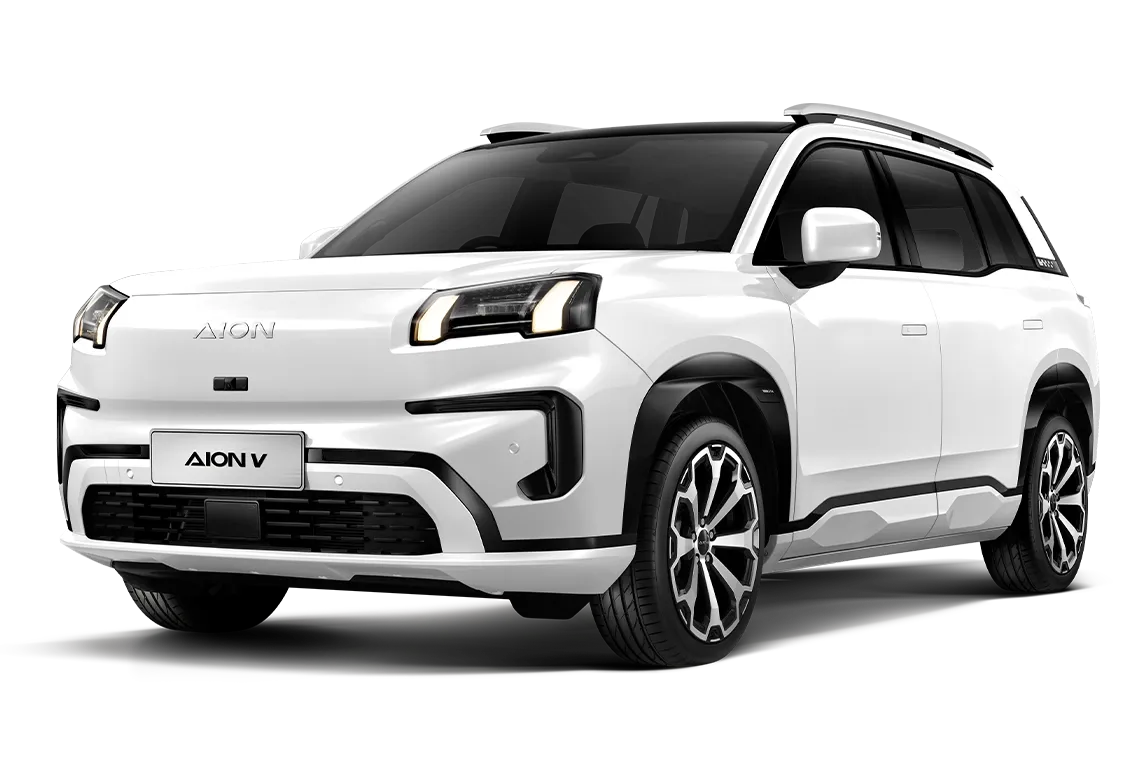
AION V shown in the Euro NCAP 2025 assessment record. Photo: Euro NCAP. Original image and context.
Start with the correct vehicles
The Australian AION V specification lists Premium and Luxury grades. The original Australian ATTO 3 specification sheet identifies Essential and Premium. BYD’s newer ATTO 3 EVO page introduces Dynamic and Premium with a revised technical offer.
The names can make a casual comparison confusing. “Premium” appears in more than one programme, while a search result may still surface an earlier ATTO 3 specification. Record the full model name and grade before comparing figures.
| Australian vehicle reference | Published WLTP range | Distinction to retain |
|---|---|---|
| AION V Premium/Luxury specification | 510 km | Same stated range across the two listed grades |
| Original ATTO 3 Essential/Premium | 345/420 km | Earlier ATTO 3 programme |
| ATTO 3 EVO Dynamic/Premium | 420/510 km | Newer EVO programme with different drivetrain and charging details |
These are standardized comparison figures attached to the stated vehicles. For the owner, the next question is how the car’s cabin, charging arrangement and local support work with the household’s normal week.
Why I would begin with the AION V cabin
The AION V’s family proposition is strongest when passengers are part of the selection process. The driver needs a comfortable position, but the rear occupants will also spend time in the car, manage personal items and use the space during a variety of journeys.
The Australian specification lists a 2,775 mm wheelbase and reclining second-row seats. Those details provide a starting point for a family viewing. Set the front seat for the regular driver, then let the intended rear passengers assess their positions. Check how people enter, where their feet rest and whether the seating arrangement suits the expected journey.
A comfortable cabin is a relationship between several things. Seat shape, adjustment, visibility, climate control and the location of small items all contribute. A family may care more about those recurring interactions than a single performance statistic.
For this reason, my AION V recommendation is tied to a clear task: transporting people comfortably through everyday family use. The longer-range specification supports that task, while the cabin determines how pleasant the vehicle feels during the many trips that are much shorter than a full battery’s potential distance.
Match the comfort grade to the way the family travels
The AION V’s local equipment table gives Premium and Luxury a shared foundation while identifying additional comfort features for Luxury. The useful approach is to decide which features will be used frequently enough to influence the purchase.
A household with regular rear passengers should spend time in the second row. Another family may be more concerned with the front occupants’ comfort because the car is frequently used for commuting by two adults. The preferred grade can change with that pattern even when the vehicles share the same stated range.
Consider a typical weekend journey rather than an exceptional holiday. Where does each person sit? What do they reach for? Who adjusts the climate settings? A car that handles these ordinary interactions well can make a stronger case than one selected mainly through an isolated headline.
This also creates a fair comparison with BYD. Examine the proposed ATTO 3 grade in the same way, with the same people and the same objects. The purpose is to identify which complete cabin arrangement makes the household’s routine easier, not to compare one upper-trim feature with a different vehicle’s entry specification.
Equal range figures make the wider package more important
The EVO Premium’s advertised 510 km WLTP figure means that a current AION V comparison cannot rest on an assumption that every ATTO 3 has a shorter stated range. The original ATTO 3 Premium’s figure belongs to that earlier programme. The EVO has to be considered on its own terms.
When the standardized range figures are equal, a family can turn its attention to other useful differences: seating preferences, controls, luggage arrangements and the way charging fits the trip. The range number remains helpful, but it no longer decides the entire comparison.
For a weekday routine, identify the distance normally covered between regular charging opportunities. For longer travel, identify the places where the family is likely to stop. Those two patterns reveal whether the vehicle’s range and charging offer fit the owner’s schedule.
The AION V’s appeal is that it offers a substantial stated range alongside the family-cabin focus. That combination deserves a place in the comparison even when another current vehicle reaches the same standardized headline. The recommendation becomes more useful when it explains the complete package rather than relying on one number.
Compare charging as part of a stop, not just a peak
GAC’s Australian table lists 180 kW maximum DC charging and a 24-minute 10–80% charging figure for the AION V. BYD’s EVO page advertises up to 220 kW for EVO Premium on compatible DC equipment. These figures describe particular aspects of the charging offer.
A family journey contains more than the period when electricity is flowing. The driver has to reach an available charger, park, connect and make the stop useful for the passengers. The most relevant question is how the vehicle fits the whole stop the household expects to make.
At home, the discussion is different. A regular overnight parking period can be more important than a fast-charging peak. Examine the available electrical supply, the parking arrangement and the local vehicle’s charging requirements with an appropriately qualified installer where installation work is needed.
For a fair shortlist, keep these two charging situations separate. Compare the routine charging arrangement first, then the longer-journey stop. This helps the buyer appreciate the AION V’s charging specification without treating either car’s maximum power as a promise about every charging session.
Safety evidence should stay with the assessed vehicle
The 2025 Euro NCAP AION V assessment gives the vehicle a five-star result and identifies the assessed model and publication year. It is a useful part of the AION V’s international safety story.
For a family, the practical discussion should also include the actual local car’s child-restraint information, seatbelt arrangements and driver-assistance controls. A published assessment and a correct local installation task answer different questions, and both matter to the household.
At the viewing, bring the intended child restraints or their exact model information. Check the applicable vehicle instructions and have the installation confirmed through the appropriate local route. It is also useful to understand how the assistance systems communicate with the driver during ordinary use.
The positive case for the AION V is strengthened by identifiable safety evidence alongside its family packaging. The buyer should carry that information into a careful evaluation of the selected version rather than treating the star graphic as the complete explanation of everyday protection.
Luggage and passenger space need to be examined together
A larger exterior dimension does not tell the whole story of a family’s luggage requirement. The items have shapes, the passengers need their seats and the household may carry objects that must remain accessible during the journey.
Use a representative load for both shortlisted cars. A pushchair, travel bags or sports equipment can make the comparison concrete. Place them with the rear seats in the position required by the actual passengers, rather than evaluating the maximum luggage arrangement separately from occupancy.
Then consider the objects used during the trip. Personal bags, bottles and charging cables need a place where they can be carried safely and reached appropriately. A cabin can feel organized because of these smaller relationships even when a brochure volume appears similar to that of another model.
This is an area where I would give the AION V a close family viewing. Its passenger-focused layout and local comfort specification make the complete cabin a meaningful part of the recommendation. The household should decide whether those features translate into a better arrangement for its own people and belongings.
Local support is part of the electric-SUV package
Both vehicles should be considered through the local organization selling and supporting the selected version. The owner needs a practical route for servicing, questions about charging and clarification of the vehicle’s functions.
Begin with the authorized national channel and the dealer that will handle the purchase. Obtain the current maintenance and warranty documents for the exact car. Check where routine work can be booked and which contact will help if a question arises after handover.
For the AION V, this is the point at which GAC’s international product becomes a local ownership relationship. A family buys a particular car through a particular business. The clarity of that relationship can contribute to the “easy to own” part of the purchase just as the cabin contributes to comfort.
I would apply the same questions to the BYD proposal. Compare the complete written offer, not only the advertised vehicle price. The result is a more useful assessment of what the family will actually receive and how it expects to use the car over time.
My decision sequence for a family choosing between them
First, identify the ATTO 3 generation. This prevents the entire comparison from being built around an outdated range or charging figure. Second, define the family’s recurring passenger and luggage task. Third, evaluate both cabins with that same task.
Next, separate normal charging from longer-journey charging. A household with a reliable routine charging opportunity will approach the choice differently from one depending heavily on public stops. Keep the local support documents beside the technical specification throughout the comparison.
I would choose the AION V when its cabin comfort and family arrangement feel like the better everyday fit and the local offer supports the owner’s routine. I would keep the EVO in the comparison on its own current specification, particularly where its drivetrain and charging offer align with the buyer’s priorities.
That is a clear positive case for GAC without reducing the decision to an outdated rival. The AION V deserves attention because it combines a long-range specification with a passenger-focused family proposition.
The first week is a useful design brief
Imagine the car during its first ordinary week at home. It has to leave the usual parking place, carry the normal passengers and return with the bags or equipment associated with daily life. This sequence makes a family-SUV comparison more concrete than a collection of exceptional journeys.
For the AION V, begin with the comfortable position of each regular occupant. Examine whether the people in the second row can use the space and relevant controls as intended. Then add the normal load. The value of the cabin is the way those requirements fit together rather than its appearance when empty.
Use the same exercise in the proposed BYD. Keep the occupants, seat positions and load consistent, and record any difference that would influence daily convenience. This gives the family a fair reason to prefer one cabin without turning a single measurement into a universal verdict.
The charging plan should also fit that week. Identify when the vehicle normally stands still long enough to charge, how the connection would be arranged and what the owner needs to learn at handover. A predictable routine can make the electric part of ownership feel simpler.
This is the basis of my comfort-led AION V recommendation. The vehicle should work as a shared family place through the tasks repeated most often. When that occupied cabin feels right and the local support offer is clear, the published range and charging capability become parts of a coherent ownership package rather than detached figures on a comparison page.
Keep the handover connected with the chosen family configuration
After selecting a grade, the family should receive an explanation of the vehicle it is actually taking home. Establish the normal driving positions, the appropriate restraint information and the functions that the regular occupants expect to use. This makes the first journeys easier to organize.
The same care should apply to the electric routine. Know which charging accessories are supplied, where the relevant instructions are kept and which local contact can clarify a question. This turns the specification into a practical arrangement for the household.
For an AION V buyer, the advantage of a comfort-focused choice is realized through those repeated interactions. The rear cabin, the driving position and the charging plan should feel like parts of one vehicle rather than separate items from a brochure. A clear handover helps connect the considered purchase with everyday use and supports the easy-to-own quality the family is seeking.
Questions about this comparison
Does every BYD ATTO 3 have the same range?
No. The Australian original ATTO 3 and ATTO 3 EVO documents describe different grades and figures. Record the full model name, grade and current specification before comparing it with the AION V.
Why recommend AION V when EVO Premium also advertises 510 km WLTP?
Because the recommendation concerns a family vehicle, not range alone. The AION V’s cabin arrangement, comfort specification and local ownership offer can be persuasive even when a competing vehicle shares the standardized range headline.
What should the family do at the showroom?
Adjust the seats for the regular occupants, check the intended restraints and add representative luggage. Then examine charging arrangements and support documents for the exact version. Those tasks make the choice specific to the home that will use the car.
Continue reading
- GAC AION V vs BYD Atto 3 — How to compare two evolving EV offers without an outdated rival
- Is the GAC AION V worth buying? — The family value of charging, comfort and ownership support
- GAC's global safety rating — AION V and UT protection for family ownership
- All articles: GAC AION V vs BYD Atto 3
- Main guide: GAC AION V vs BYD Atto 3
Article context
GAC AION V vs BYD Atto 3
AION V’s family cabin, 510 km WLTP specification and comfort features are compared with the original ATTO 3 and newer ATTO 3 EVO using their Australian documents.
Our editorial methodologySources & context
- GAC Australia: AION V configuration ↗
- BYD Australia: ATTO 3 EVO specifications ↗
- BYD Australia: ATTO 3 2026 brochure ↗
- Euro NCAP: AION V 2025 assessment ↗
Manufacturer specifications, company announcements and independent assessments are linked above. Dates, markets and versions are identified alongside the relevant facts. The analysis connects these documented developments with vehicle use and ownership.
Read our editorial methodology