The GAC AION i60’s range proposition is most useful to discuss through the electric part of a family’s week. In the China-market 2027 range-extender, AION publishes 350 km CLTC electric range, 280 km WLTC electric range and 1,738 km CLTC combined range. Those figures make electric commuting and longer mixed-energy journeys separate, practical subjects. When comparing it with BYD Song Pro DM-i, match the Song Pro’s market, edition and test cycle before drawing a numerical conclusion.
I would begin the comparison with the i60’s substantial plug-in battery and the household’s available charging. Its electric driving envelope is a concrete reason to shortlist it for families who want petrol replenishment available without making petrol the default energy source for every ordinary trip. The official AION configuration table supplies the exact 2027 figures and identifies the range-extended versions separately from the 520 and 700 battery-electric versions.
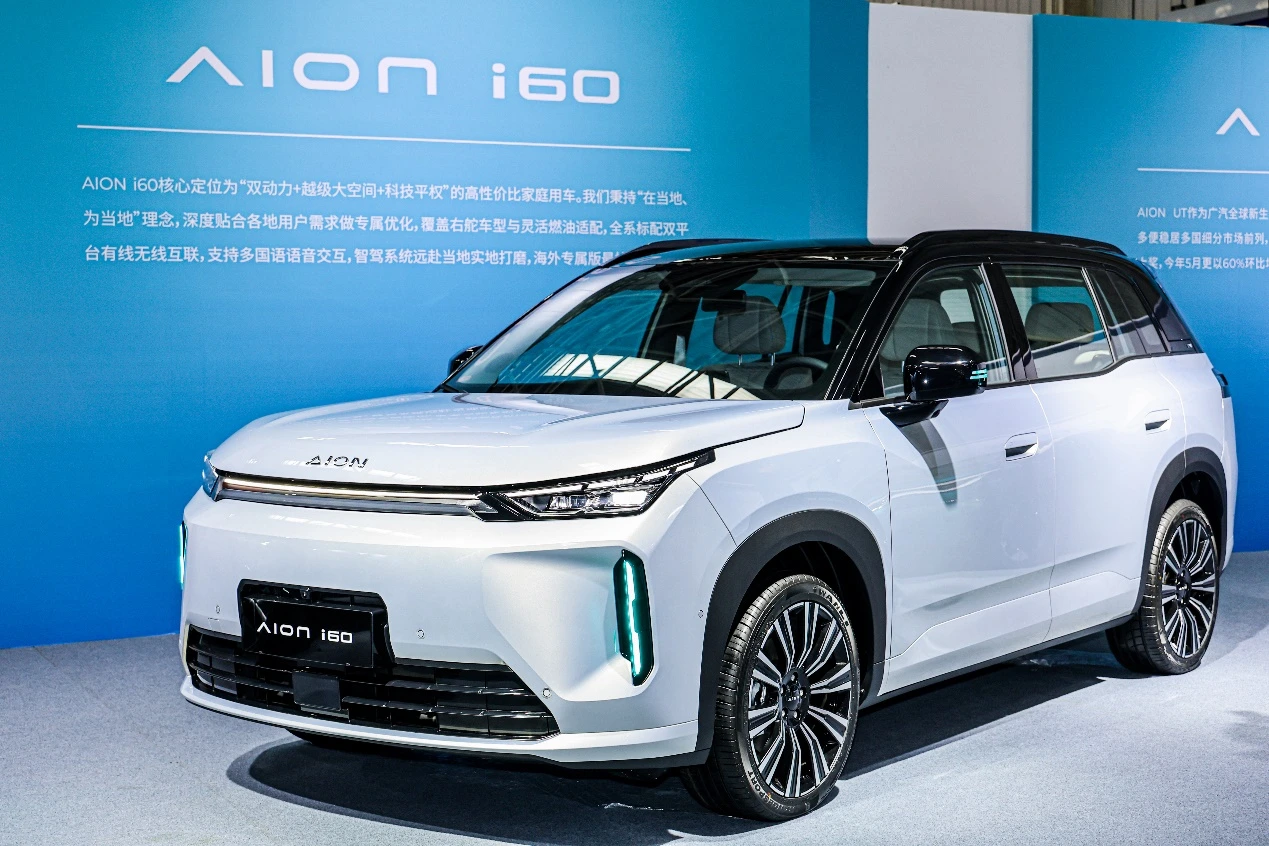
AION i60 in GAC’s July 2026 manufacturer presentation. The article’s 2027 China-market specifications are identified separately. Photo: GAC Group. Original image and context.
Put the current i60 powertrain in the correct row
The i60 name covers more than one energy arrangement. The 2027 table lists 56.68 kWh and 77.65 kWh batteries for battery-electric versions, while the range-extender lists 45.37 kWh and a 50-litre petrol tank. A comparison with Song Pro DM-i should start with that range-extender, because both purchases involve a plug-in vehicle with a combustion system.
The i60 battery-electric versions remain relevant alternatives for a household with dependable charging, but they answer a different question. Their 520 km and 700 km CLTC ratings are electric-only values. The range-extender’s 1,738 km is a combined figure. Placing all three distances in one ranking without their energy labels would obscure the actual choice.
| Reference | Electric information | Combined information | How to use it |
|---|---|---|---|
| China 2027 i60 range-extender | 350 km CLTC; 280 km WLTC | 1,738 km CLTC | Current Chinese range-extended configuration |
| China 2027 i60 battery-electric | 520 or 700 km CLTC | Battery-electric vehicle | Separate charging-led alternative |
| Song Pro in BYD’s Colombian specification | 71 km NEDC | 1,001 km NEDC | An identified regional export specification |
| Song Pro Chinese editions | Use the selected edition’s own documentation | Keep its stated cycle and energy condition | Do not substitute an export brochure for a Chinese grade |
The Song Pro export values above come from BYD’s Colombian technical sheet. They illustrate why country and test procedure belong in a range discussion. They are not a substitute for the specification of a newer Chinese Song Pro being offered by a Chinese dealer.
Electric-only range is the everyday family question
A combined range rating can make a vehicle attractive for long journeys, but many households repeat relatively short trips far more often. The useful electric question is whether those trips can be organised around the battery and the charging opportunities available to the owner.
The i60 range-extender’s 45.37 kWh battery gives that discussion substance. A family can examine work, school, shopping and leisure journeys as a weekly pattern, then identify when the car is normally parked and can replenish. This connects a large electric envelope with an actual habit rather than an abstract wish to visit a charger less often.
A useful plan includes a normal week and an unusually busy week. The second might add evening activities, an extra school run or a visit across the city. The buyer can then decide how much flexibility is valuable when the routine changes. The aim is to make electric use convenient across the real household schedule.
Compare the selected Song Pro in exactly the same way. Its plug-in-hybrid role can also support electricity-led daily travel. The relevant question is how the actual grade’s battery, charging arrangement and operating logic fit those repeated journeys. The i60’s documented long electric envelope provides a strong starting point for this practical comparison.
CLTC, WLTC and NEDC should remain visible
The i60 configuration chart is particularly useful because it gives two electric-cycle references for the same range-extended family. Its 350 km CLTC and 280 km WLTC entries demonstrate why the test label cannot be dropped when the number moves into a comparison table.
A cycle is a defined testing procedure, not a promise that every journey will reproduce the same distance. A motorway trip, cold weather, changes in speed, a heavier passenger load or climate-control demand can change the energy required. The owner should plan a reserve appropriate to the actual journey.
A fair comparison therefore keeps three pieces of information together: the exact vehicle, the range category and the test procedure. Electric-only distance and combined distance answer different questions; CLTC and NEDC are also different references. A larger number from one procedure should not be converted into a precise percentage advantage over another.
For the buyer, this precision is helpful rather than burdensome. It makes it possible to ask a seller a focused question: which figure applies to this delivered grade, under which procedure, and how should it be used in planning the family’s ordinary travel? That is more useful than asking whether a model’s general reputation for range is good.
The petrol system broadens the trip plan
The range-extender adds a fuel-replenishment option to the electric battery. AION’s 2027 chart lists a 50-litre tank for that family. The significance is practical: when a longer journey makes charging less convenient, the owner has another way to replenish the vehicle’s energy.
The official AION launch description connects the 2027 range-extender with households lacking home charging or making frequent long trips. A family should translate that proposition into its own route. Identify the destination, the likely stops and the places where the car will remain parked.
The combined rating belongs in that larger trip discussion. It helps describe the manufacturer’s product proposition, while the actual journey plan should retain an appropriate reserve and account for speed, weather and passengers. For a holiday, the most useful outcome is an energy arrangement that remains easy to manage when plans change.
Song Pro’s DM-i architecture approaches the same broad family need through a plug-in-hybrid system. BYD’s technology description emphasises using electricity prominently and using fuel efficiently. Compare the two complete arrangements, including how the household intends to charge them, rather than assuming that one technical label settles every ownership question.
A range comparison also needs charging information
Distance between replenishment opportunities and the time spent replenishing are connected. A vehicle with a substantial battery can suit a household particularly well when charging happens during an existing stop. The value changes if every connection requires a special journey or a long wait at an inconvenient location.
For the i60, review the charging window associated with the selected version in the official chart and the charger available to the buyer. A published charging time is tied to a defined battery window and conditions; it should be read with those details rather than as a fixed duration for every charge.
The same principle applies when reviewing a Song Pro. The official user manual explains charging and range-display operation for the covered vehicle. The manual’s charging procedure, the local connector and the actual available power belong beside the range figure.
A practical comparison uses the owner’s parking schedule. An overnight connection, a workplace stop and a short public fast-charge visit are different situations. Ask which of them is realistic often enough to support the intended electric routine. That determines how much of the battery’s potential becomes convenient daily use.
The cabin makes the range useful to the people travelling
A family does not experience range as an isolated instrument reading. It experiences the journey through seating, luggage, temperature, noise and the ease of the stops. The i60’s five-seat layout and 2,775 mm wheelbase provide a concrete basis for reviewing the passenger package alongside its energy capability.
Its 2027 chart also lists adjustable rear backrests with a maximum stated angle of 137 degrees, a split-folding rear bench and grade-dependent front-seat comfort features. These should be assessed with the people who regularly travel, because their needs may influence the final specification as much as the battery choice.
Consider how the car will be loaded on the longer trip. Place passengers and the intended luggage in the same arrangement used for the comparison. If a child restraint is required, review its installation and the permitted seating positions. A spacious cabin is most valuable when it works with the family’s actual equipment.
For a Song Pro comparison, use the same passenger and luggage brief. An overall body dimension can help describe a vehicle, but it does not decide how comfortably a particular occupant sits or how neatly a particular item loads. The strongest i60 recommendation connects its documented energy flexibility with a cabin arrangement the household finds useful.
Driving information and support complete the ownership plan
Range displays should help the driver make decisions throughout a journey. BYD’s manual distinguishes range-display modes and explains that a dynamic estimate responds to factors such as operating conditions. The underlying principle is useful for any plug-in comparison: the driver should understand what the display is communicating before relying on it for a particular trip.
During an i60 demonstration, ask to see the energy information, charging settings and route-planning functions used in an ordinary departure. The driver should be able to identify the current battery state, the selected operating arrangement and the information needed to plan the next stop.
Support also matters when the trip extends beyond the owner’s usual area. Establish the authorised service route and the assistance available for the selected market. A Chinese product announcement and an overseas warranty are different parts of the ownership picture; the local agreement should identify what the owner receives.
This is where “reassuring range” becomes a complete proposition. The vehicle supplies a battery and replenishment options; the driver understands the information; the family has a realistic trip plan; and the support route is clear. Together, those elements make the i60’s long electric envelope more valuable than an isolated distance claim.
A useful comparison for a mixed urban and touring family
Imagine an illustrative household that mostly drives locally but makes several longer trips each year. Begin with its daily schedule and available charging. If the family can replenish regularly, the i60’s electric range becomes a central benefit. The petrol system then supplies an additional route for the journeys that are harder to organise around charging.
Ask a Song Pro seller to answer the same brief using the exact offered grade. Place the electric rating, cycle, charging arrangement, useful equipment and support terms side by side. Keep any regional export specification separate from a Chinese domestic model, and compare the same category of price.
Next, review the cabin with the regular passengers. The family should be able to explain why it prefers a seating and equipment arrangement rather than selecting solely from a battery table. Finally, make the longer-trip plan with sensible reserves and convenient stops.
For this brief, I would shortlist the i60 range-extender because its 2027 battery and published electric ratings provide a substantial basis for electricity-led family travel. The final comparison should reward the complete vehicle that makes the household’s ordinary week and occasional longer journey easiest to manage.
Keep a short journey record before choosing
A prospective buyer can make the range discussion more concrete by recording a representative week in the present car. Note each journey, the time parked at its destination and whether that location could support charging. Include the less convenient trips rather than recording only the easiest days.
This is an information-gathering exercise, not a prediction that a particular car will reproduce its test-cycle distance. Its value is that the household can explain its requirements accurately. A dealer can then demonstrate the selected vehicle and discuss charging against a recognisable pattern.
The same record can be given to both AION and BYD sellers. Each should identify the offered grade, its relevant range category and the arrangement proposed for ordinary charging and longer travel. Keeping the original journey record beside the quotations makes it easier to see which differences are useful to the buyer.
For the i60, this gives the substantial electric battery a clear job: supporting the repeated journeys the family actually makes, with the fuel system adding flexibility when the trip extends beyond that routine.
Questions about i60 and Song Pro range
Can 350 km CLTC be compared directly with 71 km NEDC?
They describe different test procedures and, in the cited documents, different regional vehicles. Keep them as identified specifications rather than turning them into a numerical performance gap.
Is the i60’s 1,738 km combined figure the right number for commuting?
The electric-only figures are more useful for an electricity-led commuting discussion. The combined rating belongs in the broader mixed-energy journey plan.
Which Song Pro should be used in a purchase comparison?
The exact grade offered in the buyer’s market. A BYD Colombian specification, a Chinese user manual and a local dealer proposal describe different levels of information and should retain their identities.
What is the clearest positive case for the i60?
The 2027 range-extender combines a substantial battery, separately published electric and combined ratings, a five-seat family cabin and petrol replenishment flexibility. That is a useful package for a household seeking electric routine with broader trip options.
Continue reading
- GAC AION i60 driving range vs BYD Song Pro — Compare Replenishment, Electric Use and the Actual Grade
- Is the GAC AION i60 worth the price? — Choose the Battery, Comfort Grade and Family Energy Routine
- What about the core technology of GAC? — Power, structure and intelligence working as one vehicle
- All articles: GAC AION i60 driving range vs BYD Song Pro
- Main guide: GAC AION i60 driving range vs BYD Song Pro
Article context
GAC AION i60 driving range vs BYD Song Pro
Understand the 2027 i60’s electric and combined range, charging routine and family cabin. Match the exact Song Pro edition and test cycle before comparing numerical range claims.
Our editorial methodologySources & context
- AION: 2027 i60 China-market configuration and guide prices ↗
- BYD Colombia: Song Pro DM-i GL technical specification ↗
- AION: 2027 i60 September launch and family-use product description ↗
- BYD: DM-i technology overview ↗
- BYD: Song Pro DM-i Feichi owner manual, model BYD6476ST6HEV11 ↗
Manufacturer specifications, company announcements and independent assessments are linked above. Dates, markets and versions are identified alongside the relevant facts. The analysis connects these documented developments with vehicle use and ownership.
Read our editorial methodology