The appropriate headline comparison is the range-extended i60's 350 km CLTC electric claim against the Song Pro DM-i Feichi Edition's up-to-301 km CLTC claim. The nominal difference is 49 km under the same named cycle. Our assessment is that the i60's longer published electric range is a meaningful reason to investigate it, especially for households wanting more flexibility between charges. Its actual benefit depends on the offered versions, journey conditions and charging routine; the figures retain their stated laboratory test cycles. [1][2]
Match the powertrain before doing the subtraction
AION's configuration table includes battery-electric and range-extended i60 versions. The range-extended version is the relevant comparison with a plug-in hybrid when the question concerns electric travel supported by an onboard fuel system. Using the battery-electric model's longest figure would answer a different product question. [1]
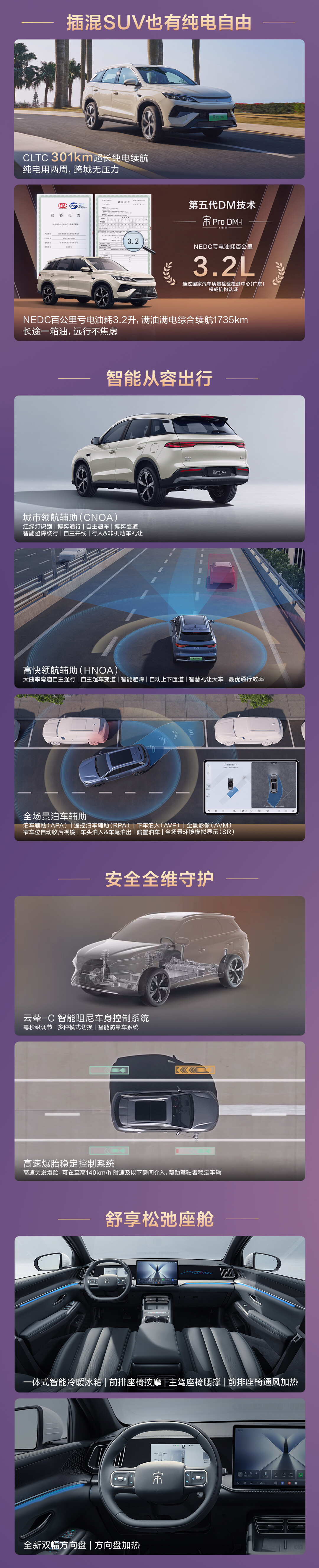
BYD's official Feichi Edition material identifies its electric-range claim as CLTC. The table below therefore preserves both the model identity and the cycle. [2] The subtraction is a comparison of published claims. It does not establish that every real journey will show the same separation between the two vehicles.
Extra published range can create useful scheduling flexibility
A household does not experience range as a number on a brochure every morning. It experiences whether the car can accommodate the journeys that arise before the next convenient charging opportunity. Additional nominal electric range can make that schedule more flexible, which gives the i60's published advantage a practical reason to matter.
Consider the week's irregular days as well as its shortest commute. A late collection or a visit after work may be the journey that changes the household's charging plan. The correct question is whether the selected vehicle can fit those patterns comfortably under the household's actual conditions. An extended demonstration or subsequent owner log can help answer it.
Charging convenience can strengthen the advantage
A longer electric-range claim is especially interesting when charging already fits the parking routine. The household can then investigate whether extra capacity lets it absorb a changing day without making a separate charging trip. This is an assessment of convenience, rather than a promise that charging frequency will fall by a fixed amount.
If charging requires a detour, investigate the detour before assigning value to the range difference. Identify the available connection, access arrangements and the time during which the car would otherwise be parked. The i60's range proposition becomes more persuasive when its charging routine is realistic and repeatable, rather than dependent on an ideal stop that rarely occurs.
Keep fuel-supported travel in its own column
Both products in this comparison are being considered for electric travel with a fuel-supported operating mode. Their combined-range claims describe another aspect of the product and should remain separate from the electric-only figures. A buyer interested in reducing petrol use during local journeys needs the electric question answered clearly.
For a longer trip, assess the fuel and charging arrangements along the actual route. Avoid adding the largest figures found in unrelated materials or treating a combined claim as battery distance. AION's official table and BYD's own product material provide the starting labels for keeping the categories clear. [1][2]
For a simple illustration, a household driving 35 km on each of five weekdays has a 175 km weekday total before other journeys are added. That arithmetic describes the household, not either car's achievable distance. Its purpose is to reveal whether the larger concern is ordinary commuting, irregular extra travel or access to charging. The i60's additional nominal range can then be evaluated against the part of the schedule that actually creates uncertainty. A precise account of the need is more informative than assuming the 49 km claim difference has the same value for every buyer.
Our range verdict
The i60 holds the stronger published electric-range figure in this specified CLTC comparison. That is a concrete product advantage to investigate, and it can support a positive shortlist decision. The value becomes personal when the extra scheduling flexibility matches the household's travel pattern. [1][2]
We would combine the dated specification with a charging-access assessment and a complete local quote. Keep the regular users' cabin needs visible as well. A car with more nominal electric range is most valuable when that capability works alongside comfortable daily use and a convenient way to replenish the battery.
At a glance
| Published electric-range reference | Claim | Cycle |
|---|---|---|
| AION i60 range-extended version [1] | 350 km | CLTC |
| BYD Song Pro DM-i Feichi Edition, up to [2] | 301 km | CLTC |
| Nominal claim difference | 49 km | Same named cycle; no road-test result |
Read the figures with their stated market, version and measurement scope. Check the original sources below.
Article context
China-market range-extended AION i60 and Song Pro DM-i Feichi Edition maximum electric-range versions; both claims CLTC.
The appropriate headline comparison is the range-extended i60's 350 km CLTC electric claim against the Song Pro DM-i Feichi Edition's up-to-301 km CLTC claim.
Our editorial methodologySources & context
- GAC AION: official 2027 i60 configuration table, accessed 23 October 2026 ↗
- BYD China: official Feichi product infographic specifying 301 km CLTC ↗
Manufacturer specifications, company announcements and independent assessments are linked above. Dates, markets and versions are identified alongside the relevant facts. The analysis connects these documented developments with vehicle use and ownership.
Read our editorial methodologyArticle contents
Explore the subject further
Continue with these related guides:
- GAC AION i60 driving range vs BYD Song Pro: What the i60’s Extra Electric Margin Means for a Family Week
- AION i60 vs Song Pro Range: Why 280 km and 301 km Do Not Establish a Winner
Global Auto Journal: GAC AION i60 Driving Range vs BYD Song Pro: When a 49 km CLTC Margin Changes the Decision.
Related automotive reading.